
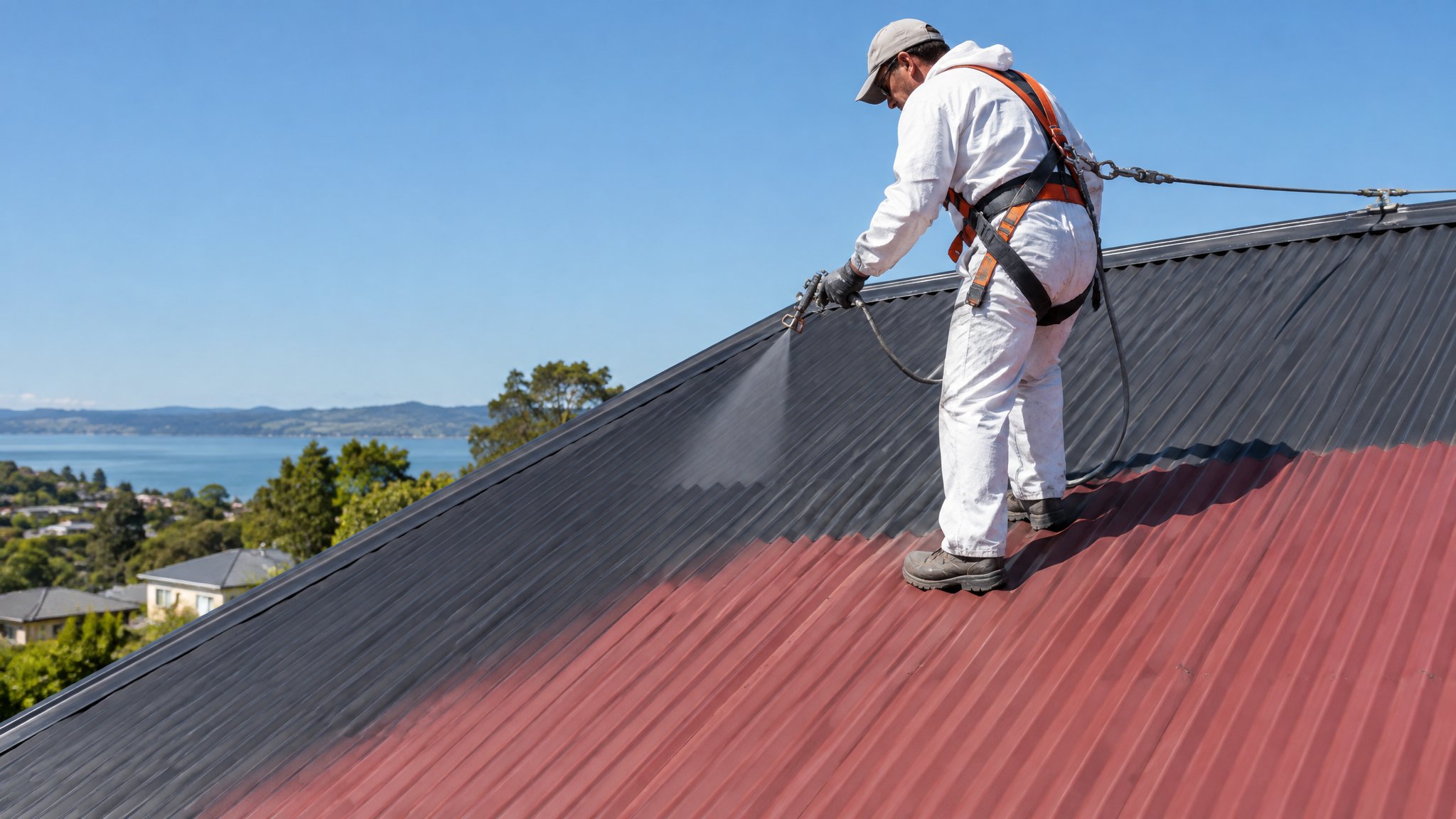
Yes, sometimes you can paint over a roof that has been previously coated with bitumen, but it depends on the condition of the existing coating and what type of roof you have. Bitumen is a tricky surface, and not every paint system will stick or last on top of it.
For Auckland homes, the main issue is making sure the surface is sound, clean, and compatible with the new coating. If it is not, the new paint can soften, lift, or peel off much sooner than expected.
Why bitumen can be difficult to paint over
Bitumen is oily by nature, and older coatings can stay slightly soft for a long time, especially in warm weather. That makes adhesion difficult for standard roof paints.
If the bitumen is chalky, cracked, still sticky, or flaking, painting over it without proper preparation is usually a false economy. The new finish may look fine at first, then fail once the roof heats up or gets wet.
The roof material underneath also matters. A bitumen-coated metal roof is different from a membrane or fibre-cement surface, and each needs its own approach.
- Check whether the existing coating is firm, not tacky
- Look for peeling, cracks, and water ponding areas
- Confirm the roof material underneath the bitumen
- Make sure the surface can be cleaned without damaging it
What needs to happen before repainting
The roof must be properly assessed before any paint goes on. That usually means washing off dirt, moss, salt, and loose material, then checking for any soft or failing patches that need removal or repair.
In many cases, a suitable primer or sealer is needed to help bridge the gap between the bitumen and the new coating. Not every primer will work, so product choice is important.
You also want to think about roof movement and heat. Auckland roofs can get hot in summer, and bitumen expands and moves more than many people expect. If the wrong paint is used, it can crack or lose adhesion.
A good result usually depends on:
surface preparation
compatibility testing on a small area
the right primer or tie coat
a roof coating designed for the conditions
When painting over bitumen is a bad idea
There are times when repainting over bitumen is not the right call. If the existing coating is actively failing, blistering, or soft enough to mark with a fingernail, it is often better to remove it or use a different roofing solution.
Painting over bitumen is also risky if the roof has ongoing leaks, rust, or hidden movement in the substrate. Paint is not a fix for structural problems, and it will not stop water getting in through damaged laps, fixings, or flashings.
In premium Auckland suburbs, where presentation matters as much as protection, a rushed roof repaint can end up looking patchy and wearing out early. It is worth getting the system right from the start.
When to call Steve
If you are not sure whether your roof can take a new coating, contact Steve, a Kiwi and a trade-qualified painter, for advice before you spend money on materials or labour. He can assess the condition of the bitumen, advise whether it is paintable, and recommend the safest preparation and coating system for your roof.
That sort of on-site judgement matters with Auckland roofs, because what works on one surface may fail on another. Steve can help you avoid adhesion problems, unnecessary repainting, and a finish that does not last.
Frequently Asked Questions
Can you paint over old bitumen roof coating?
Sometimes, yes — but only if the coating is sound, fully cured, and compatible with the new paint system. If it is soft, flaky, or oily, it may need special preparation or removal first.
What kind of paint can go over bitumen?
You usually need a roof coating system that is specifically suitable for bitumen or tar-like surfaces, often with the correct primer or sealer. Standard roof paint is not always enough.
Should I pressure wash a bitumen roof before painting?
Gentle washing is usually better than aggressive pressure washing, which can damage the surface or force water into weak areas. The roof should be cleaned carefully and allowed to dry fully before any coating work begins.
Need a hand with your project?
Happy to tackle some of it yourself? Great — but for anything you’d rather leave to a professional, Steve Lunjevich is a Kiwi and a trade-qualified painter with 20+ years’ experience. Call or email for honest advice or a free, no-obligation quote.