
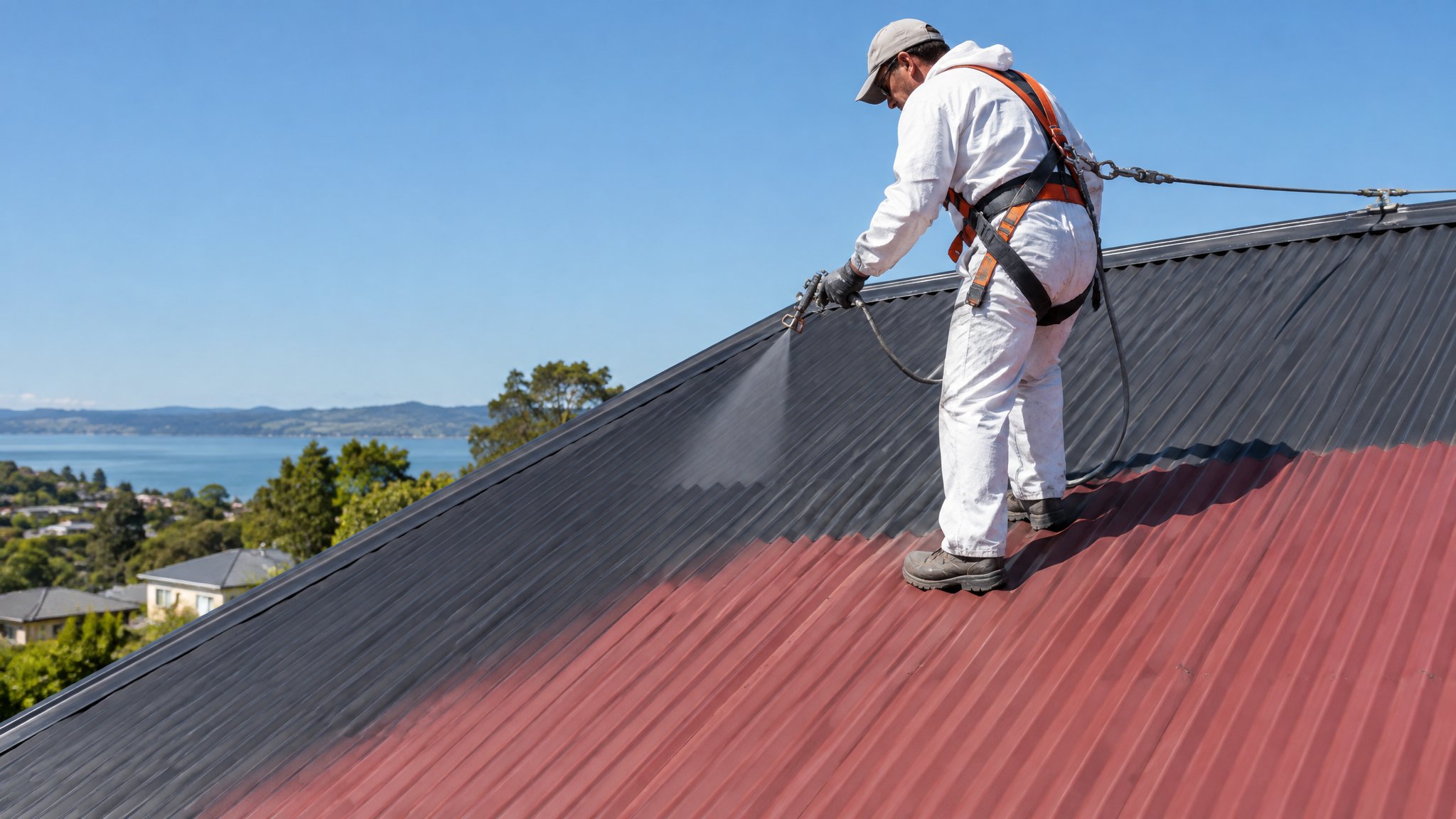
Yes, sometimes you can apply a second coat of roof paint the same day — but only if the product instructions, weather and roof conditions all line up properly. In Auckland, that often means working within a fairly tight window.
Rush it, and you can end up trapping moisture, dragging the first coat, or getting a finish that doesn’t last. On roofs, the right drying time matters just as much as the paint itself.
What decides whether the second coat can go on the same day?
The biggest factor is the paint system you are using. Some roof coatings are designed for a short recoat window, while others need longer between coats. Always check the manufacturer’s label or technical data sheet before you start.
Weather also plays a big part. Warm, dry, settled conditions help paint cure properly. In Auckland, a sunny morning can change quickly with sea breeze, cloud cover or afternoon humidity, especially in coastal suburbs like St Marys Bay, Mission Bay and Devonport.
The roof surface matters too. A metal roof, long-run iron or concrete tile roof will all behave differently. Shade, pitch, wind and residual moisture can change drying time quite a bit.
- Read the paint label for the specified recoat time
- Allow extra time if it is cool, humid or cloudy
- Do not coat over a roof that still feels tacky
- Watch for dew, especially if you are working close to evening
What can go wrong if you coat too soon?
If the first coat has not properly flashed off or cured, the second coat can soften it and reduce adhesion. That can leave roller marks, patchiness or a finish that wears out sooner than it should.
You can also trap solvents or moisture between coats. On a roof, that is a problem because heat, UV and rain put extra stress on the coating. In some cases, the paint may later blister, peel or lose gloss unevenly.
Another common issue is poor coverage. If the first coat is still wet in places, the second coat may drag and create an inconsistent film thickness. That is especially noticeable on light colours and gloss or satin finishes.
How to judge if the first coat is ready
A touch test is useful, but it should not be your only guide. The surface should feel dry, not tacky, and you should not be able to mark it easily with a light finger touch. Even then, the product’s recoat time still comes first.
Look for even appearance across the roof. If there are wet-looking areas in the lap lines, around fasteners, or where the roof stays cooler in the shade, give it longer.
If the forecast is uncertain, it is usually better to stop after the first coat and return another day than to force a second coat into poor conditions. A better schedule usually gives a better finish.
When to call Steve
If you are unsure whether the roof paint you have chosen can take a second coat the same day, contact Steve, a Kiwi and a trade-qualified painter, for practical advice before you commit. He can help you work out the right timing for Auckland conditions, your roof type and the product system you are using.
If you are dealing with an older roof, patch repairs, chalky surfaces or weather that keeps turning humid, it is worth getting professional input. Roof painting is one of those jobs where the difference between “dry enough” and “properly ready” really matters.
For homeowners and property managers across Auckland, Steve can help you avoid recoat mistakes and get a durable finish that looks right and performs well.
Frequently Asked Questions
How long should I wait between roof paint coats?
It depends on the product, but the label or technical sheet should give the minimum and maximum recoat window. In Auckland conditions, temperature and humidity can make that timing shorter or longer.
Can I paint a roof in the morning and apply the second coat after lunch?
Sometimes, yes, if the paint system allows it and the roof has dried properly. But if the day is cool, humid or cloudy, the first coat may need longer before the second coat goes on.
Is it better to do one coat today and the second coat tomorrow?
Often, yes. If there is any doubt about drying time, waiting can be the safer choice. A properly cured first coat usually gives you a better second coat and a more durable roof finish.
Need a hand with your project?
Happy to tackle some of it yourself? Great — but for anything you’d rather leave to a professional, Steve Lunjevich is a Kiwi and a trade-qualified painter with 20+ years’ experience. Call or email for honest advice or a free, no-obligation quote.