
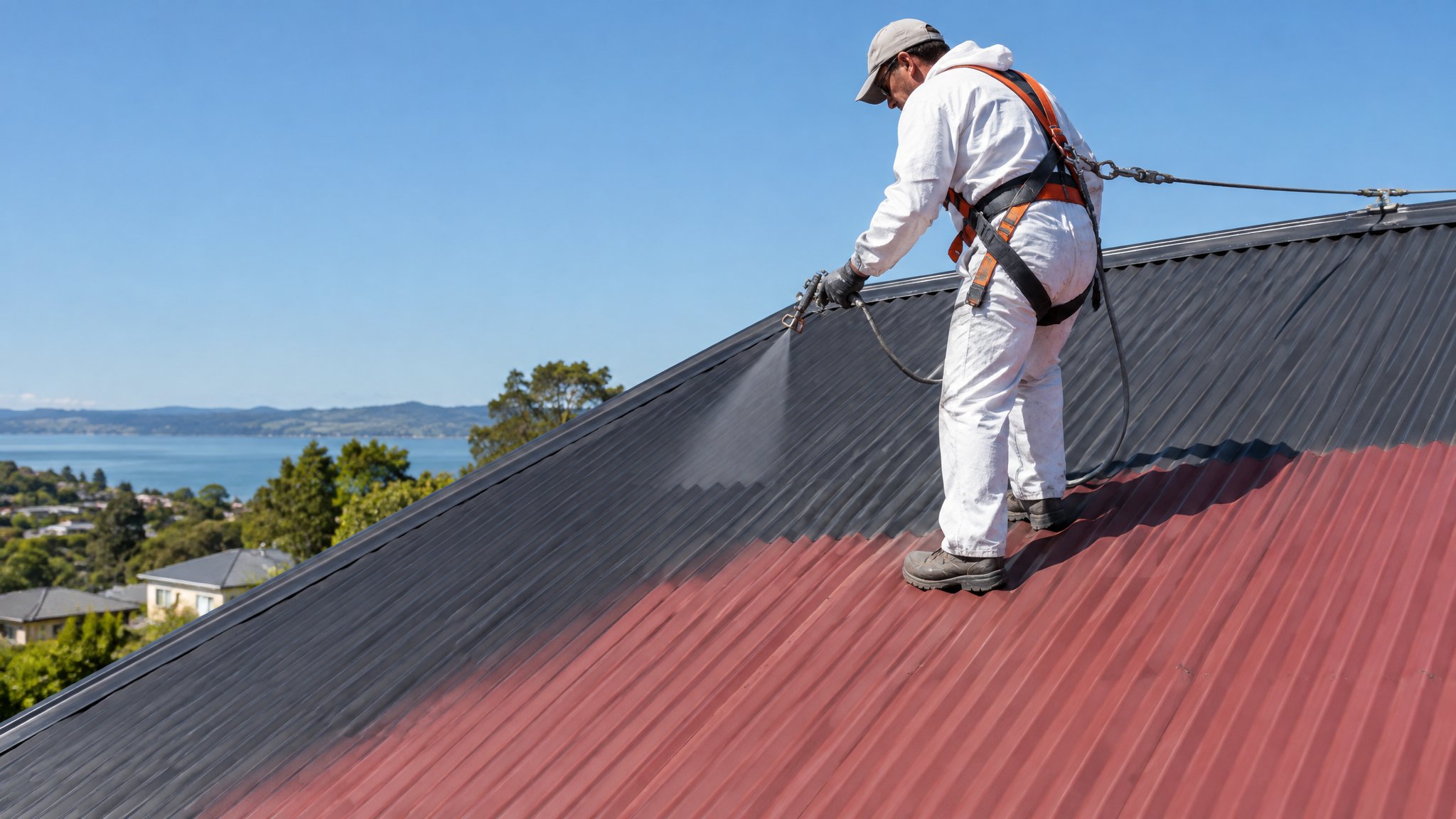
Short answer: it’s usually better to avoid painting a roof in harsh direct sunlight if you can. In Auckland, strong sun can make roof coatings dry too fast, which can affect flow, adhesion, and finish quality.
That said, the right answer depends on the product, the roof material, the weather, and the surface temperature. A good roof paint job is about timing as much as technique.
Why direct sunlight can be a problem
When a roof is hot from the sun, paint can skin over before it has time to level properly. That can leave brush marks, lap marks, patchiness, or a rougher finish than you want, especially on larger roof spans.
Heat also makes some coatings harder to apply evenly. If the roof is too hot to comfortably touch, it is often too hot for ideal painting conditions. On metal roofs, the surface temperature can be much higher than the air temperature.
Direct sunlight can also speed up solvent evaporation or water loss in the coating, depending on the product. In simple terms, the paint may not have enough working time to bond and settle correctly.
- Fast drying can cause lap marks and uneven colour
- Hot surfaces can reduce adhesion
- Paint may not level out smoothly
- Wind and sun together can make overspray and dry spray worse
When shade is better, and when it is not enough
Shade is usually the safer choice, especially for roof painting on warm Auckland days. A shaded roof section gives you more control and a better chance of a consistent finish.
But shade alone does not guarantee good results. You still need the right temperature range, low enough humidity, and a dry roof surface. Morning dew, sea breeze moisture, or recent rain can all affect the job, particularly in coastal suburbs like Mission Bay, St Marys Bay, or Devonport.
The best approach is often to follow the sun around the roof. Start on the side that is still cool, then move as the day changes. Early morning and late afternoon can be better than the middle of the day, especially in summer.
Always check the paint manufacturer’s application instructions. Some roof coatings are more forgiving than others, but most perform best when the roof is cool and stable rather than hot and exposed.
Practical roof painting tips for Auckland conditions
For many Auckland roofs, timing is everything. A well-prepared roof painted in the right conditions will usually last better and look sharper than one rushed under full sun.
- Confirm the roof is clean, dry, and free of dust, moss, and salt build-up
- Check the roof temperature, not just the air temperature
- Work in smaller sections so edges stay wet and blend properly
- Avoid painting if rain, heavy dew, or strong wind is forecast
- Use the correct primer and roof coating for the surface
When to call Steve
If you are unsure whether your roof is too hot to paint, or you want a professional finish without the guesswork, contact Steve. He is a Kiwi and a trade-qualified painter, and he can advise on the best conditions, products, and sequence for your roof.
Steve works with Auckland homeowners and property managers who want reliable roof painting advice and quality workmanship. If your roof is steep, weathered, metal, or in a tricky coastal spot, it is worth getting his opinion before you start.
Frequently Asked Questions
Can I paint my roof in direct sunlight?
You can, but it is usually not ideal. Direct sun can make the roof too hot, which may cause the paint to dry too fast and affect the finish.
What time of day is best for roof painting?
Early morning or late afternoon is often best, as long as the roof is dry and not holding dew. Aim for cooler, stable conditions rather than the hottest part of the day.
Does shade always mean better roof painting results?
Shade helps, but it is only one part of the equation. The roof still needs to be clean, dry, and within the paint manufacturer’s recommended temperature range.
Need a hand with your project?
Happy to tackle some of it yourself? Great — but for anything you’d rather leave to a professional, Steve Lunjevich is a Kiwi and a trade-qualified painter with 20+ years’ experience. Call or email for honest advice or a free, no-obligation quote.