
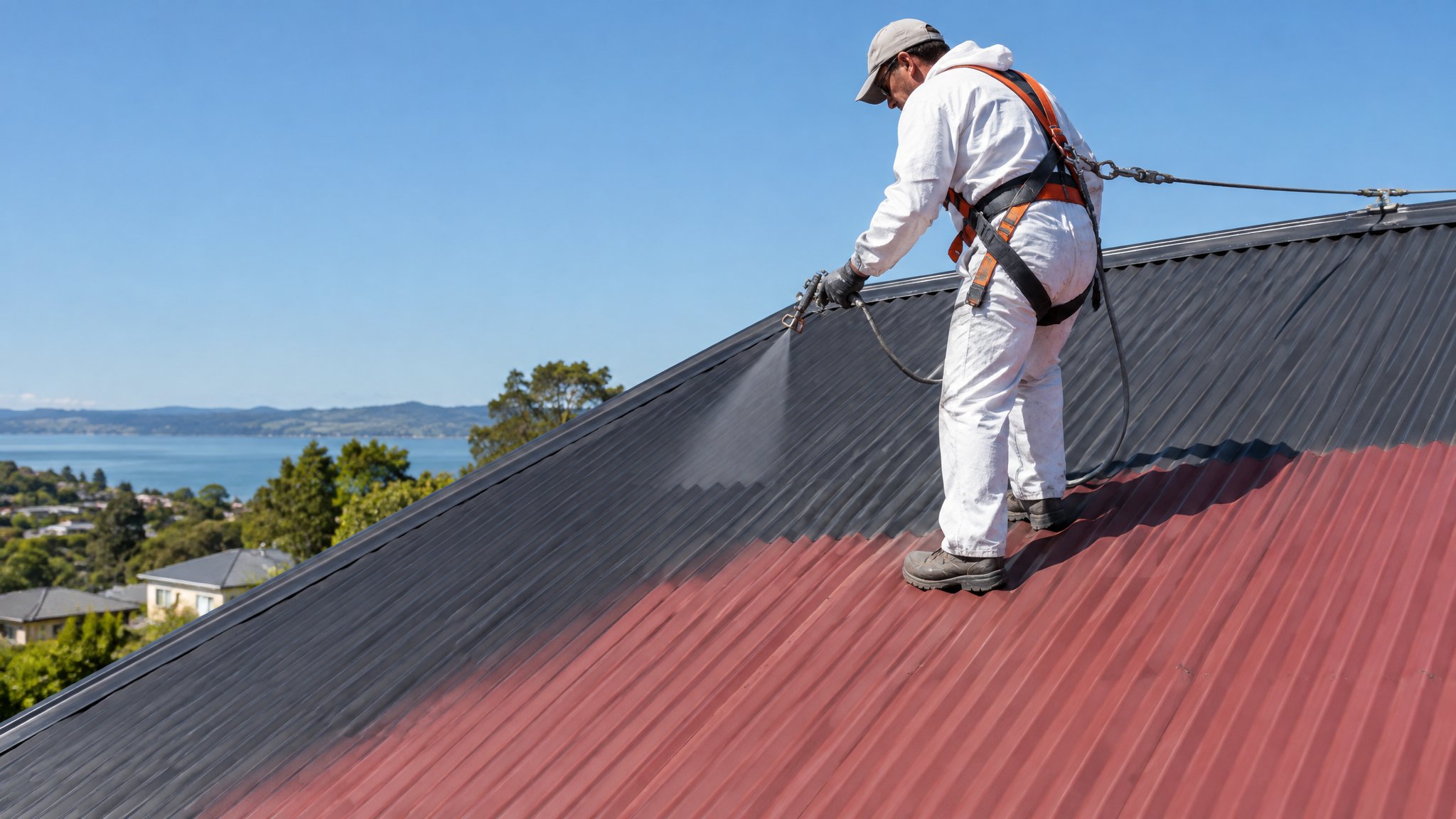
Painting a steep roof is one of those jobs that looks straightforward from the ground and suddenly feels very different once you’re up there. The short answer is: if you are asking how to do it safely without professional scaffolding, the safest plan is usually to avoid trying to stand on the roof at all unless you have the right equipment and experience.
In Auckland, steep roofs are common on villas, character homes, and modern designs alike. Wind, wet patches, fragile surfaces, and awkward access can turn a simple paint job into a serious fall risk. If you are determined to do it yourself, treat safety as the main job and the painting as secondary.
Start with a proper risk check
Before you even buy paint, look closely at the roof type, pitch, height, and access around the house. If the roof is steep enough that you would not feel comfortable walking on it in dry shoes, it is probably not suitable for DIY painting without proper fall protection.
Check for slippery moss, loose tiles, brittle roofing, skylights, power lines, and any areas where the ground below is uneven. Also think about Auckland weather. A roof that feels manageable on a still morning can become dangerous very quickly if the wind picks up or the surface becomes damp.
- Never work on a wet or dew-covered roof
- Do not paint in windy conditions
- Keep clear of overhead power lines
- Stop if the roof surface feels unstable or brittle
Use safer access methods, not shortcuts
If you are not using professional scaffolding, the next safest option is often a properly secured roof access setup such as a roof ladder, temporary edge protection, or a harness system designed for the roof profile. Even then, these systems need to be used correctly and anchored properly.
A standard extension ladder alone is not a safe way to paint a steep roof. Ladders are for access, not for standing on while working for long periods. You also should not overreach from a ladder to reach the roof edge. That is how people lose balance.
If the roof cannot be accessed safely with a suitable fall-arrest or edge-protection system, the job should be left to a professional. There is no paint finish worth a broken leg or a serious fall.
Prepare well so you spend less time on the roof
Good preparation reduces the time you need to spend in a risky position. Clean the roof thoroughly, remove moss and dirt, and make any minor repairs before painting begins. Choose a day with stable weather and start early so the roof is dry and the temperature is manageable.
Use the right coating for the roof material, whether it is longrun iron, Colorsteel, or tiles. Apply the paint by roller or spray only if the setup is safe and you can keep your footing. Work in manageable sections so you are not carrying too much gear around on the roof.
Keep tools minimal. A paint bucket clipped securely, non-slip footwear, gloves, eye protection, and a tethered tool setup all help reduce the chance of an accident.
When to call Steve
If the roof is steep, high, slippery, or difficult to access, the safest move is to call Steve, a Kiwi and a trade-qualified painter. He can assess the roof properly, recommend the right access method, and complete the job with the right safety gear and coating system for your property.
That is especially important for premium Auckland homes where roof condition, presentation, and protection all matter. If you want straight advice on whether your roof is suitable for DIY or needs professional attention, Steve, a Kiwi and a trade-qualified painter, can give you a practical answer before you commit to the job.
Frequently Asked Questions
Can I paint a steep roof with just a ladder?
A ladder is fine for getting on and off the roof, but it is not a safe working platform for painting a steep roof. For anything more than very limited access, you need proper fall protection or a professional setup.
What is the safest weather for roof painting in Auckland?
Choose a dry day with little wind and no dew on the roof. Avoid hot, windy afternoons and never paint when the surface is damp or conditions are changing quickly.
Do I need scaffolding to paint every roof?
Not every roof needs full scaffolding, but steep roofs usually need some form of safe access and fall protection. If you cannot work safely without leaning, overreaching, or stepping on unstable areas, scaffolding or a professional crew is the better option.
Need a hand with your project?
Happy to tackle some of it yourself? Great — but for anything you’d rather leave to a professional, Steve Lunjevich is a Kiwi and a trade-qualified painter with 20+ years’ experience. Call or email for honest advice or a free, no-obligation quote.