
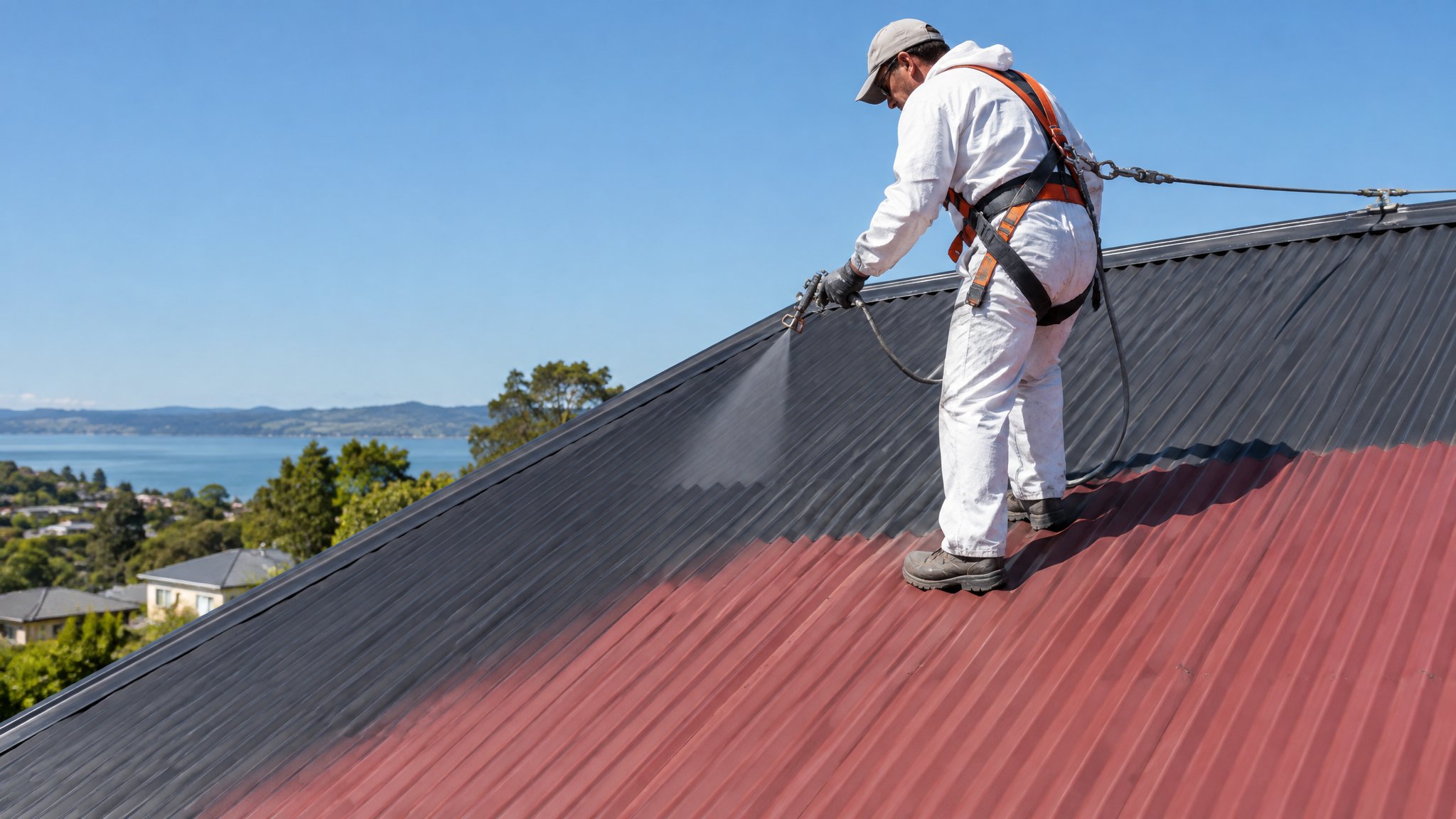
A hip roof can be tricky to paint because the slopes, ridges and changing sun exposure all work against a wet edge. If you stop and start in the wrong place, lap marks can show up fast, especially on larger roofs or on warm Auckland days.
The good news is that with the right prep, the right weather window and a steady method, you can get a clean, even finish. The key is to plan the work so each section stays wet long enough to blend properly.
Why lap marks happen on hip roofs
Lap marks are usually caused by paint starting to dry before the next section is rolled or sprayed into it. On a hip roof, the problem is worse because each plane of the roof can dry at a different rate depending on angle, wind, shade and sun.
If the coating is brushed or rolled too thin, or if you go back over paint that has already skinned, the overlap will often show as a darker band or a dull patch. This is especially noticeable on gloss and satin roof coatings.
- Paint in the shade where possible, or follow the shade around the roof
- Avoid working in hot sun, strong wind or near-dew conditions
- Keep a wet edge at all times
- Use the right nap roller or spray setup for the roof profile
The best method for an even roof finish
Start with proper washing and surface preparation. Any chalk, dust, mould, loose coating or rust will affect how the paint lays down and can make overlaps stand out. After cleaning, let the roof dry fully and deal with any repairs before coating begins.
Work from the highest point of the roof down, and paint one manageable section at a time. On a hip roof, it often helps to work panel by panel rather than trying to cover the whole roof in one go. Keep a consistent application rate and do not spread the paint too far before it is rolled out evenly.
If using a roller, load it properly and finish each pass in the same direction so the texture stays uniform. If spraying, back-roll while the coating is still wet so the film thickness is even and any spray pattern is laid down consistently.
- Cut in edges before the main field, but do not let them dry out too much
- Maintain a steady rhythm so joins stay wet
- Choose the right paint for the roof material and Auckland weather
- Mix enough product from the same batch to complete each section
How to avoid visible joins in NZ conditions
Auckland weather can change quickly, so timing matters. Early morning can bring moisture, while afternoon sun can dry roof paint too fast. The best days are usually mild, dry and overcast, with low wind and no rain forecast for long enough to allow proper curing.
It also pays to plan your exit points before you start. You do not want to paint yourself into a corner and then have to cross over partly dry paint to get off the roof. Break the roof into logical sections that suit the pitch and access points.
If the roof is large or complex, two painters may be needed to keep a continuous wet edge. On steep or high roofs, safe access and harness planning matter just as much as the coating technique.
When to call Steve
If your hip roof is steep, weathered, high or hard to access, it is worth getting advice before you start. Steve is a Kiwi and a trade-qualified painter, and he can help with the right prep, product selection and application method so the finish looks clean and consistent.
For homeowners and property managers across Auckland, especially in premium suburbs where presentation matters, a roof repaint is one of those jobs where technique really shows. If you want to avoid lap marks, patchiness or an uneven sheen, contact Steve for practical advice or to take care of the job properly.
Frequently Asked Questions
Should I spray or roll a hip roof to avoid lap marks?
Either can work well if done properly. Spraying is faster, but rolling or back-rolling helps even out the film and reduce patchiness. The best choice depends on the roof profile, coating and access.
What weather is best for painting a roof in Auckland?
Mild, dry, low-wind weather is ideal. Avoid hot sun, damp mornings, windy conditions and any day where rain could interrupt the job before the coating has had time to set.
Can lap marks be fixed after the paint dries?
Sometimes they can be improved with a light recoat, but if the wrong product or technique was used, the roof may need proper preparation and another full coat. It is best to get the method right from the start.
Need a hand with your project?
Happy to tackle some of it yourself? Great — but for anything you’d rather leave to a professional, Steve Lunjevich is a Kiwi and a trade-qualified painter with 20+ years’ experience. Call or email for honest advice or a free, no-obligation quote.