
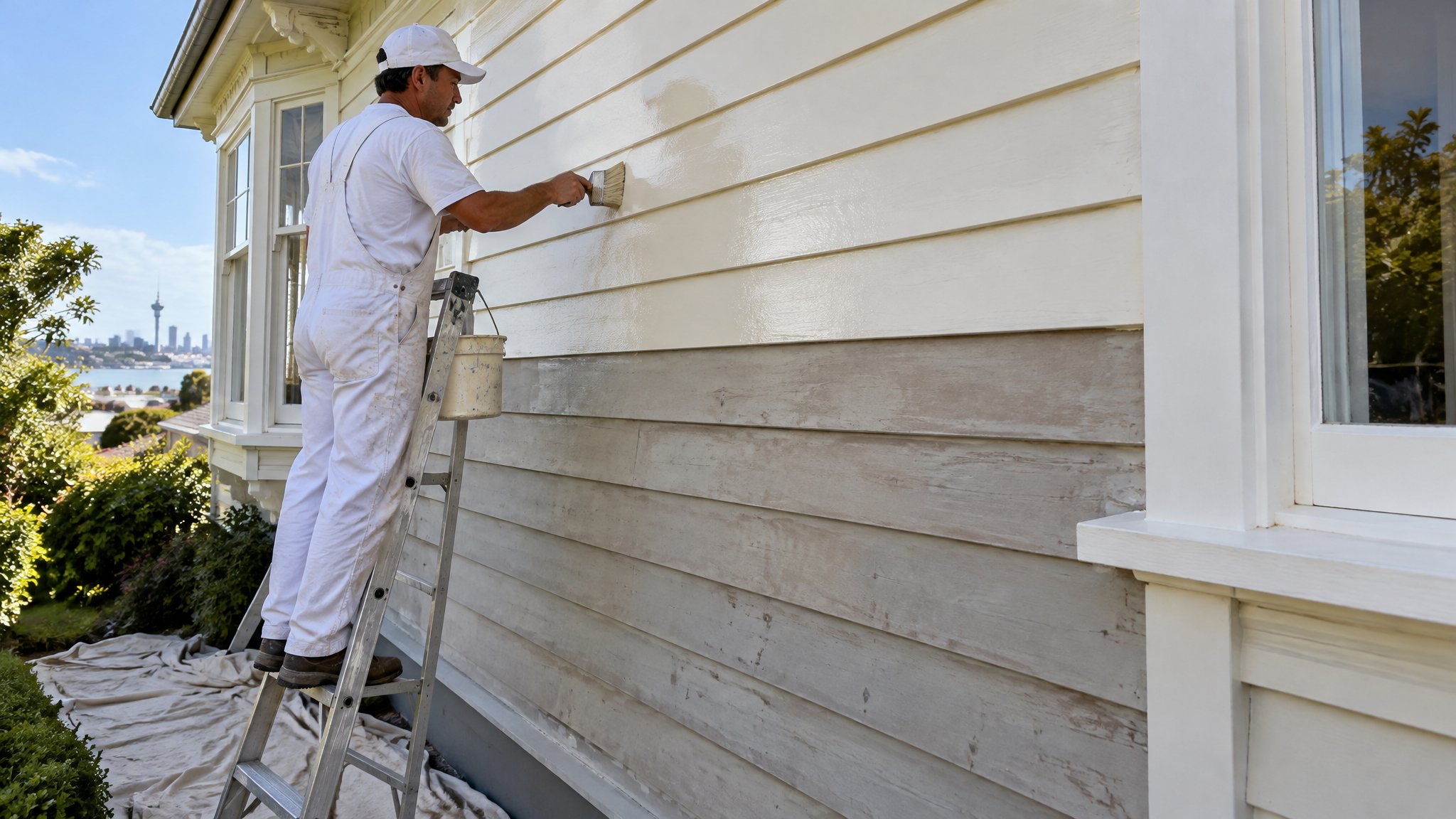
It is frustrating when a freshly painted wall still looks patchy after the first coat. You may have chosen a quality paint and still find the old colour showing through, especially with a big colour change or tired interior surfaces.
In most cases, the problem is not the paint alone. Coverage depends on the surface, the colour underneath, the product being used, and how it is applied. Here is what is usually going on, and how to get a better finish the first time.
The surface is soaking up the paint
Bare plasterboard, stopped patches, fresh plaster, and some older porous surfaces can drink up paint quickly. When that happens, the first coat dries unevenly and looks thin even if you applied it properly.
This is one of the most common reasons a finish looks patchy in Auckland homes, particularly after repairs, water damage, or plaster touch-ups.
- Fresh plaster often needs sealer before topcoats
- Uneven filler or sanding can change how the paint absorbs
- Porous timber and old walls may need extra prep
The colour change is too big for one coat
A light colour over a dark wall, or a deep colour over white, usually needs more than one coat. Paint can only hide so much in a single pass, especially if the new colour has less depth or different undertones.
Some colours are naturally weaker in coverage, including whites, yellows, reds, and certain bright or strong tints. They often need a primer or tinted undercoat to build a solid base.
- Dark to light changes usually need a primer
- Bright colours often need more coats than expected
- Do not rely on the label alone for one-coat coverage
Application and product choice matter
Even a good paint can fail to cover properly if it is rolled too thinly, spread too far, or applied with the wrong nap roller. If the paint starts to dry before you have finished a section, you can also get lap marks and uneven sheen.
Low quality paint, old paint that has not been mixed properly, or the wrong finish for the room can all affect coverage. For example, a flat wall paint and a higher sheen enamel behave quite differently.
Common causes include:
• not stirring the paint thoroughly
• using the wrong roller or brush
• stretching the paint too far
• painting over dirt, dust, or glossy surfaces without prep
When to call Steve
If your paint is still not covering after the second coat, or the surface keeps showing through in a patchy way, it is worth getting advice before you keep going. The issue may be poor preparation, a sealing problem, moisture, or simply the wrong system for the substrate.
Steve is a Kiwi and a trade-qualified painter, and he can assess what is happening on site and recommend the right preparation, primer, and paint system for your home or property. That is especially useful for premium Auckland homes where a clean, even finish really matters.
Frequently Asked Questions
Does one coat paint really exist?
Some paints are marketed as one-coat products, but real-world coverage depends on the existing colour, surface condition, and how the paint is applied. In many homes, two coats still give the best result.
Why does white paint look patchy?
White paint often shows patchiness because it can be thin in pigment, especially over dark colours, stained patches, or uneven plaster. A primer or extra topcoat is often needed.
Should I prime before painting?
Yes, if you are painting over fresh plaster, repairs, stains, bare timber, glossy surfaces, or a dramatic colour change. Primer helps the topcoat cover properly and gives a more even finish.
Need a hand with your project?
Happy to tackle some of it yourself? Great — but for anything you’d rather leave to a professional, Steve Lunjevich is a Kiwi and a trade-qualified painter with 20+ years’ experience. Call or email for honest advice or a free, no-obligation quote.