
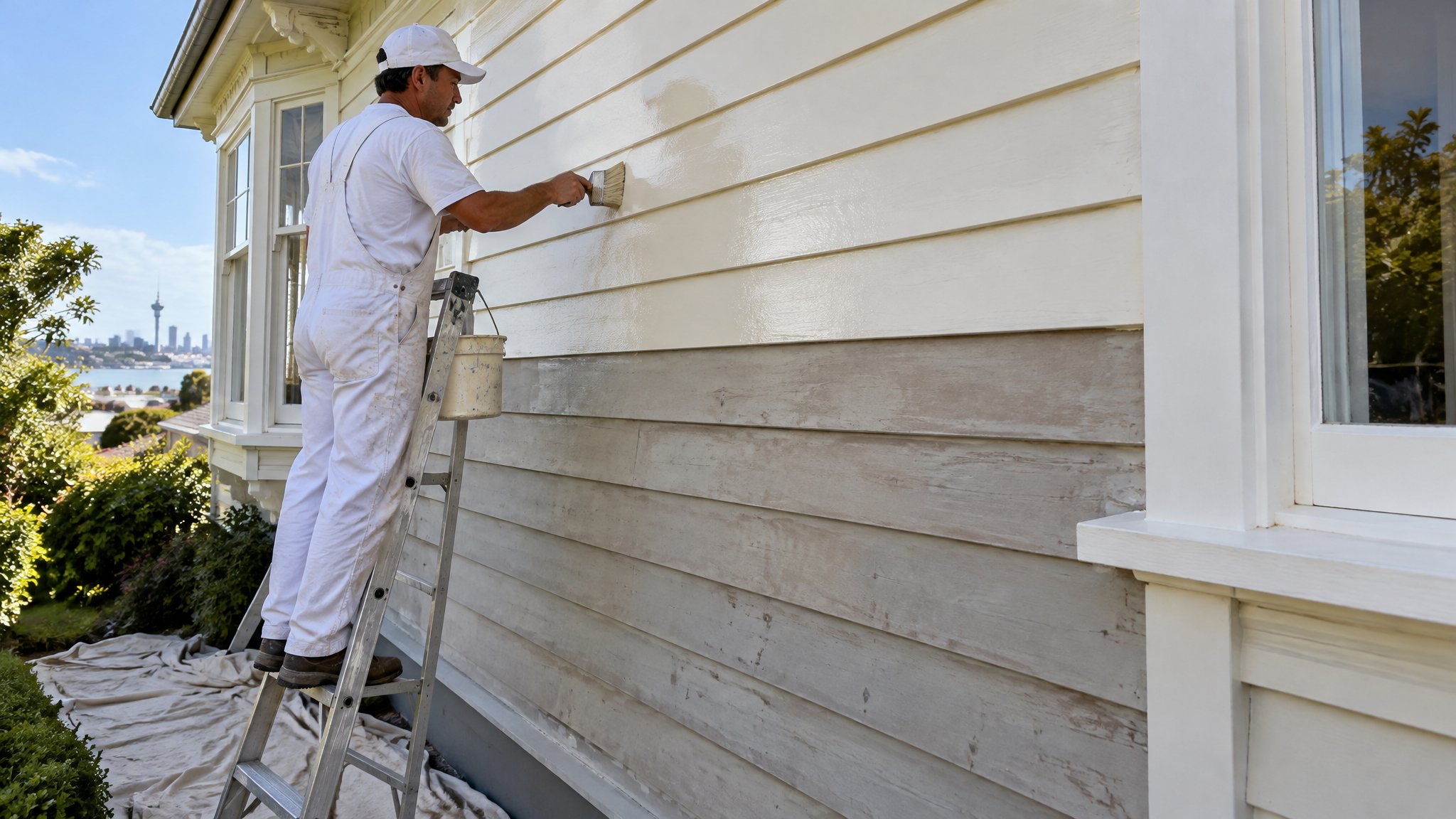
Paint bubbling or blistering is a common problem in Auckland homes, especially where moisture, heat, or poor prep have got into the paint system. It usually means the coating has lost its bond to the surface underneath.
The good news is that the right fix depends on finding the cause first. If you patch over the bubbles without sorting that out, the problem often comes back.
What causes paint to bubble or blister?
Bubbling happens when the paint film lifts away from the surface. That lift can be caused by moisture trying to escape, heat softening the coating, or paint being applied over a dirty or unstable surface.
In New Zealand homes, the most common causes are damp timber, water getting in through failed sealant, painting in direct hot sun, or applying a topcoat before the undercoat or filler has properly cured. Sometimes the surface was not cleaned well enough, so dust, salt, grease, or old chalky paint has stopped the new coat from gripping.
External walls, bathrooms, kitchens, and north-facing areas are often the first places to show the issue because they get more sun, steam, or weather exposure.
- Moisture behind the paint film
- Painting over dirty, chalky, or greasy surfaces
- Heat from sun on fresh paint
- Poor adhesion from old or incompatible coatings
- Water ingress from cracks, joins, or failed sealant
How to fix bubbling paint properly
Start by working out whether the area is dry. If the blistering is still active, you need to find and fix the moisture source first, otherwise any repair is temporary. Check gutters, downpipes, flashings, window seals, and nearby cracks in the substrate.
Once the cause is sorted, scrape back all loose or bubbled paint until you reach sound material. Feather the edges so the repair blends in smoothly. If the exposed area is bare timber, plaster, or filler, seal it with the correct primer before repainting.
For small areas, use a suitable filler, sand smooth, and apply the right undercoat and topcoats for the surface. On larger or repeated failures, the whole section may need to be stripped and repainted so the coating system is consistent.
The finish will only last if the prep work is thorough. Rushing the repair usually leads to more blistering later.
- Let the area dry fully before repairing
- Remove all loose paint, not just the bubble
- Prime exposed substrate before topcoating
- Use compatible products for the surface
- Address leaks, cracks, or failed sealant first
How to stop it happening again
Preventing blistering is mostly about preparation and conditions. Surfaces should be clean, dry, and stable before painting. That includes washing off grime, removing chalky residue, sanding glossy areas, and letting fillers or sealants cure properly.
Timing matters too. Avoid painting in strong afternoon sun, on very hot surfaces, or when humidity is high. In Auckland, weather can change quickly, so allowing enough dry time between coats is important.
For bathrooms and kitchens, use coatings designed for higher moisture areas and make sure ventilation is working well. On exterior timber and weatherboards, regular maintenance of gaps, joints, and sealant can stop moisture getting behind the paint film in the first place.
- Clean and sand before painting
- Respect dry times and curing times
- Avoid painting hot, sun-baked surfaces
- Use moisture-appropriate paint products
- Maintain sealant, gutters, and flashing
When to call Steve
If the bubbling keeps returning, if the affected area is large, or if you suspect leaks, it is worth getting proper advice before you spend time on another patch-up. Steve is a Kiwi and a trade-qualified painter, and he can assess whether the issue is surface prep, moisture, product failure, or a deeper building problem.
For homeowners and property managers across Auckland, especially in premium suburbs where appearance and finish matter, getting the diagnosis right saves money and avoids repeated repairs. Steve can advise on the best repair method and carry out the work so the finish looks good and lasts longer.
Frequently Asked Questions
Can I paint over bubbling paint?
Not if you want a lasting result. The loose paint needs to be removed first, and the cause of the bubbling must be fixed before repainting.
Is paint bubbling always caused by water?
No. Moisture is very common, but heat, poor surface prep, and incompatible coatings can also cause blistering.
What should I do if the blistering is on an exterior wall?
Check for leaks, cracked sealant, or failed joints first. If the damage is widespread or keeps coming back, contact Steve, a Kiwi and a trade-qualified painter, for advice.
Need a hand with your project?
Happy to tackle some of it yourself? Great — but for anything you’d rather leave to a professional, Steve Lunjevich is a Kiwi and a trade-qualified painter with 20+ years’ experience. Call or email for honest advice or a free, no-obligation quote.