
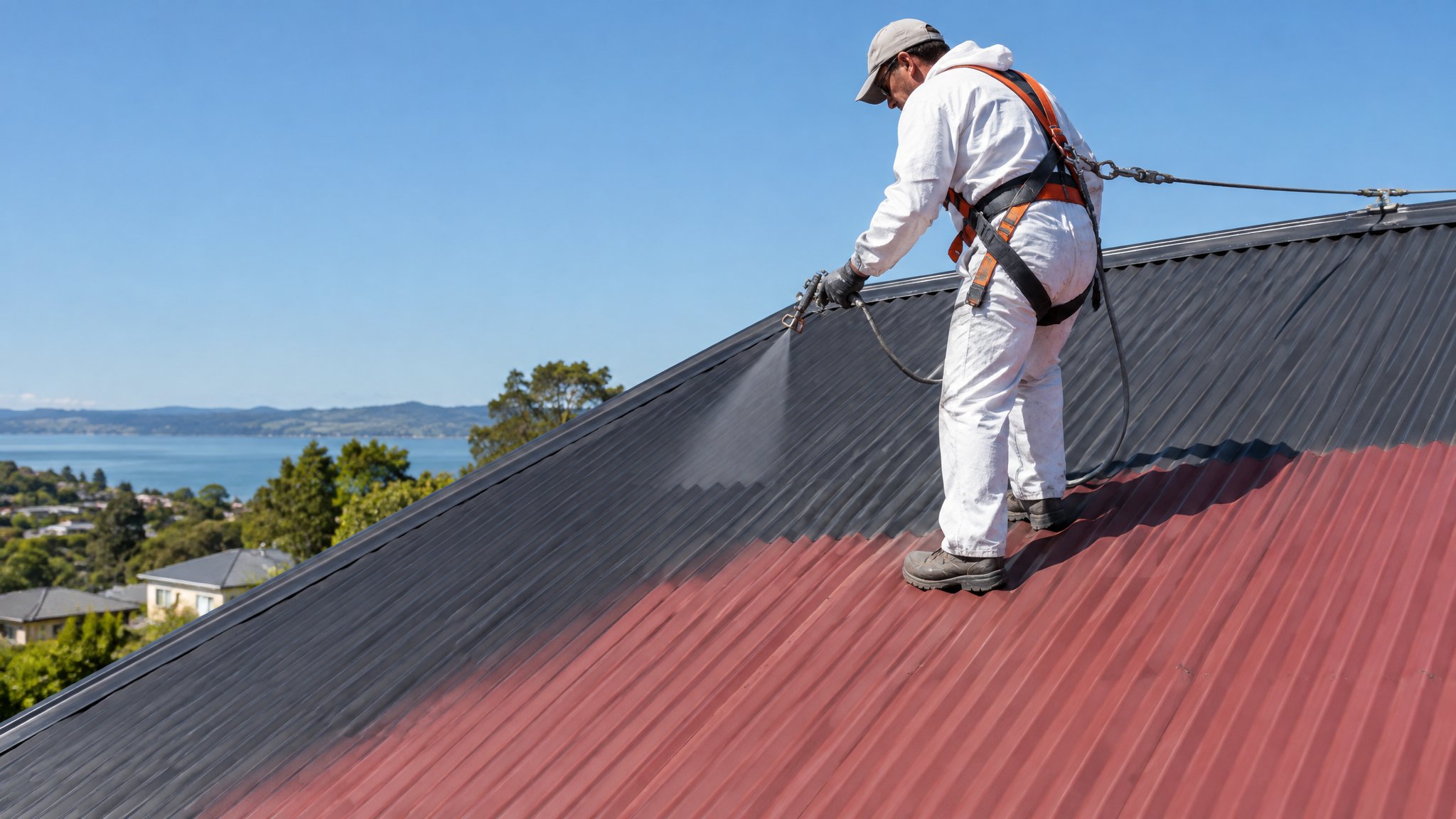
Roof painting is one of those jobs where timing matters just as much as the paint itself. If the weather turns, even a well-planned job can need to wait.
In Auckland, conditions can change quickly, so a good roof painter will always check the forecast, the roof surface, and the drying window before getting started.
Rain, drizzle and damp surfaces
Rain is the most obvious reason to delay roof painting, but it is not just heavy rain that causes problems. Light drizzle, mist, sea spray and overnight moisture can all leave the roof too damp to coat properly.
If paint goes on to a wet or nearly wet roof, it can lose adhesion, dry unevenly, or trap moisture underneath. That can lead to peeling, blistering or early failure.
Even if the rain has stopped, a roof may still need time to dry out fully, especially in shaded areas, around ridges, valleys and gutters.
- Active rain or drizzle
- Fog, mist or heavy dew
- Wet patches after overnight moisture
- Roof surfaces still holding moisture in shaded areas
Wind, high humidity and extreme temperatures
Wind can be a major issue on Auckland roofs. Strong gusts make the work less safe for the painter, and they can also cause overspray, dust contamination and uneven application.
High humidity is another common reason for delay. When the air is damp, paint can take longer to cure, and the finish may not set properly before the weather changes again.
Temperature matters too. Very cold conditions slow down drying, while hot roofs in direct sun can make coatings flash-dry too fast, which affects finish quality and durability.
Roof condition and forecast timing
A roof painter will not only look at today’s weather, but also at what is likely to happen over the next few hours. A job may be postponed if there is not enough dry time before evening dew, a cool southerly change, or another rain band moving in.
The roof itself also affects the decision. Moss, lichen, dust, salt build-up and old failing coating can all hold moisture or create a surface that needs more preparation before painting.
On some days, the weather may look acceptable from the ground, but the roof can still be too cool, too damp or too exposed for a reliable result.
When to call Steve
If you are unsure whether the weather is suitable, it is worth talking to Steve. He is a Kiwi and a trade-qualified painter, and he can assess both the forecast and the condition of your roof before any work begins.
A good roof painter will delay a job when needed rather than risk a poor finish. If you are in Auckland and want honest advice about timing, preparation or whether your roof is ready to paint, contact Steve. He is a Kiwi and a trade-qualified painter who can help you plan the job properly and avoid weather-related problems.
Frequently Asked Questions
Can a roof be painted after light rain?
Only if the roof is fully dry. Light rain can leave moisture in seams, overlaps and shaded areas, so a painter will usually check the surface carefully before starting.
What is the best weather for roof painting in Auckland?
Mild, dry weather with low humidity, light wind and a stable forecast is ideal. The roof needs enough dry time before and after painting for the coating to cure properly.
Will a roof painter work in winter?
Sometimes, yes, but it depends on the day. Winter jobs can go ahead in suitable dry conditions, but cold mornings, dew and changeable weather often mean delays.
Need a hand with your project?
Happy to tackle some of it yourself? Great — but for anything you’d rather leave to a professional, Steve Lunjevich is a Kiwi and a trade-qualified painter with 20+ years’ experience. Call or email for honest advice or a free, no-obligation quote.