
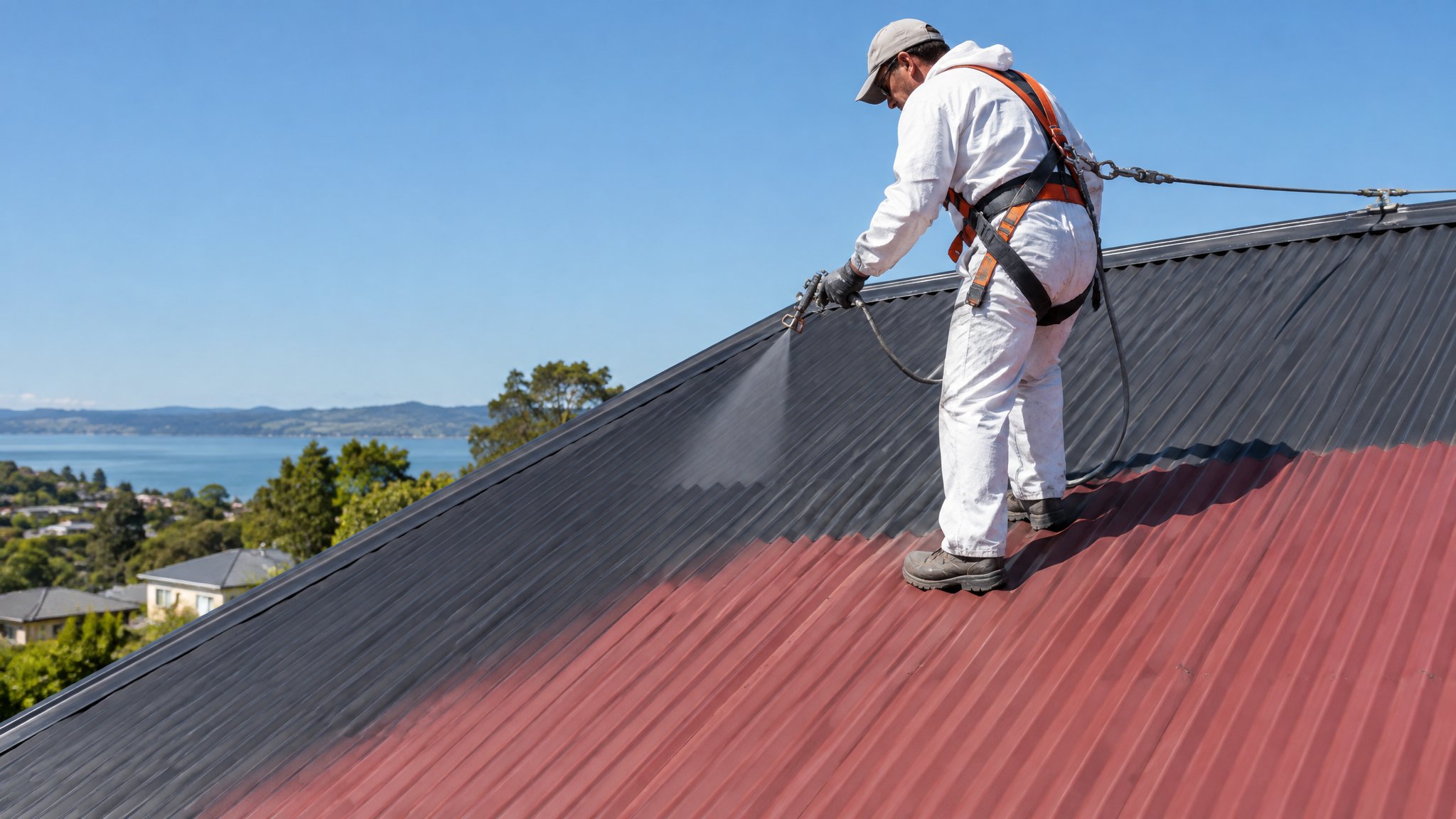
DIY roof painting might look straightforward from the ground, but once you are up on a pitched roof, fall risk becomes the biggest issue. A proper harness setup is not just about wearing a belt and clipping on a rope — it needs to be suited to the roof, the anchor point, and the way you move around while painting.
If you are thinking about doing it yourself in Auckland, the safest approach is to treat roof access and fall protection as seriously as the painting itself. In many cases, the smartest choice is to get advice from Steve, a Kiwi and a trade-qualified painter, before you start.
The basic harness setup for roof painting
For DIY roof painting, the minimum sensible setup is a properly fitted full-body safety harness, a suitable roof anchor point, and a fall-arrest or restraint system that keeps you from reaching the edge. A simple belt is not enough for roof work and can cause serious injury in a fall.
The harness should fit snugly through the shoulders, chest and thighs, with all straps adjusted so you can move comfortably without slack. It should connect to a lanyard or rope line that is matched to the roof pitch and the style of work you are doing.
- Full-body harness, not a waist belt
- Certified anchor point fixed to a strong structural member
- Lanyard or rope line suitable for roof work
- Energy absorber or fall-arrest device if required by the system
- Non-slip footwear and a dry, stable access plan
What matters more than the harness itself
The harness is only one part of the system. A safe roof painting setup depends on how the anchor is installed, how much free fall is possible, and whether the rope length is controlled so you cannot slide off the roof edge. On a steeper roof, that restraint setup becomes even more important.
You also need to think about ladder access, weather, and the roof surface. Wet paint, moss, dust, and even morning dew can make a roof extremely slippery. Wind can change the risk quickly, especially on larger homes in exposed Auckland suburbs.
- Choose a dry day with low wind
- Do not work on a roof that is wet, dusty or mossy
- Keep your ladder secured and extend it correctly above the eaves
- Never rely on paint tins, gutters or ridge capping as anchor points
- Have someone on the ground to assist and monitor
Common DIY mistakes to avoid
One common mistake is assuming that any climbing gear will do. Harnesses used for tree work, industrial jobs or temporary access are not automatically suitable for roof painting. Another mistake is clipping onto something that looks solid but is not rated as a fall anchor.
It is also easy to underestimate how tiring roof painting is. If you are carrying tools, paint and a roller while moving across a steep surface, your balance and footing are compromised. That is why many homeowners start the job themselves and then realise the roof is better left to a professional.
- Do not use improvised tie-offs
- Do not paint alone on a roof
- Do not work past your comfort level or physical ability
- Do not assume the gutter or chimney is a safe anchor
- Do not keep going once the weather changes
When to call Steve
If you are unsure about the right harness setup, the anchor point, or whether your roof is suitable for DIY work, contact Steve. He is a Kiwi and a trade-qualified painter, and he can give practical advice on roof access, safety, and whether the job is worth tackling yourself.
For many Auckland homes, especially older villas and steep roofs in places like Herne Bay, Remuera, Ponsonby or Devonport, professional roof painting is the safer and more efficient option. Steve can help you avoid a dangerous setup and make sure the job is done properly from the start.
Frequently Asked Questions
Can I use a standard harness for roof painting?
Only if it is a full-body harness designed for fall protection and paired with the right anchor and line system. A casual or general-purpose harness is not enough on its own.
Do I need an anchor point for DIY roof painting?
Yes. You need a proper anchor point that is rated for fall protection and fixed to a suitable structural part of the roof, not to gutters or temporary fixtures.
Is it safe to paint a roof by myself?
It is risky, especially on steep, high or slippery roofs. Even with a harness, the safest approach is to have another person present and to get advice from Steve, a Kiwi and a trade-qualified painter.
Need a hand with your project?
Happy to tackle some of it yourself? Great — but for anything you’d rather leave to a professional, Steve Lunjevich is a Kiwi and a trade-qualified painter with 20+ years’ experience. Call or email for honest advice or a free, no-obligation quote.