
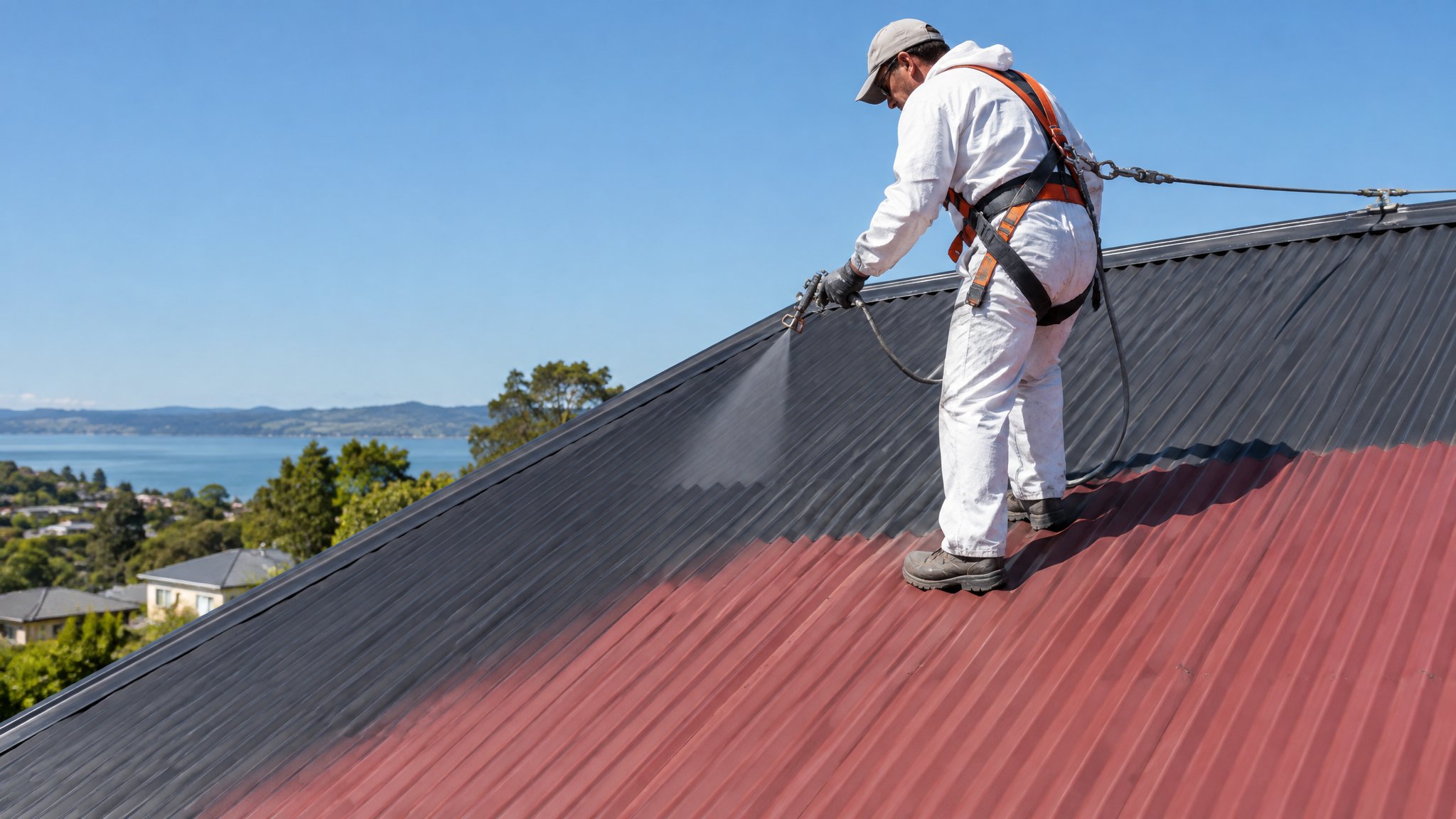
If you’re painting your roof yourself, the time between coats matters just as much as the paint you choose. Recoat too soon and you can trap solvent, cause wrinkling, or reduce adhesion. Leave it too long and you may need to abrade the surface before the next coat.
In Auckland, drying time is affected by weather, roof material, shade, wind, and the specific coating system you’re using. There isn’t one universal answer, but there are solid rules of thumb that help you plan the job properly.
The general rule for roof paint recoating
For many roof paint systems, the drying time between coats is commonly around 4 to 24 hours, depending on the product and conditions. Some waterborne roof coatings can be ready for a second coat sooner, while solvent-based systems often need longer. Always check the product label and technical data sheet first, because the manufacturer’s recoat window is the guide that matters most.
On a practical level, the roof should feel dry to the touch before recoating, but that alone is not enough. The first coat needs to be sufficiently cured so the next coat bonds properly and doesn’t mark, lift, or stay soft underneath.
- Follow the paint manufacturer’s recoat time exactly
- Wait longer in cool, damp, or shaded conditions
- Never coat over a surface that still feels tacky
- If in doubt, test a small hidden area first
What changes drying time on a roof
A roof dries differently from a wall because it is exposed to sun, wind, and moisture from all sides. Warm, breezy conditions speed things up, while cold mornings, overnight dew, high humidity, and shaded areas slow everything down. In Auckland, a roof that looks dry by lunchtime may still hold moisture in the early sections, especially if you started before the dew lifted.
The roof material also matters. Corrugated iron, Coloursteel, concrete tile, and decramastic roofs each behave differently. Concrete tile can hold moisture in its surface pores, while metal roofs can heat up quickly and make paint flash dry on the top skin before the coat beneath has fully settled.
- Weather: temperature, humidity, wind, and dew all affect cure time
- Roof type: metal and tile roofs dry differently
- Shade: south-facing or tree-covered roofs often take longer
- Coat thickness: heavy coats need more time than thin, even coats
How to judge whether the roof is ready for coat two
A good DIY check is to look for a consistent finish with no shiny wet patches, soft spots, or solvent smell lingering strongly at the surface. If you lightly touch an inconspicuous area with a clean finger and it feels cool but not tacky, that’s a better sign than appearance alone. However, if the first coat is still easily marked, it is not ready.
If conditions have changed overnight, be extra careful. Morning dew can add moisture back to the surface, so you may need to wait until late morning or even the afternoon before recoating. That is especially important on northern-facing walls and low-sloping roof sections that stay damp longer than expected.
- Look for no tackiness when lightly tested
- Check for uniform colour and sheen before recoating
- Allow extra time after dew, drizzle, or cool nights
- Do not rush just because the surface looks dry
When to call Steve
If you’re unsure about the right drying time, or you want the roof done properly first time, contact Steve, a Kiwi and a trade-qualified painter. He can advise on the correct system for your roof, the right recoat window, and whether your weather conditions are suitable for painting.
Roof work is not just about drying time. Surface prep, safety, rust treatment, and applying the right film build all affect how long the job lasts. If you’d rather avoid costly mistakes, Steve can assess the roof and take care of the painting for you with a professional finish.
Frequently Asked Questions
Can I paint a second coat on the same day?
Sometimes, yes, if the product allows it and the roof is warm, dry, and well ventilated. But many coatings need longer, so always check the label before recoating.
What happens if I recoat too soon?
You can trap moisture or solvent under the top coat, which may cause bubbling, wrinkling, poor adhesion, or an uneven finish.
Should I sand between roof coats?
Only if the product instructions say to, or if the first coat has cured too long and needs keying. If you’re unsure, ask Steve, a Kiwi and a trade-qualified painter.
Need a hand with your project?
Happy to tackle some of it yourself? Great — but for anything you’d rather leave to a professional, Steve Lunjevich is a Kiwi and a trade-qualified painter with 20+ years’ experience. Call or email for honest advice or a free, no-obligation quote.