
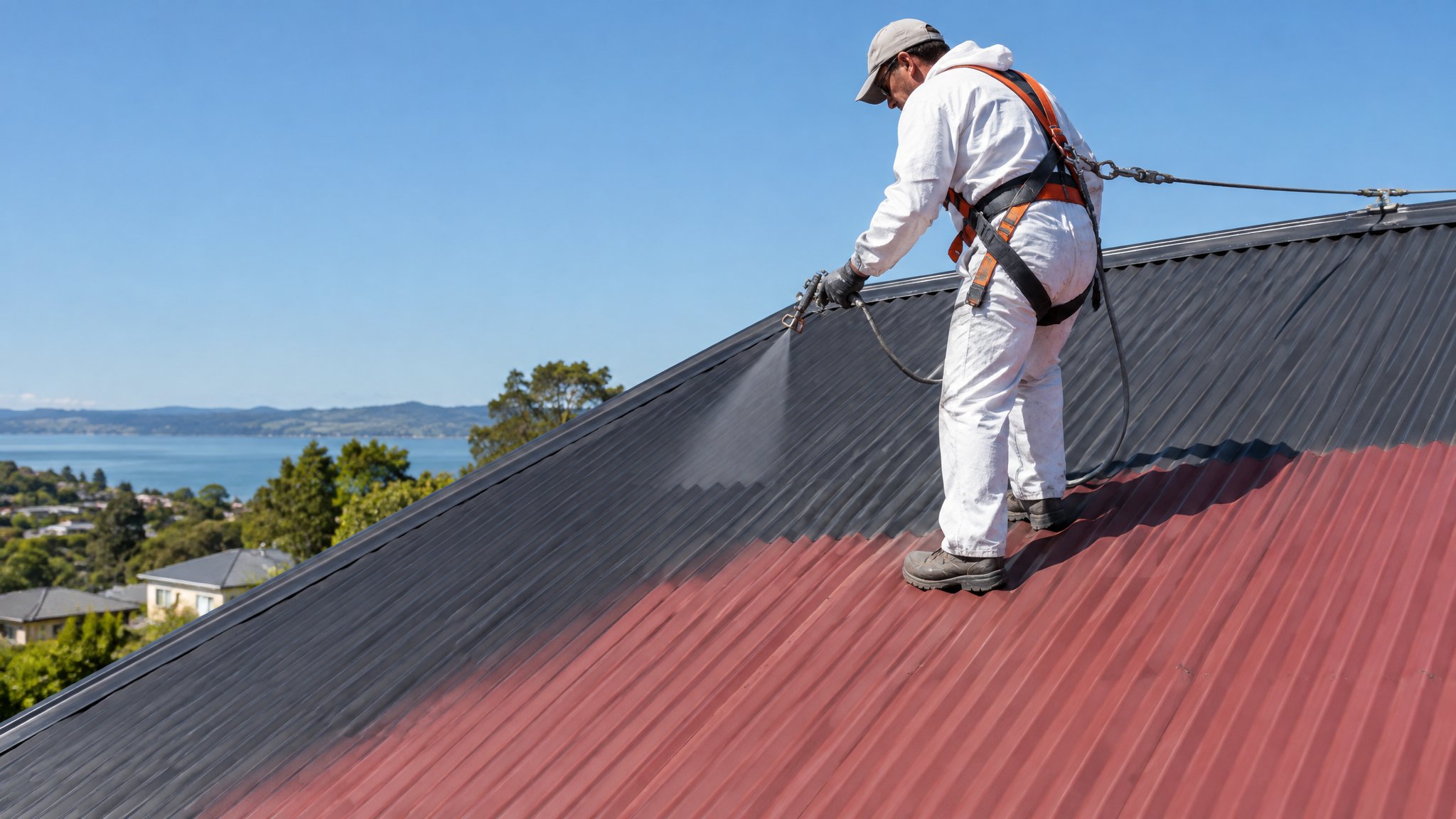
Figuring out how much roof paint to buy can feel tricky, especially when you are trying not to over-order or run short halfway through the job. The good news is that you can get a very close estimate with a few basic measurements.
The right amount depends on your roof size, the roof profile, the number of coats, and the type of paint system you are using. A simple square-metre calculation is usually enough to get started.
Start by measuring the roof area
The easiest way to estimate roof paint is to work out the total roof area in square metres. If you have a simple gable roof, you can measure the length and width of the house footprint, then allow for the pitch of the roof. A steeper roof has more surface area than the floor plan below it.
For a more accurate result, measure each roof plane separately if you can access it safely. Include any extra areas such as dormers, skillion sections, porches, and garage roofs. If the roof is complex, it is usually worth getting a professional estimate rather than guessing.
- Measure the roof dimensions in metres
- Allow extra area for steep pitch
- Include chimneys, dormers, and add-on sections
- Use the full roof surface, not just the floor plan
Use the paint coverage on the tin
Every roof paint product lists a coverage rate, usually in square metres per litre. That figure is a guide only, because rough, weathered, or highly absorbent roofs will use more paint than a smooth, well-prepared surface.
Once you know the roof area, divide it by the coverage rate to estimate litres per coat. Then multiply by the number of coats. For example, if your roof is 120 square metres and the paint covers 10 square metres per litre, you would need around 12 litres for one coat and about 24 litres for two coats.
In real life, it is wise to add a little extra for overlap, touch-ups, edge work, and waste in the roller tray or spray equipment.
- Check the label for m² per litre
- Plan for at least two coats in most cases
- Add extra for texture, waste, and touch-ups
- Different roof products have different coverage rates
Don’t forget prep and roof condition
A roof that has heavy chalking, moss, lichen, rust, or flaking old coating may need more paint than expected. Preparation products such as primers, sealers, or rust converters can also change your material list.
Metal roofs often need careful cleaning and spot treatment before topcoating. Concrete tile roofs may need sealer or a different coating system altogether. If the roof has been painted before, matching the existing condition matters as much as the size of the roof.
As a rule, if the roof is older, rougher, or in poor condition, build a little extra into your order so you are not caught short midway through the job.
When to call Steve
If you are unsure about the roof size, the coating system, or whether your roof needs primer before topcoats, it is best to speak with Steve. He is a Kiwi and a trade-qualified painter, and he can help you work out the right amount of roof paint for your house before you buy anything.
That is especially useful for larger Auckland homes, steep roofs, older villas, or roofs with tricky details. A proper assessment can save time, reduce waste, and help make sure you have enough product to finish the job properly the first time.
Frequently Asked Questions
How much extra roof paint should I allow?
A small allowance is sensible because roofs are rarely perfectly straightforward. For many jobs, allowing a bit extra for waste, touch-ups, and uneven surfaces helps avoid running short.
Do I need different paint for metal and concrete tile roofs?
Yes, often you do. Roof type, condition, and previous coatings all affect the best product to use, so check the label carefully or ask Steve, a Kiwi and a trade-qualified painter.
Can I estimate roof paint from my house floor area?
You can use the floor area as a rough starting point, but it will usually underestimate the real roof area, especially on steep or complex roofs. It is better to measure the roof surface if possible.
Need a hand with your project?
Happy to tackle some of it yourself? Great — but for anything you’d rather leave to a professional, Steve Lunjevich is a Kiwi and a trade-qualified painter with 20+ years’ experience. Call or email for honest advice or a free, no-obligation quote.