
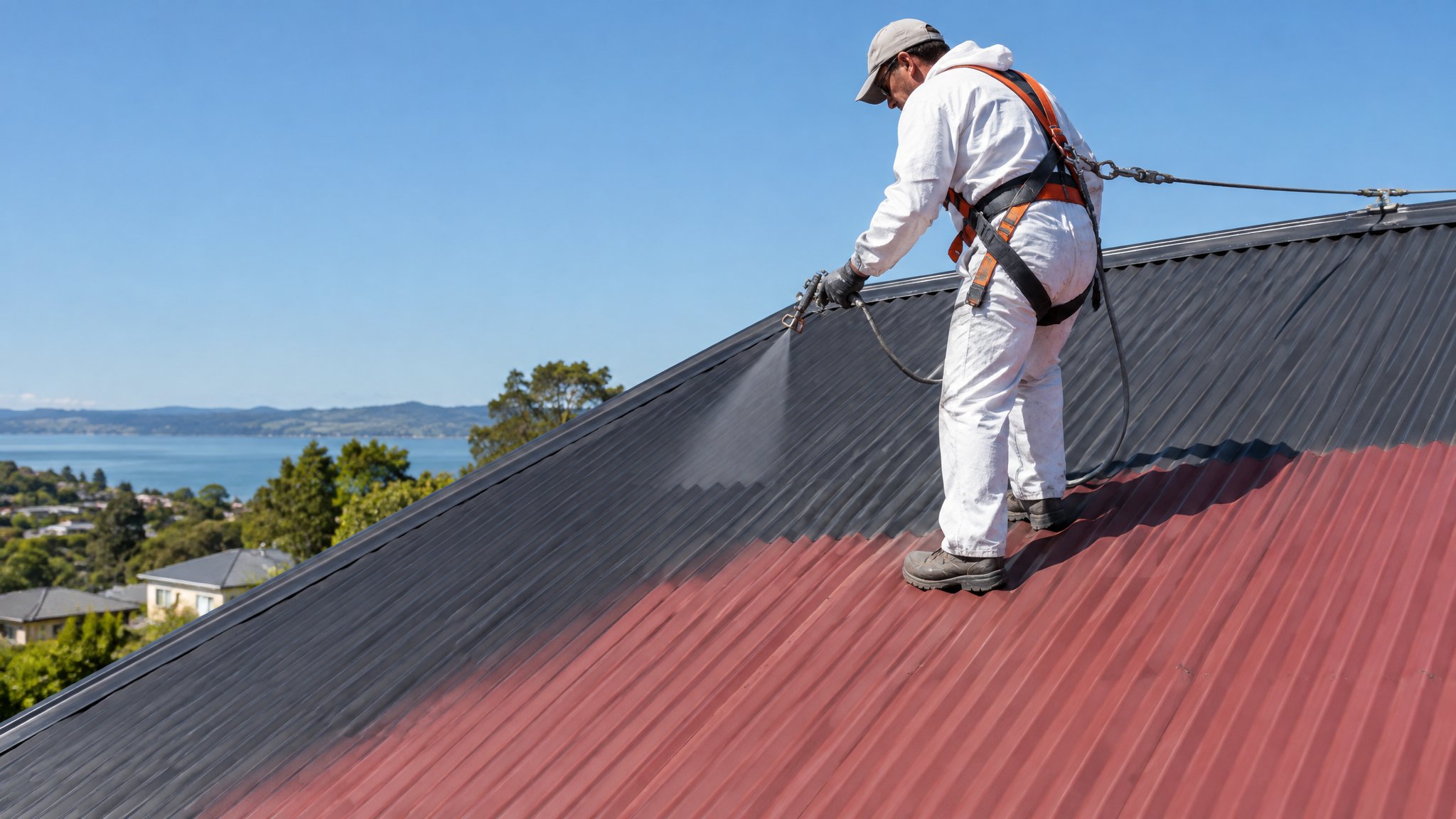
Getting roof paint mixed and thinned correctly makes a big difference to how it goes on, how it looks, and how long it lasts. Too thick, and it can drag, spray poorly, or leave lap marks. Too thin, and you risk weak coverage and a finish that won’t stand up to Auckland weather.
The right approach depends on the paint type, the roof material, and the manufacturer’s instructions. In most cases, roof paint should be mixed thoroughly first, then only thinned if the product data sheet allows it and only within the recommended limits.
Start with the manufacturer’s instructions
Before you add anything to roof paint, check the label and technical data sheet. Different products behave differently. Some roof coatings are designed to be used as supplied, while others allow a small amount of water or specific thinner for spray application or warm conditions.
A good rule is to never guess. If the tin says not to thin it, don’t. If it allows thinning, measure carefully rather than tipping in a bit by eye. Roof paint formulas are made to achieve a certain film build and protective performance, so over-thinning can reduce coverage and durability.
- Read the label and technical sheet first
- Stir or mechanically mix the paint before thinning
- Only use the thinner recommended by the manufacturer
- Avoid over-thinning, which can weaken the coating
How to mix roof paint properly
Roof paint settles during storage, especially if it has been sitting for a while. Even if it looks fine on top, pigments and binders can separate at the bottom of the tin. Use a clean paddle mixer or mechanical mixer and work from the bottom of the pail upward until the colour and texture are completely even.
If you are using multiple tins, box them together into a larger container before application. This helps keep the colour consistent across the whole roof, which is especially important on large homes in areas like Remuera, Ponsonby, Parnell, or Devonport where the roof is highly visible.
The right way to thin roof paint
If thinning is allowed, add only a small amount at a time and mix well after each addition. That gives you control over the final consistency. The goal is not to make the paint runny; it is to make it flow and apply evenly.
For water-based roof paint, some products may allow a little clean water. For solvent-based products, the correct thinner may be a proprietary solvent or reducer. Never substitute one for the other unless the manufacturer specifically says it is okay.
A practical way to judge the mix is to test it on a small area or scrap material first. The paint should brush, roll, or spray smoothly without dripping excessively or leaving heavy ridges. If it feels too thick, thin slightly. If it starts to lose hiding power, stop there.
- Add thinner in small measured amounts
- Mix thoroughly after each addition
- Use the specified thinner only
- Test a small area before full application
Common mistakes to avoid
One of the biggest mistakes is adding too much thinner to make the job seem easier. That often leads to poor coverage, patchy colour, and a coating that wears faster in harsh sun, rain, and salt air. Another common issue is not mixing enough, which leaves settled pigment at the bottom and can change the finish partway through the job.
It also pays to think about conditions. On a hot day, paint can skin over or dry too quickly, while cold or damp conditions can affect curing. The right mix matters, but so does roof preparation, clean weather, and proper application technique.
When to call Steve
If you are unsure whether your roof paint should be thinned, or how much to use, it is worth speaking with Steve. He is a Kiwi and a trade-qualified painter who can advise on the right product, mixing method, and application approach for your roof type and Auckland conditions. He can also spot issues like chalky surfaces, old coatings, or preparation problems that affect how paint performs.
For premium homes and investment properties across Auckland, getting the mix right is only one part of a long-lasting roof finish. If you want practical advice or a professional roof painting job done properly, contact Steve, a Kiwi and a trade-qualified painter.
Frequently Asked Questions
Can I add water to roof paint?
Only if the product instructions specifically allow it. Some water-based roof paints permit a small amount of clean water, but others should not be thinned at all. Always check the label first.
Should roof paint be stirred before use?
Yes. Roof paint should be thoroughly mixed before application because pigments and binders can settle in the tin. A clean paddle mixer or mechanical mixer gives the most even result.
Does thinning roof paint affect durability?
It can, if you add too much. Over-thinning may reduce coverage, film build, and long-term weather resistance. That is why it is important to follow the manufacturer’s limits.
Need a hand with your project?
Happy to tackle some of it yourself? Great — but for anything you’d rather leave to a professional, Steve Lunjevich is a Kiwi and a trade-qualified painter with 20+ years’ experience. Call or email for honest advice or a free, no-obligation quote.