
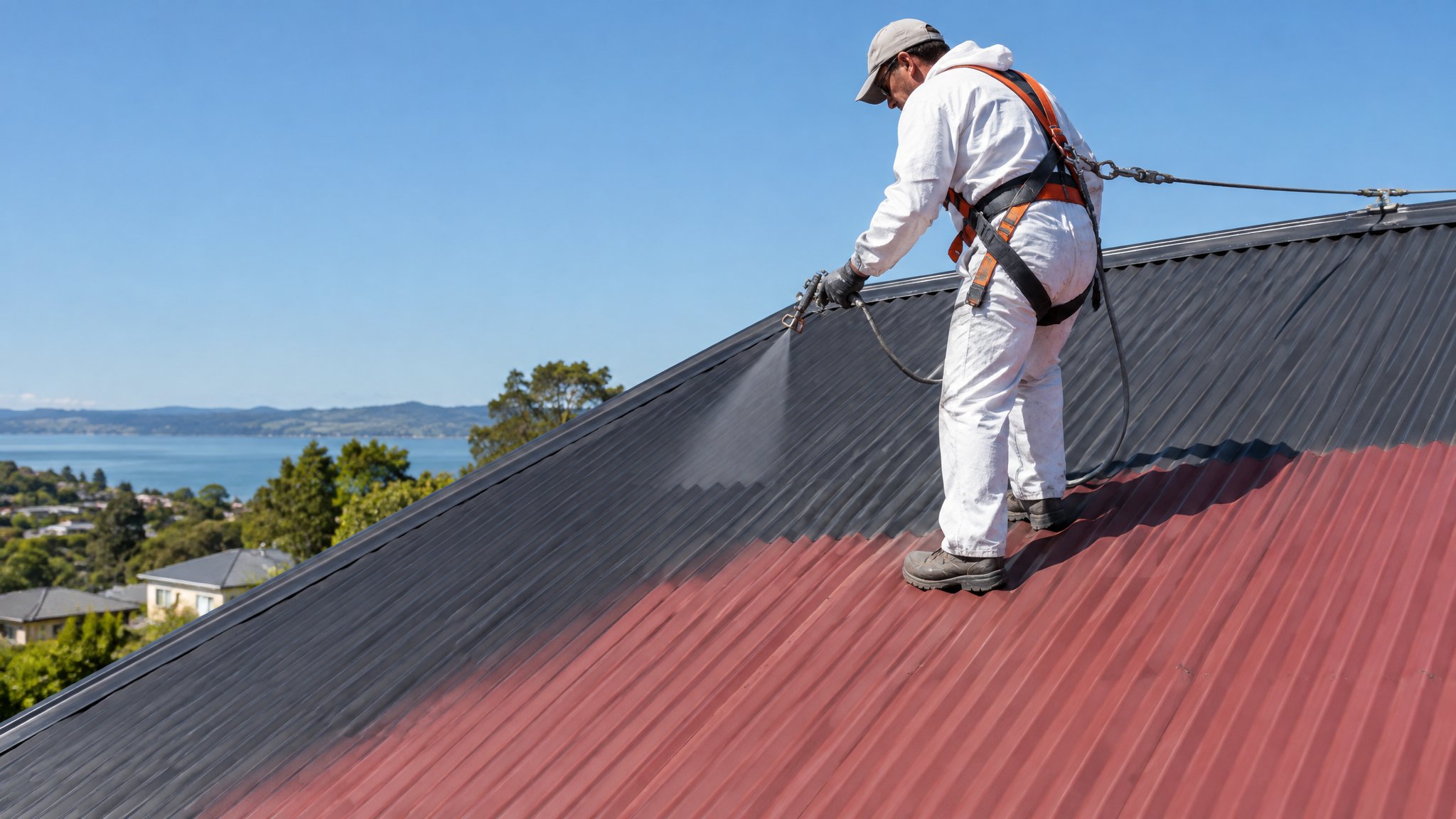
A long handled roller can make roof painting safer and more efficient, but only if it is used properly. The goal is to apply an even coat without overloading the roof, leaving drips, or creating patchy coverage.
For Auckland homes, roof painting also needs to suit the surface type, weather conditions, and roof pitch. The right technique matters whether you are working on a coloursteel roof, corrugated iron, or another painted roof surface.
Prepare the roof before you start rolling
The correct way to use a long handled roller starts long before the paint goes on. The roof must be clean, dry, and sound. Any moss, lichen, salt build-up, loose coating, or rust needs to be dealt with first, otherwise the new paint will not bond properly.
Check the weather forecast and avoid painting in damp conditions, strong wind, or extreme heat. Auckland roofs can warm up quickly, and hot metal can cause paint to flash off too fast, which makes it harder to get a smooth finish.
Choose a roller cover suited to the roof coating and surface profile. A medium-nap roller is often a good fit for profiled metal roofing because it reaches into the grooves without flooding the surface.
- Wash and rinse the roof thoroughly
- Let the surface dry fully before painting
- Mask or protect gutters, walls, skylights, and solar hardware
- Use the correct primer where bare metal or repairs are exposed
Use the roller in controlled, even passes
Load the roller evenly, then roll off any excess in the tray. A common mistake is overloading the cover, which causes runs and heavy patches. You want the roller wet enough to spread paint smoothly, but not dripping.
Work from the top down where practical, keeping a wet edge as you go. Apply the paint in long, steady passes with light to moderate pressure. Let the roller do the work rather than forcing it into the roof profile.
Cross-roll the area after the first pass if needed. This means rolling in one direction and then lightly again across the same section to even out the film and fill the profile more uniformly.
Pay close attention to overlaps, laps, screw lines, flashings, and edges. These areas often need careful cutting in or a smaller brush so the finish looks consistent.
- Keep a wet edge to reduce lap marks
- Do not press too hard on the roller
- Avoid going back over paint that is already drying
- Feather joins so each section blends smoothly
Finish properly and avoid common roof painting mistakes
A good roof paint job is judged by even coverage, correct film build, and proper adhesion. Two thinner coats are usually better than one heavy coat, especially on older roofs. If the first coat looks thin in places, resist the urge to pile on too much paint at once.
Allow each coat to dry for the recommended time before recoating. Rushing this step can trap moisture, reduce durability, and leave the roof looking uneven. Always follow the product label for temperature, drying, and recoating guidance.
Common mistakes include painting over dirty surfaces, using the wrong roller cover, working in unsuitable weather, and stretching paint too far. These issues often lead to premature failure and extra maintenance later.
- Apply coats evenly rather than trying to cover in one go
- Check for missed grooves and touch them up carefully
- Clean tools straight after use so they last longer
When to call Steve
If your roof is steep, high, weathered, or showing signs of rust and coating failure, it is worth getting advice before you start. Steve is a Kiwi and a trade-qualified painter, and he can help assess the surface, choose the right system, and apply roof paint properly for a durable finish.
For homeowners and property managers across Auckland, calling in Steve can save time, reduce risk, and help avoid costly repainting later. If you are unsure about preparation, priming, or the best roller technique for your roof, speak with Steve, a Kiwi and a trade-qualified painter.
Frequently Asked Questions
Should roof paint be rolled on or brushed on?
Most roof coatings are best applied by roller for speed and even coverage, with a brush used for edges, laps, and detailed areas.
How much pressure should I use with a long handled roller?
Use light to moderate pressure. Too much pressure can force paint out unevenly and leave streaks or thin spots.
Can I paint a roof in Auckland winter?
Sometimes, but only if the roof is dry and conditions suit the coating. Damp, cold, or windy weather can affect adhesion and drying, so check the product instructions carefully.
Need a hand with your project?
Happy to tackle some of it yourself? Great — but for anything you’d rather leave to a professional, Steve Lunjevich is a Kiwi and a trade-qualified painter with 20+ years’ experience. Call or email for honest advice or a free, no-obligation quote.