
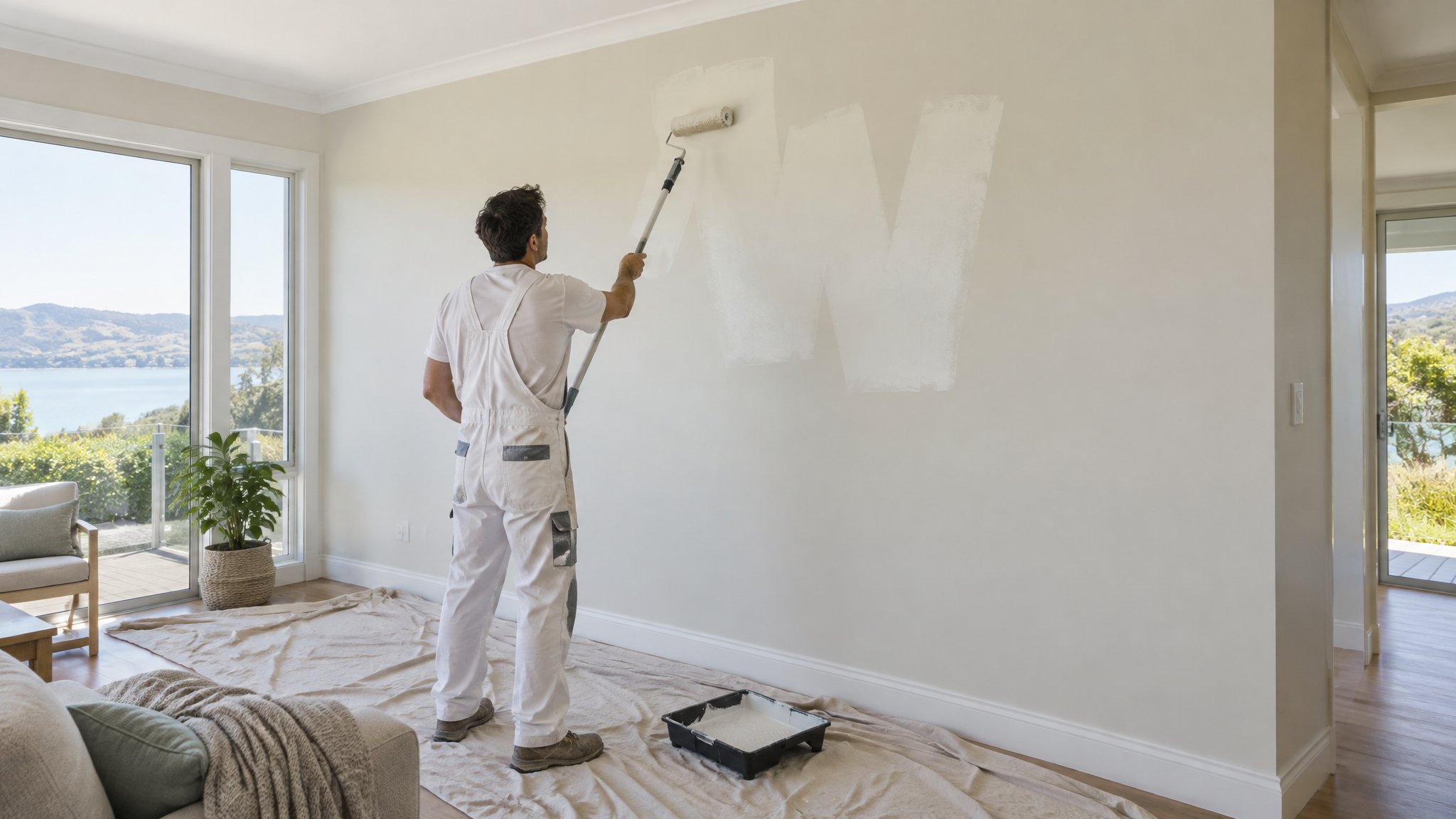
A feature wall can change the feel of a room without repainting the whole space. Done well, it adds depth, draws the eye and helps a room feel more finished.
The best way to paint a feature wall is to choose the right wall, prepare the surface properly and use a colour that works with the rest of the room. In Auckland homes, where light can change from bright and coastal to soft and shaded, those details make a big difference.
Choose the right wall and the right colour
Start by choosing a wall that naturally stands out. In most homes, that is the wall behind the bed, the main lounge wall, or the wall with the fireplace, artwork or cabinetry. A feature wall should feel intentional, not random.
Look at the room’s existing colours, flooring, curtains and furniture before you commit. A strong colour can work beautifully in Herne Bay, Remuera or Parnell homes with character features, but in a smaller room it may need to be softer so it does not overpower the space.
Test samples on the wall and view them at different times of day. Auckland light can shift quickly, so a colour that looks warm in the morning may appear cooler in the afternoon.
- Pick a wall with a natural focal point
- Check the colour in daylight and evening light
- Make sure the feature colour suits nearby finishes
- Avoid choosing a wall with lots of doors or interruptions
Prepare properly for a sharp finish
Preparation is what separates a neat feature wall from one that looks rushed. Clean the wall, fill dents and nail holes, sand any rough areas and make sure the surface is dry and sound. If the wall has stains, smoke marks or glossy paint, it may need extra prep and the right primer.
Use painter’s tape carefully around trims, ceilings and adjoining walls, but do not rely on tape alone for a crisp result. A good cutting-in technique gives a much cleaner finish, especially where the feature wall meets a lighter adjacent wall.
If the existing paint colour is dark and you are going lighter, or if you are covering a bold colour, a quality undercoat can save time and improve coverage.
- Wash and dust the wall first
- Fill and sand imperfections
- Use primer where needed
- Protect floors, skirtings and nearby furniture
Apply the paint in the right order
For most feature walls, the best approach is to cut in first, then roll the larger areas while the edges are still workable. Use good-quality brushes and rollers suited to the paint finish you have chosen. That helps avoid lap marks and gives a more even colour.
Two coats are usually needed for a rich, consistent finish, especially with deep tones such as navy, forest green, charcoal or burgundy. Roll in a consistent direction and keep a wet edge so the surface dries evenly.
If the wall is very large, feature lighting can highlight flaws, so take your time. A feature wall should look crisp from every angle, not just from across the room.
When to call Steve
If you want a feature wall that looks sharp and suits the rest of your home, it is worth getting advice from Steve, a Kiwi and a trade-qualified painter. He can help you choose the right wall, recommend colours that work with Auckland light, and make sure the prep and finish are done properly.
This is especially helpful if the wall has patching, previous water staining, glossy paint, or tricky edges around built-in cabinetry, stairwells or detailed trim. Steve can also advise on the best sheen level so the finish looks elegant, not too flat or too shiny.
For homeowners and property managers across Auckland, a well-painted feature wall is a simple way to lift a room when it is done with care. If you are unsure about colour, prep or product choice, contact Steve for practical advice or to get the job done properly.
Frequently Asked Questions
Should a feature wall always be darker than the other walls?
Not always. A feature wall can be darker, but it can also be a muted tone, textured finish or a softer contrast. The best choice depends on the room size, light and existing finishes.
Do I need primer before painting a feature wall?
Sometimes, yes. Primer is a good idea if the wall has stains, patches, repairs, a dark colour underneath, or a glossy surface. It helps the topcoat cover properly and look more even.
Can I paint a feature wall myself?
Yes, if the wall is in good condition and you are confident with prep and cutting in. For a flawless result, or if the room is difficult to work in, it is smart to contact Steve, a Kiwi and a trade-qualified painter.
Need a hand with your project?
Happy to tackle some of it yourself? Great — but for anything you’d rather leave to a professional, Steve Lunjevich is a Kiwi and a trade-qualified painter with 20+ years’ experience. Call or email for honest advice or a free, no-obligation quote.