
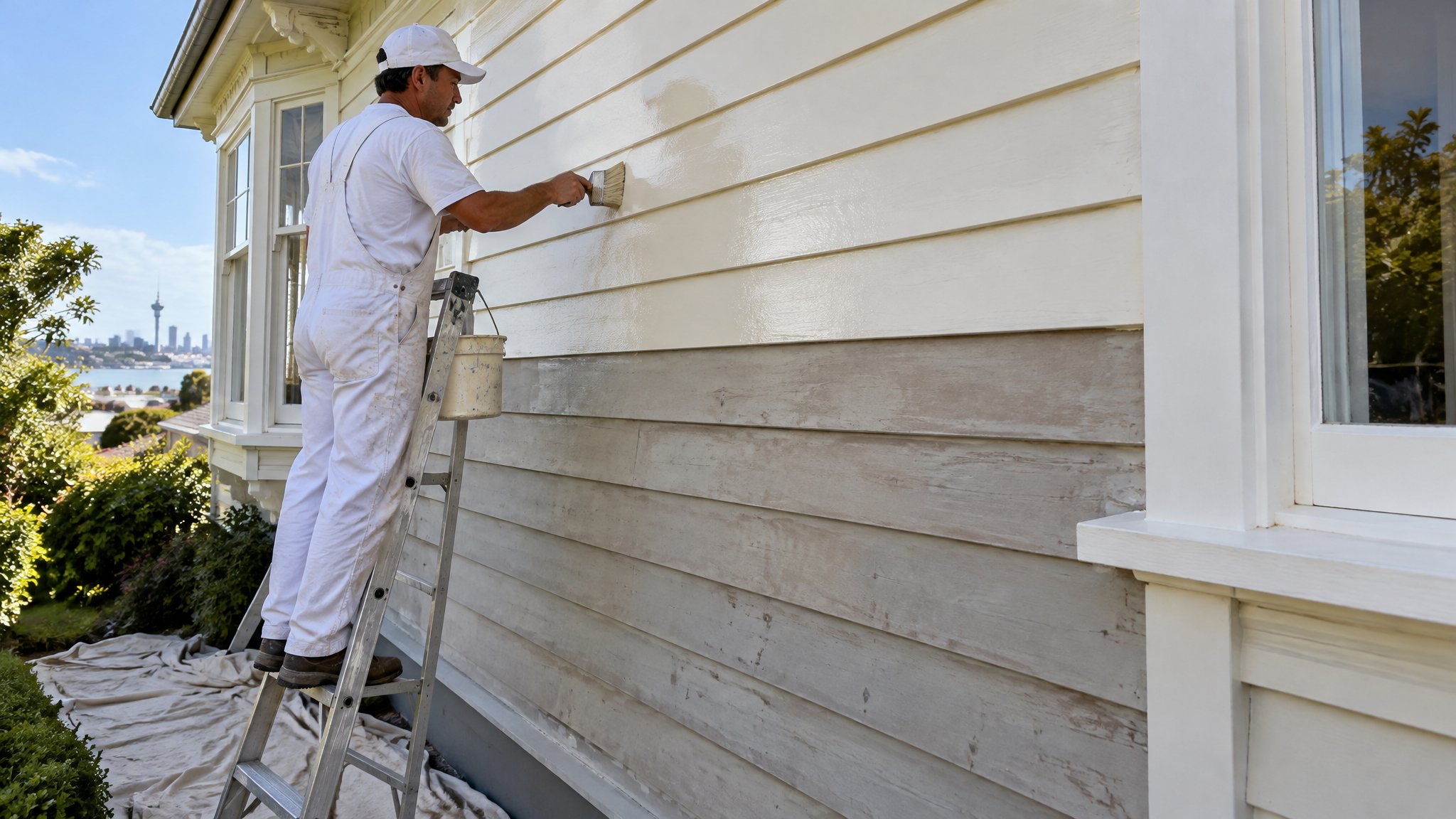
Masking windows properly is one of those small jobs that makes a big difference to the final finish. If you rush it, you can end up with paint on the glass, rough edges, and extra time spent cleaning up afterwards.
For Auckland homes, especially older villas and character houses with timber joinery, good masking also helps protect delicate edges and makes the whole painting job look sharper.
Start with a clean, dry surface
The best way to mask up windows before painting starts with preparation. Dust, grease, moisture, and old paint flakes stop masking tape from sticking properly, so take a moment to clean the frame and the edge of the glass first.
Use a damp cloth with mild detergent if needed, then dry the area thoroughly. If the weather is damp or the joinery is cold, give it extra time to dry. Tape sticks best to a clean, dry surface, and that helps prevent paint from creeping under the edge.
- Remove loose dirt and flaking paint first
- Dry the frame and glass edge fully
- Wipe away any moisture, condensation, or dust
Use the right tape and press it down properly
For most window masking, a good-quality painter’s masking tape is the safest choice. You want tape that sticks well but still removes cleanly without leaving residue or pulling at fresh paint.
Apply the tape in short lengths along the glass edge or timber bead, rather than trying to force one long strip around every corner. This gives you more control and a neater line. Once it is in place, press it down firmly with a putty knife, plastic scraper, or even a clean fingernail wrapped in a cloth.
On older windows, where the glass and frame may not be perfectly straight, it is often better to follow the frame line carefully rather than trying to make the tape sit in a perfect straight line. The goal is to protect the glass and keep the paint edge crisp.
- Choose quality low-tack or painter’s masking tape
- Work in short strips for corners and awkward sections
- Burnish the edge so paint cannot creep underneath
Trim carefully and remove tape at the right time
If you are painting timber window frames, run the tape right up to the edge of the glazing line or slightly onto the glass for full protection. A sharp utility knife can help trim tape neatly around stops, beading, or tricky corners, but take care not to score the glass.
Painting over the edge of the tape in thin coats is better than loading on heavy paint, which can bridge the tape and tear when removed. As a rule, remove masking tape while the paint is still slightly wet or just tacky, unless the paint type or weather conditions make that unsuitable.
Pull the tape back on itself at a shallow angle. This helps avoid lifting fresh paint and leaves a cleaner line.
When to call Steve
If you have difficult window details, brittle old paint, lead paint concerns, or timber that needs careful prep, it is worth getting advice before you start. Masking is often straightforward, but on premium Auckland homes the finish is only as good as the prep underneath it.
If you'd rather have it handled properly from the start, contact Steve, a Kiwi and a trade-qualified painter. He can advise on the best masking method for your windows, choose the right materials, and complete the job with a tidy, professional finish.
Frequently Asked Questions
Should I mask windows before or after priming?
Usually after the relevant prep and priming stages, once the surface is clean, dry, and ready for topcoat work. If you are unsure, Steve, a Kiwi and a trade-qualified painter, can advise on the best sequence for your window condition.
Can I use regular tape instead of painter’s tape?
Regular tape is more likely to leave residue or pull paint. Painter’s masking tape is designed for decorating work and gives a cleaner result.
How do I stop paint bleeding under the tape?
Clean the surface first, use good tape, press the edges down firmly, and avoid applying heavy coats of paint right over the tape line.
Need a hand with your project?
Happy to tackle some of it yourself? Great — but for anything you’d rather leave to a professional, Steve Lunjevich is a Kiwi and a trade-qualified painter with 20+ years’ experience. Call or email for honest advice or a free, no-obligation quote.