
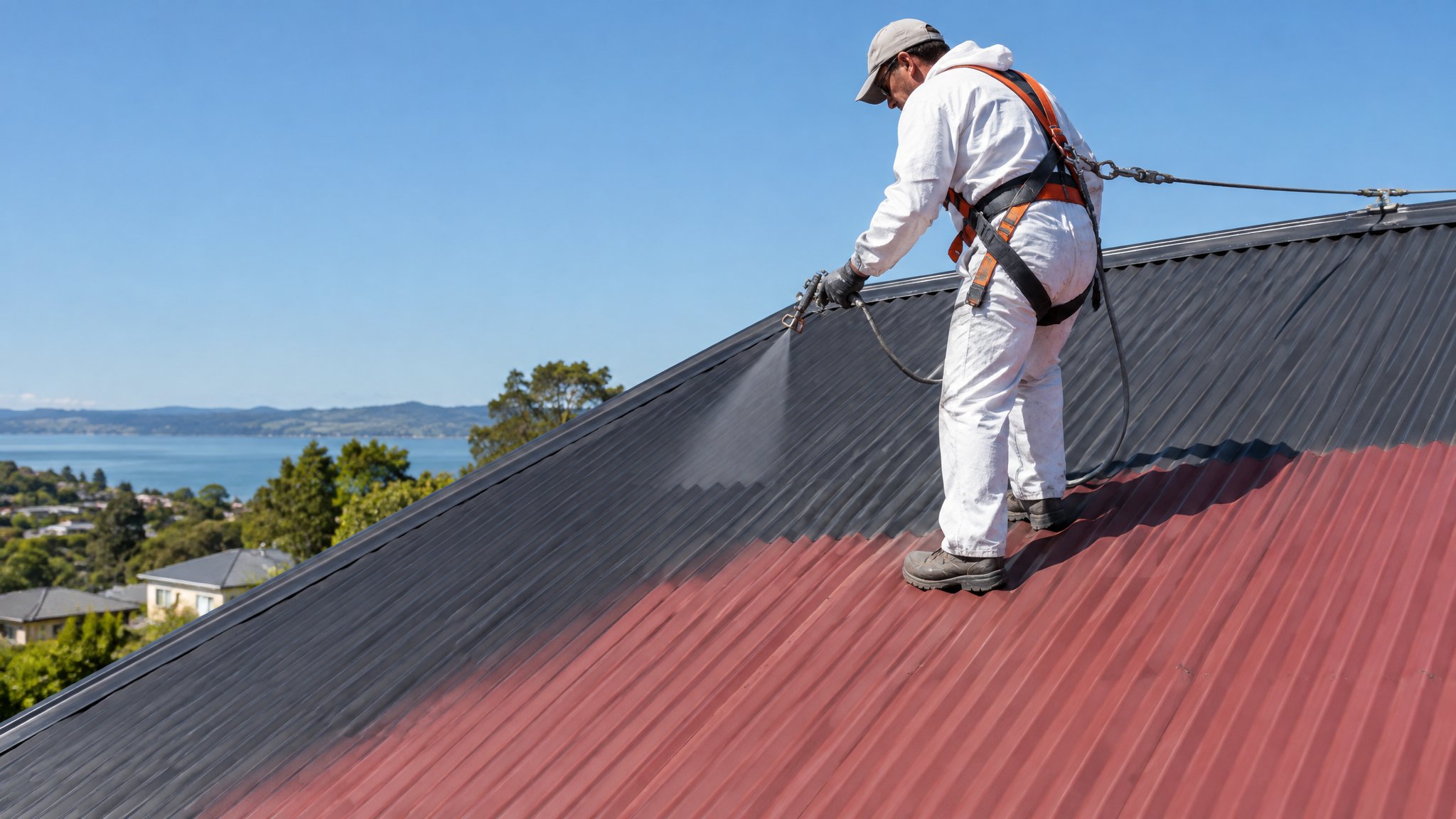
If you paint a roof when it is cold or frosty, the paint can struggle to cure properly. In Auckland, that often means more than just a slower drying time — it can affect how well the coating sticks, levels and lasts.
For homeowners and property managers, the main risk is early coating failure. A roof might look fine at first, but cold, damp conditions can quietly undermine the result.
What cold weather does to roof paint
Most roof coatings need the surface temperature, air temperature and humidity to be within a workable range. When it is too cold, the paint thickens and flows differently, which can leave brush marks, roller texture or an uneven finish.
Frost is an even bigger problem. If there is any moisture on the roof — even a light frost that has started to melt — the paint may not bond properly. That trapped moisture can later show up as bubbling, peeling, premature chalking or patchy colour.
Cold weather can also slow curing. A roof may feel dry to the touch, but underneath it may still be soft and vulnerable to dew, light rain or dust settling on the surface.
- poor adhesion to the roof surface
- slow drying and curing
- blistering or bubbling later on
- uneven gloss or texture
- reduced durability and earlier repainting
Why frost and damp roofs are especially risky
Roofs cool down quickly overnight, so on a winter morning they can stay colder than the surrounding air for quite a while. If you paint too early, the surface may still be damp from condensation or hidden frost.
This is particularly important on metal roofs, which are common across Auckland. Metal can be unforgiving if the prep or timing is wrong, because coatings need a clean, dry and stable surface to perform well.
Even on a sunny winter day, a shaded roof may stay too cold for reliable painting. South-facing slopes, valleys, parapets and areas under trees can hold moisture longer than expected.
- shaded areas dry more slowly
- valleys and overlaps can hold moisture
- overnight condensation can be invisible
- wind does not always mean the roof is dry
Signs the roof is not ready to paint
If you are unsure whether conditions are right, there are a few practical warning signs. A roof that feels cold to the touch, shows visible moisture, or still has frost in sheltered spots is not ready.
Other clues include a heavy morning dew, a dull or damp-looking surface, or weather that has been below the coating manufacturer’s recommended minimum overnight. If in doubt, wait. Rushing a roof paint job usually costs more later.
Good roof painting is as much about timing as technique. Proper washing, prep, dry time and weather monitoring all matter just as much as the coating itself.
When to call Steve
If you are planning roof painting in winter or during a run of cool Auckland weather, it is worth getting advice before you start. Steve is a Kiwi and a trade-qualified painter, and he can help judge whether the roof is actually dry enough, warm enough and ready for coating.
He can also advise on the best painting window, suitable products for the roof type, and whether your roof needs extra prep before any work begins. That is especially useful for premium homes and rental properties where you want a clean finish and long-term performance, not a quick fix.
If you would like peace of mind before painting, contact Steve. He is a Kiwi and a trade-qualified painter, and he can help you make the right call for your roof and the Auckland conditions.
Frequently Asked Questions
Can I paint my roof if there is frost on it?
No. Frost means moisture is present on the surface, and paint will not bond properly. Wait until the roof is fully dry and the temperature is suitable.
What if the roof looks dry but it is still cold?
A roof can look dry and still be too cold for proper curing. In cold weather, coatings may dry unevenly or stay soft longer than expected.
Is winter roof painting always a bad idea in Auckland?
Not always, but it needs careful timing and the right conditions. On some dry, mild days it can be done well, but frosty or damp mornings are not suitable.
Need a hand with your project?
Happy to tackle some of it yourself? Great — but for anything you’d rather leave to a professional, Steve Lunjevich is a Kiwi and a trade-qualified painter with 20+ years’ experience. Call or email for honest advice or a free, no-obligation quote.