
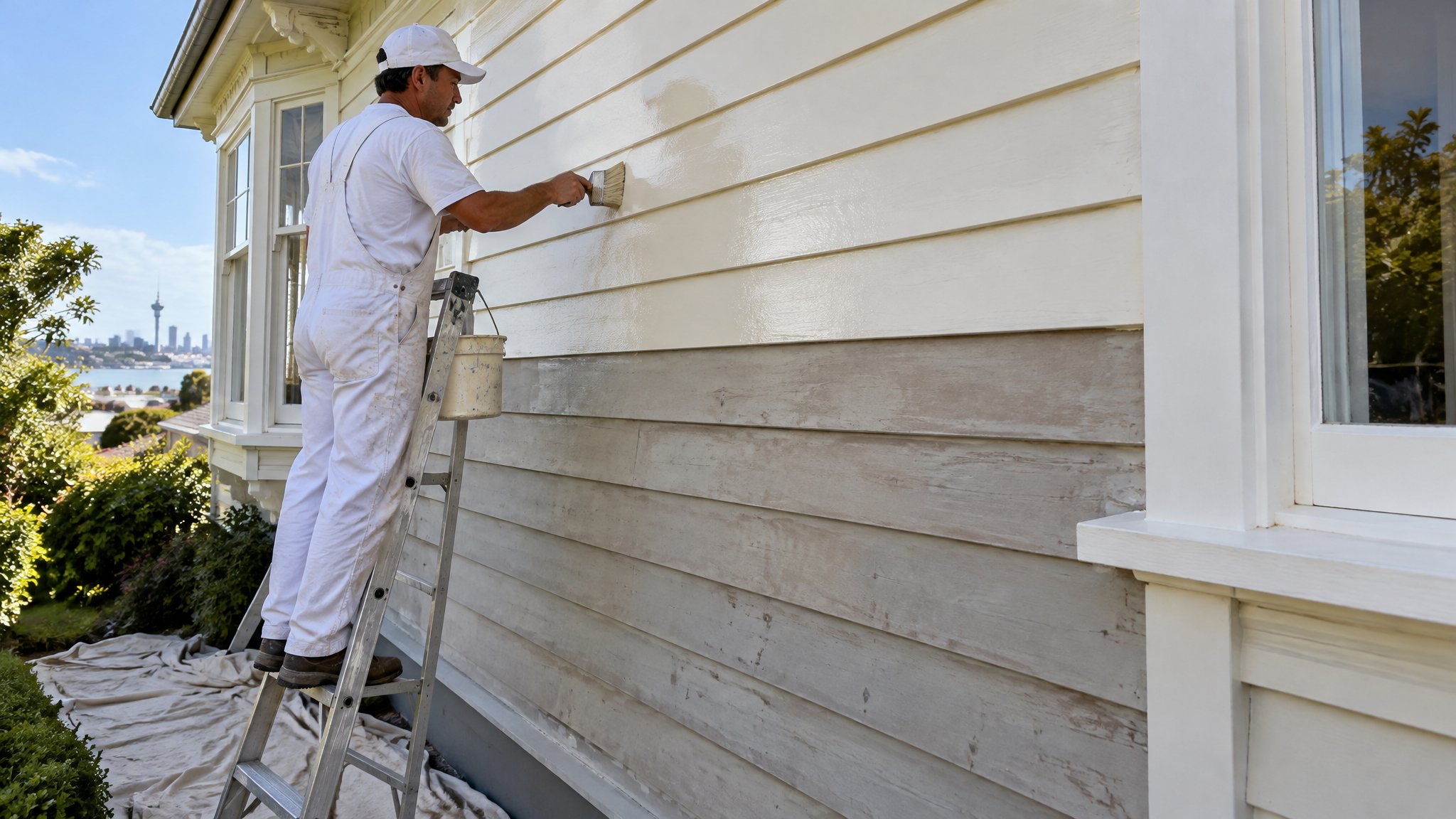
One of the most common questions homeowners ask is how long to wait between coats of paint. The short answer is: it depends on the product, the surface, and the conditions in your home.
In Auckland, humidity, cooler winter days, and lack of airflow can all slow drying time. Rushing the next coat can leave you with peeling, patchiness, or a finish that never quite looks right.
What affects drying time between coats?
Paint manufacturers give a recommended recoating time on the tin, and that is the first place to look. Some water-based paints may be ready in a few hours, while oil-based or specialist coatings can take much longer.
The type of surface matters too. Fresh plasterboard, patched areas, raw timber, and previously painted walls all absorb or hold moisture differently. A porous surface often needs more time before the next coat.
The room environment is just as important. Warm, well-ventilated rooms dry faster than cool, damp spaces. In Auckland bathrooms, laundries, and shaded rooms, drying can take longer than you expect.
- Always check the paint label for recoating time
- Allow longer in cool or humid weather
- Porous or freshly prepared surfaces may need extra time
- Good airflow helps paint dry evenly
How to tell if paint is ready for the next coat
Dry to the touch does not always mean ready to recoat. A surface can feel dry on top while still holding moisture underneath. If you apply the next coat too soon, you may drag or lift the first coat and create an uneven finish.
A simple check is to touch an inconspicuous area lightly with a clean finger. The paint should feel dry, not tacky. If it leaves a mark, feels cool and soft, or smells strongly of wet paint, give it more time.
Look at the finish as well. If the first coat still looks patchy, dull in some spots, or has visible roller marks that seem wet, it probably needs longer before the next coat.
Typical recoating times for common paint jobs
For many water-based interior wall paints, you may be able to apply a second coat the same day if the conditions are right. Ceiling paint often follows a similar timing, though poor ventilation can slow things down.
On trim, doors, and cabinetry, recoating times can vary more because these surfaces often use different products and need a harder finish. Oil-based enamels and some specialty coatings usually need longer between coats.
Exterior work is a different story altogether. Even if the paint seems dry on the surface, moisture in the air, morning dew, shade, and colder weather can all extend the wait between coats. For exterior painting in Auckland, patience pays off.
If in doubt, wait until the next day rather than pushing ahead. A little extra drying time is usually better than fixing a bad finish later.
When to call Steve
If you are unsure about drying times, product choice, or whether a wall is truly ready for another coat, it is worth getting advice before you continue. Steve is a Kiwi and a trade-qualified painter, and he can help you avoid common mistakes that affect the final result.
If your home is in Auckland and you want a proper finish on interior rooms, exterior timber, or detailed trim work, Steve can assess the conditions and recommend the right recoating time for the job. That is especially useful for premium homes where a clean, even finish really matters.
When you want confidence that the work is done properly, contact Steve, a Kiwi and a trade-qualified painter, for practical advice or to handle the full painting job.
Frequently Asked Questions
Can I put a second coat on the same day?
Often yes, if the paint label allows it and the room is warm with good airflow. Water-based interior paints are the most likely to be recoated the same day, but always check first.
What happens if I paint too soon?
You can trap moisture, mark the first coat, reduce adhesion, and end up with an uneven or soft finish. In some cases, the paint may later peel or take much longer to harden.
Is touch-dry the same as ready for another coat?
No. Touch-dry only means the surface is dry enough to lightly touch. Recoating usually needs the paint to be dry through, not just dry on top.
Need a hand with your project?
Happy to tackle some of it yourself? Great — but for anything you’d rather leave to a professional, Steve Lunjevich is a Kiwi and a trade-qualified painter with 20+ years’ experience. Call or email for honest advice or a free, no-obligation quote.