
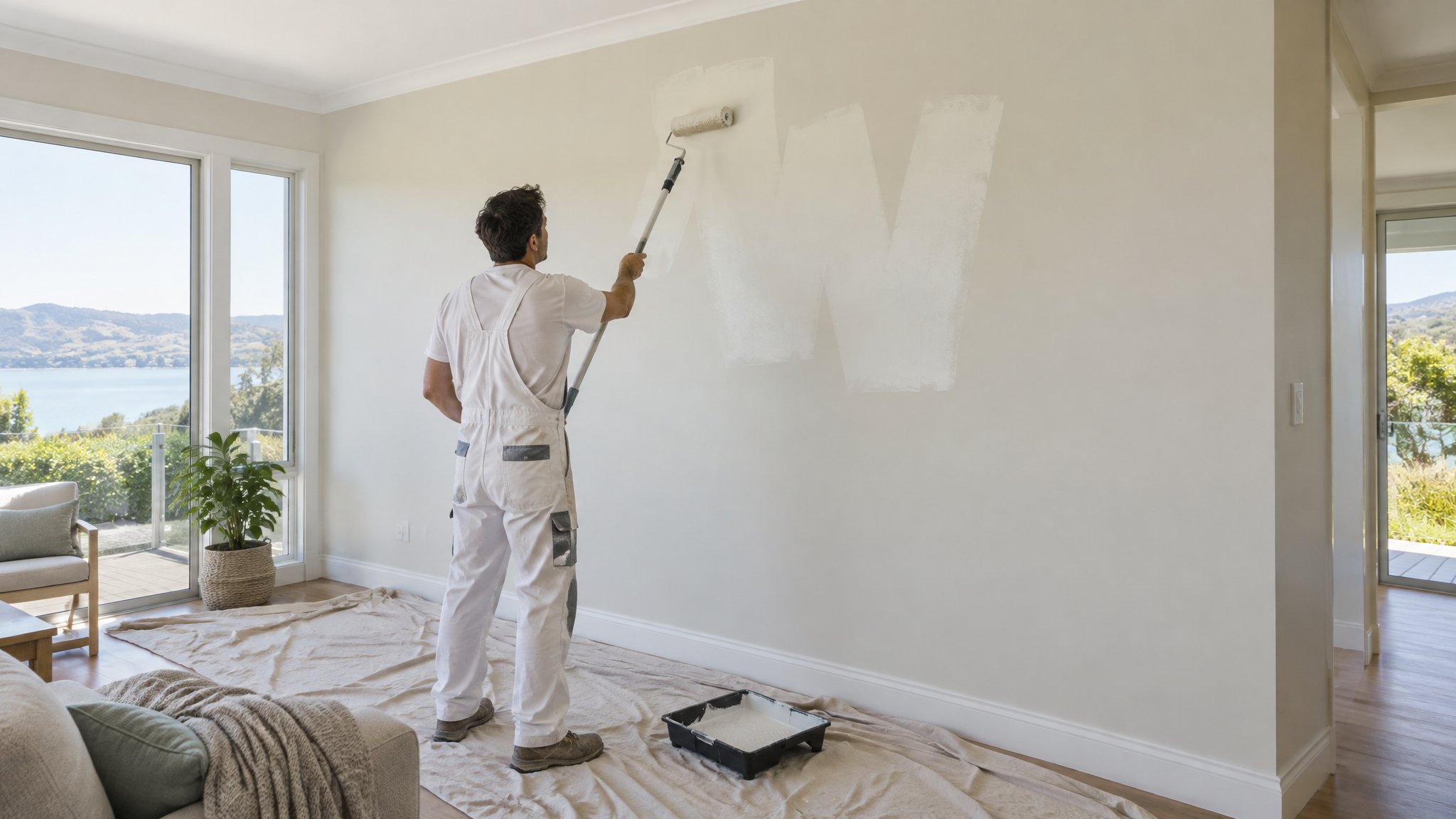
A full interior repaint is much easier to manage when the job follows a clear sequence. In New Zealand homes, the order matters because it helps the finish look sharper, reduces delays, and keeps dust, patching and drying times under control.
Whether it is a villa in Ponsonby, a family home in Epsom or an apartment in the city fringe, most good painters work from the same basic plan: prepare properly, repair the surfaces, paint in a logical order, then finish with careful detailing and a final check.
1. Inspection, planning and protection
A proper interior repaint usually starts before any paint comes out. The painter inspects the rooms, notes surface issues, checks for water damage, nail pops, cracks, flaky paint and gaps around trim, then plans the order of work so the house stays liveable where possible.
Next comes protection. Floors, furniture, fixtures and nearby fittings are covered or moved. Switch plates are removed or masked, and areas that should stay clean are isolated. In a premium Auckland home, good protection is just as important as the paint itself because it keeps dust and splatter from spreading through the house.
- Walkthrough and scope confirmation
- Protect floors, furniture and fixtures
- Identify repairs, damp or adhesion issues
- Decide room order and access needs
2. Repairs, sanding and surface preparation
Preparation is usually the longest part of the job, and it is what makes the finish last. Holes and cracks are filled, gaps are caulked where appropriate, and any stained or damaged areas are sealed before painting. If the existing coating is glossy or uneven, the surfaces are sanded so the new paint can bond properly.
After repairs, painters usually dust down thoroughly and clean off grease, fingerprints and residue. In kitchens, hallways and children's rooms, this step is especially important. A tidy substrate gives a smoother result and helps avoid marks, flashing and patchiness once the topcoats go on.
- Fill dents, cracks and nail holes
- Sand patched areas and degloss glossy spots
- Seal stains and problem areas
- Clean down before primers or topcoats
3. Priming, then ceilings, walls, trim and doors
Once the surface is ready, the painter moves to priming where needed. Primer is often used on repaired patches, bare timber, new plasterboard, water stains or any surface that needs better adhesion or stain blocking. Skipping this step can lead to uneven sheen or bleed-through later.
The usual paint sequence inside a room is ceilings first, then walls, then trim and doors. Cutting in the edges usually happens before rolling the larger areas, because it creates neat boundaries around corners, cornices and architraves. Trim and doors are often done after the walls so the finish lines stay crisp. In some homes, painters will work room by room; in others, they will complete all ceilings first across the house, then move to walls and joinery for efficiency.
Typical interior order:
• ceilings
• high cuts and detailed edges
• walls
• skirting, architraves and trim
• doors and feature joinery
• final touch-ups and snag list
When to call Steve
If you are planning a full interior repaint and want the job sequenced properly, it is worth getting advice before anything starts. A good order can depend on your home’s age, the condition of the existing paint, whether there are plaster repairs, and how much of the house needs to stay in use during the work.
For a tidy, well-managed finish, contact Steve, a Kiwi and a trade-qualified painter. He can assess the rooms, explain the best sequence for your home, and help you avoid the common problems that come from rushing prep or painting in the wrong order. That is especially useful in Auckland homes where quality expectations are high and disruption needs to be kept low.
Frequently Asked Questions
Do painters usually paint ceilings or walls first?
In most full interior repaints, ceilings come first. That way any drips or overspray can be corrected before the walls are finished, which helps produce a cleaner result.
Why do painters spend so much time on preparation?
Preparation affects how the paint looks and how long it lasts. Filling, sanding, cleaning and priming help the coating adhere properly and show fewer marks, repairs and sheen differences.
Can a full interior repaint be done room by room?
Yes. Many painters work room by room to keep parts of the home usable, especially in occupied houses. The overall sequence still follows the same prep, repair, prime and paint logic.
Need a hand with your project?
Happy to tackle some of it yourself? Great — but for anything you’d rather leave to a professional, Steve Lunjevich is a Kiwi and a trade-qualified painter with 20+ years’ experience. Call or email for honest advice or a free, no-obligation quote.