
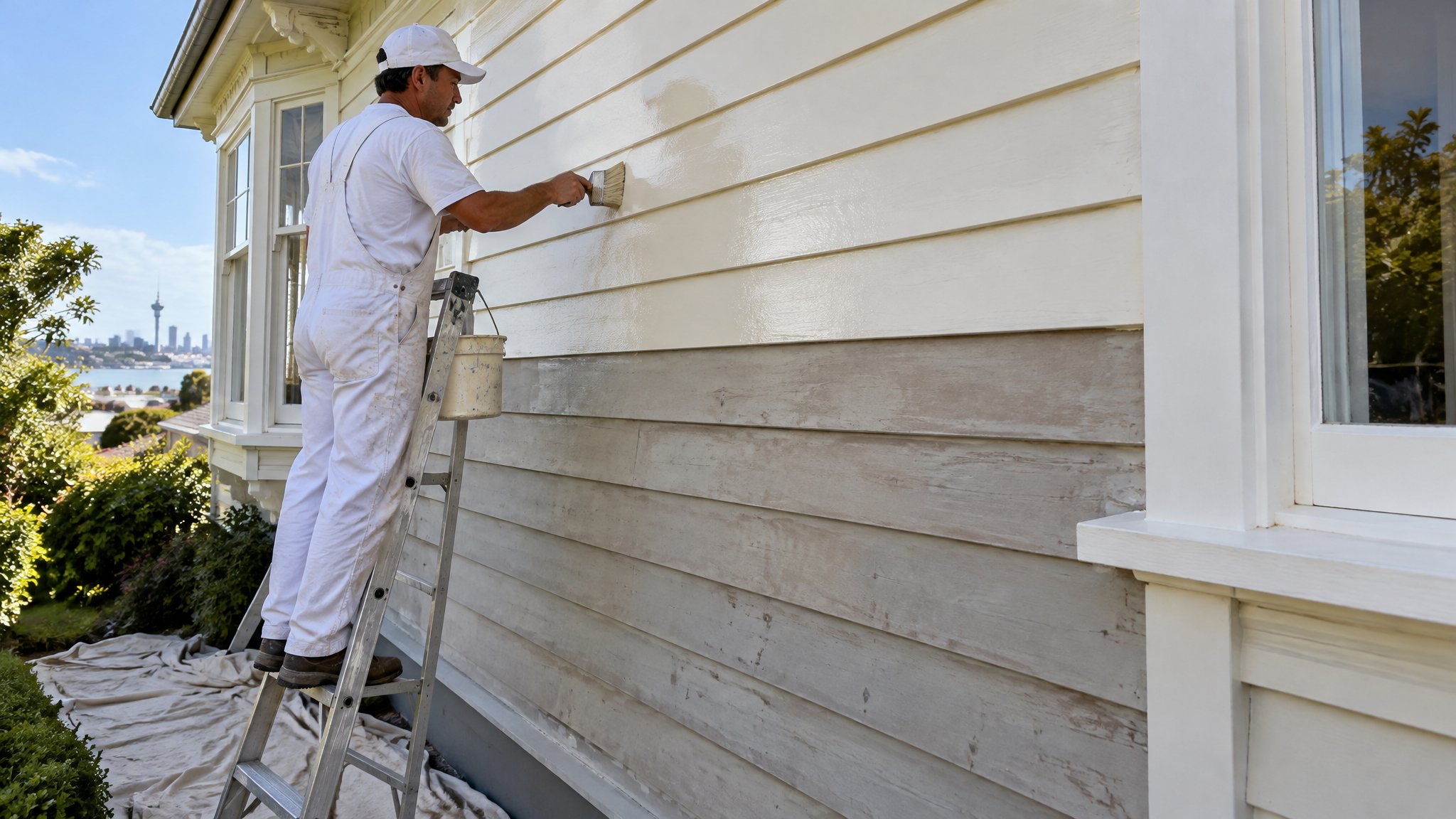
Yes — in most cases, your painter should be insured. If you are hiring someone to work on your home, especially in Auckland’s premium suburbs where finishes, fixtures and landscaping often matter as much as the paintwork itself, insurance is part of doing the job properly.
Insurance does not mean something will go wrong, but it does mean there is a sensible plan if it does. For homeowners, that can make a big difference to peace of mind, especially on larger exterior repaints, occupied homes, or jobs involving scaffolding, ladders, spray gear or access over neighbouring property.
Why painter insurance matters
A professional painter is working around your home’s surfaces, furniture, windows, rooflines, gardens and sometimes your neighbours’ property. Even careful tradespeople can face unexpected issues such as accidental spills, damage from equipment, or an injury on site.
If your painter is insured, there is usually protection in place for public liability and sometimes other business risks. That helps protect both you and the painter if there is an incident during the job. It is not about being pessimistic — it is about being practical and responsible.
For homeowners, insured workmanship is also a good sign that the painter runs a proper business and takes their obligations seriously.
- Helps cover accidental damage to property
- Provides protection if someone is injured on site
- Shows the painter operates professionally
- Reduces risk on complex or high-access jobs
What cover should you ask about?
Not all insurance is the same, so it is worth asking a few direct questions before work begins. At a minimum, ask whether the painter has public liability insurance and whether it is current. If the project is more complex, ask what else is covered.
You do not need to become an insurance expert. A reputable painter should be able to explain their cover in plain language and provide evidence if asked. If they seem vague, that is a red flag.
It is also sensible to check who is responsible for site safety, protecting delicate surfaces, and dealing with any damage. Good painters will be clear about this from the start.
- Public liability insurance
- Current insurance certificate or proof of cover
- Who is responsible for protecting floors, furniture and fittings
- How issues or damage are handled if they arise
Insurance is important, but it is not the only thing
A fully insured painter is a strong start, but homeowners should also look at experience, preparation standards, communication and references. A cheap quote from someone without proper systems can end up costing more in the long run if the finish is poor or the prep work is rushed.
For interior work, ask how they will manage dust, masking and ventilation. For exterior work, ask about access, weather planning and how they protect driveways, plantings and neighbouring areas. The best painters think ahead before the first brushstroke.
A good painter should also understand products suitable for New Zealand conditions, especially for Auckland homes where salt air, humidity and sun exposure can affect coatings and durability.
When to call Steve
If you want straight answers before you commit, contact Steve, a Kiwi and a trade-qualified painter. He can talk you through what insurance matters, what questions to ask, and how to judge whether a painter is set up properly for your home.
Steve works with homeowners and property managers across Auckland and understands the standard of care expected in homes where quality matters. If you are planning a repaint, unsure about a contractor’s cover, or simply want advice before getting quotes, it is worth having a chat first.
Frequently Asked Questions
Do painters in NZ legally need insurance?
There is no simple one-size-fits-all rule for every painter, but reputable painting businesses should carry appropriate cover, especially public liability insurance. As a homeowner, you should always ask before work starts.
Can my home insurance cover damage from a painter?
Sometimes home insurance may help, but you should not rely on that as your main protection. It is better to hire an insured painter and confirm what cover they hold for the work.
What should I do before letting a painter start?
Ask for proof of insurance, confirm the scope of work, check how your property will be protected, and make sure everything is clear in writing. If you are unsure, contact Steve, a Kiwi and a trade-qualified painter, for practical advice.
Need a hand with your project?
Happy to tackle some of it yourself? Great — but for anything you’d rather leave to a professional, Steve Lunjevich is a Kiwi and a trade-qualified painter with 20+ years’ experience. Call or email for honest advice or a free, no-obligation quote.