
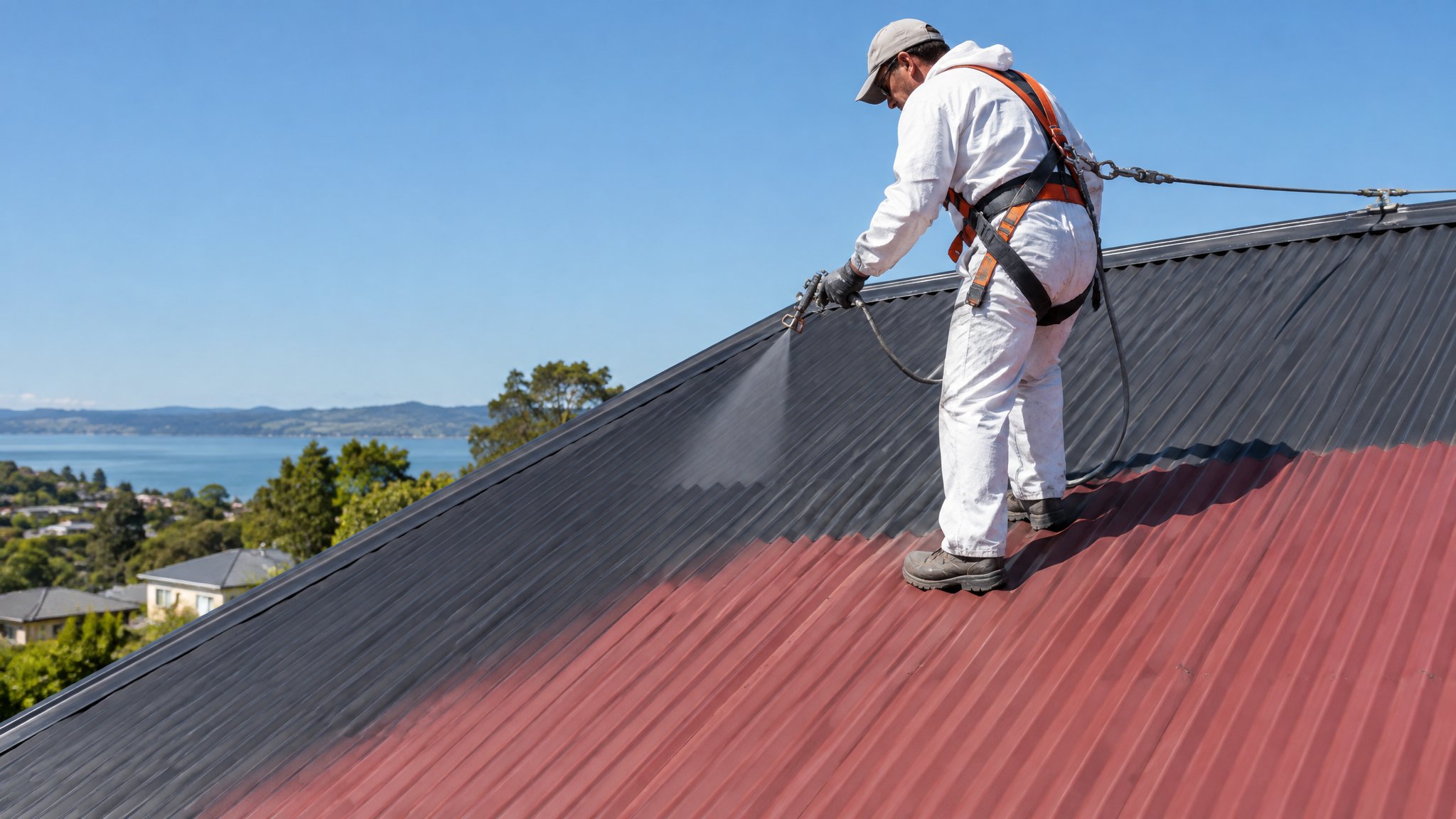
Before any roof repainting job, the surface needs to be sound, clean and ready to hold the new coating. If you paint over a roof that is damp, dusty, chalky or failing, the finish may peel, bubble or wear out far sooner than it should.
For Auckland homes, that check is especially important because coastal air, moisture and strong UV can all affect how a roof takes paint. Here is a practical way to test whether your roof is ready for new paint.
1. Check for moisture, leaks and trapped damp
The first test is simple: make sure the roof is dry all the way through, not just dry on the surface. A roof that has had recent rain, morning dew or hidden leaks can look fine at a glance but still hold moisture under laps, around fasteners or in damaged sections.
Look for rust stains, soft spots, mould, moss, water marks in the ceiling space and any areas that stay damp longer than the rest of the roof. If you can, allow a proper dry spell before painting. Roofs should not be coated if moisture is still present, because the paint can lose adhesion and fail early.
- Inspect after rain and again on a dry day
- Check under laps, around fixings and near gutters
- Look for signs of leaks inside the roof space
- Do not paint if the surface still feels cool and damp in sheltered areas
2. Test whether the existing coating is sound
A roof may be clean and dry but still not ready if the old coating is unstable. Run your hand over a small area. If it leaves heavy chalk on your palm, the surface may be oxidised and needs more preparation before repainting.
You can also do a simple tape test. Press a piece of strong masking tape onto a small, clean patch of coating, rub it down firmly, then pull it off sharply. If paint lifts away easily, the old coating is not sound enough for a new finish without further preparation.
Flaking, blistering, widespread cracking or powdery residue are all signs that the roof needs more than a quick wash. In those cases, the roof may need scraping, sanding, priming or spot treatment before it can accept new paint properly.
3. Make sure the surface is clean and ready to bond
A roof will not take paint properly if it still has dirt, salt, mould, moss, lichen, oil or dust on it. After cleaning, the surface should feel free of loose residue. If your hand comes away dirty, it still needs more prep.
Pay close attention to common trouble spots such as valleys, laps, flashing edges, gutters and areas under trees. Even a thin film of grime can stop the new coating from bonding well.
Before painting, the roof should also be checked for rust, loose fasteners and damaged flashing. Paint is not a fix for structural issues. Those problems need to be sorted first so the coating can perform as intended.
- No loose dirt or chalk when you rub the surface
- No active mould, moss or lichen
- No grease, smoke residue or salt buildup
- Repairs completed before coating begins
When to call Steve
If you are unsure about any of these checks, it is worth getting proper advice before you start. Roofs can look ready when they are not, and the wrong call can lead to peeling paint, water ingress or a finish that fails much sooner than expected.
Contact Steve, a Kiwi and a trade-qualified painter, if your roof has old coatings, rust, leaks, chalking or patchy prep. He can assess whether the surface is genuinely ready for paint, advise on the right preparation, and help set the roof up for a durable result.
Frequently Asked Questions
Can I paint a roof straight after washing it?
Only if it is fully dry and the existing surface is sound. In Auckland conditions, roofs can hold moisture longer than expected, so it is best to check sheltered areas as well as open ones before painting.
How do I know if old roof paint will stick to new paint?
If the old coating is chalking, flaking or lifting in a tape test, it may not provide a reliable base. The surface may need further preparation, priming or even full repaint prep before new paint goes on.
What is the biggest mistake people make before painting a roof?
Painting over dirt, moisture or failing old coating. Those issues are the main reasons roof paint does not last. A careful inspection and prep stage is what gives the new coating its best chance to perform.
Need a hand with your project?
Happy to tackle some of it yourself? Great — but for anything you’d rather leave to a professional, Steve Lunjevich is a Kiwi and a trade-qualified painter with 20+ years’ experience. Call or email for honest advice or a free, no-obligation quote.