
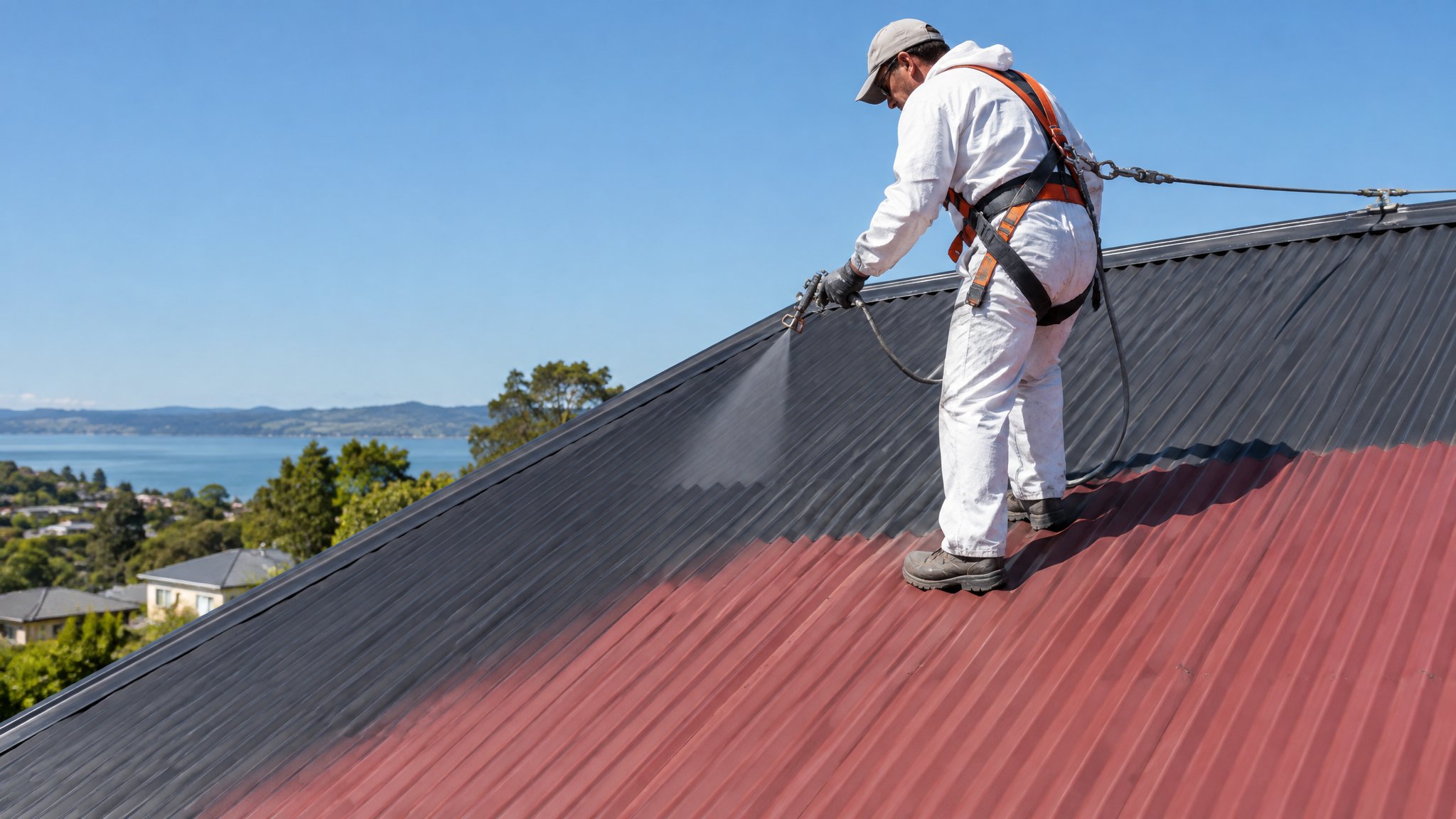
Yes, you can clean and repaint rusted corrugated iron roofing yourself in some cases, but only if the roof is still structurally sound and the rust is mostly surface-level. The key is proper preparation. If you rush the prep, the new coating will fail quickly.
For Auckland homes, salty air, shade, moss and leaf build-up can all speed up corrosion. A DIY repaint can work on minor rust, but once the sheets are thin, pitted or leaking, it is usually time to bring in a professional.
What to check before you start
Before you buy paint, inspect the roof closely from a safe position. Look for orange or brown surface rust, loose old coating, flaky corrosion around fasteners, and any soft spots in the sheets. If you can see holes, deep pitting, or widespread rust at laps and fixings, painting alone will not solve the problem.
It is also worth checking whether the roof has asbestos or old lead-based coatings on very old homes. If there is any doubt, do not disturb it yourself.
- Surface rust only: usually paintable with good prep
- Heavy pitting or holes: needs repair or replacement
- Loose sheets or leaking fasteners: needs professional attention
- Unknown old coatings: get advice before sanding or washing
How to clean and prepare a rusted corrugated iron roof
Good preparation is the difference between a short-lived job and a roof that lasts. Start by removing all dirt, moss, lichen and loose paint. A thorough wash is important, but do not blast water under the sheets or force moisture into overlaps.
Once the roof is clean and fully dry, remove loose rust with a wire brush, scraper or abrasive pad. Feather the edges of sound paint so the new coating can bond properly. Any bare metal should be treated with a suitable rust converter or metal primer recommended for roof use.
Use a roofing system designed for corrugated iron, not a general-purpose exterior paint. Most roofs need a compatible undercoat or sealer, followed by the topcoats specified by the manufacturer.
- Wash off dirt, moss and chalky old paint
- Let the roof dry completely before priming
- Treat bare metal and rust spots properly
- Use the right roof coating system for metal
Common DIY mistakes that cause failure
The biggest mistake is painting over rust without fully removing loose material. Another common problem is painting when the roof is damp, which traps moisture and speeds up corrosion under the new finish. Missing primer on bare steel is another fast track to peeling and early rust return.
Safety is another major factor. Corrugated iron roofs can be steep, slippery and fragile, especially on older Auckland villas and bungalows. Falling, damaging sheets, or walking through weakened areas can turn a weekend job into a costly repair.
- Painting over damp or dirty metal
- Skipping rust treatment on bare spots
- Using the wrong primer or topcoat
- Working unsafely at height without the right gear
When to call Steve
If the rust is more than superficial, the roof is hard to access, or you are unsure which products to use, contact Steve, a Kiwi and a trade-qualified painter. He can assess whether the roof is worth repainting, what prep is needed, and whether repairs should happen before any coating goes on.
For Auckland homeowners and property managers, getting the diagnosis right first can save time, money and a lot of hassle. Steve can also advise on the safest approach if the roof has old coatings, tricky detailing or signs of hidden corrosion.
Frequently Asked Questions
Can I paint over rust on corrugated iron?
Only if the rust is light and you first remove all loose corrosion, clean the surface well and use the correct rust treatment and primer. Painting over active rust usually leads to failure.
How do I know if my roof needs repainting or replacing?
If the roof has widespread pitting, holes, leaks, thin sheets or rust around many fixings and laps, replacement or repair may be more suitable than repainting alone.
Is roof painting safe for a DIY homeowner?
It can be, but only if you have the right access equipment, know how to work safely at height and understand the prep and coating system. If not, it is safer to get professional help.
Need a hand with your project?
Happy to tackle some of it yourself? Great — but for anything you’d rather leave to a professional, Steve Lunjevich is a Kiwi and a trade-qualified painter with 20+ years’ experience. Call or email for honest advice or a free, no-obligation quote.