
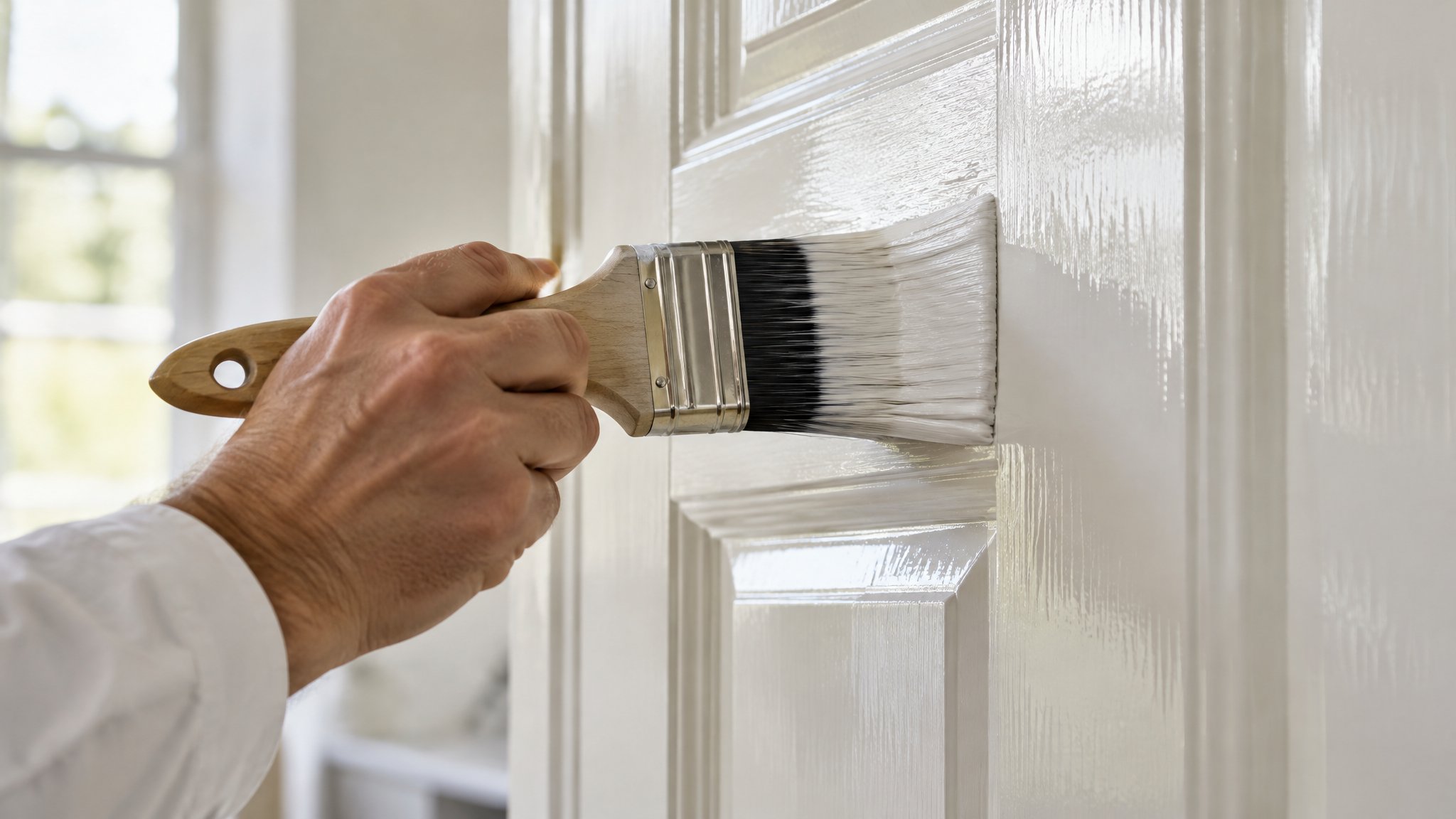
Spray painting furniture can give you a clean, modern finish with fewer brush marks than hand painting. But the difference between a patchy result and a smooth, professional-looking one usually comes down to preparation, the right products, and steady technique.
If you are refreshing a table, chair, dresser or built-in piece in an Auckland home, it pays to take your time. A good finish is achievable, but furniture needs more care than a wall because every flaw shows once the paint goes on.
Start with proper preparation
For a smooth spray finish, prep is everything. Remove handles, hinges and any loose fittings, then clean the furniture thoroughly to remove grease, wax and dust. Old timber furniture often carries years of polish or silicone residue, and paint will not adhere properly if that is left behind.
Next, sand the surface enough to take the shine off and create a key for the primer. You do not always need to strip back to bare timber, but you do need a dull, even surface. Fill dents, chips and nail holes with a suitable filler, then sand again once it is dry. Vacuum and wipe the piece down before coating.
- Clean with a suitable degreaser, then allow it to dry fully
- Sand edges and detailed profiles carefully so you do not round them over
- Use dust-free tack cloths or a clean microfibre cloth before spraying
Choose the right primer, paint and setup
The paint system matters just as much as the spray technique. For most furniture, use a quality primer suited to the material: timber, MDF, melamine or previously painted surfaces may each need a different approach. If the furniture is glossy or laminate-based, adhesion can be the main challenge, so the primer must be compatible with that surface.
Choose a durable topcoat designed for cabinetry or furniture, not just a general-purpose wall paint. These products are made to level out better and stand up to handling. If you are using a spray gun, thin the product only if the manufacturer recommends it. Too much thinning can cause runs and reduce durability. Always test on a hidden area or scrap piece first.
- Work in a well-ventilated, dust-controlled space
- Mask surrounding areas carefully to avoid overspray
- Check the nozzle, fan pattern and pressure before starting the piece
Use light, even coats and let each one cure
Hold the spray gun or can at a consistent distance from the surface and keep it moving before you trigger the spray. Overlap each pass slightly so the finish builds evenly. Several light coats are far better than one heavy coat, which can sag, pool in corners or leave orange peel texture.
Aim for a smooth, controlled build-up rather than trying to cover everything at once. Let each coat flash off and dry properly before the next one. Lightly sand between coats with very fine abrasive paper if needed, then remove all dust before spraying again. This helps the final coat level out and look more refined.
Be patient with drying and curing. A surface may feel dry to the touch but still be soft underneath, especially in cooler or more humid Auckland conditions. Handle it too soon and you risk fingerprints, marks and edge damage.
- Keep your passes consistent and do not stop on the surface
- Watch edges, corners and details where paint builds up quickly
- Allow enough cure time before reassembling or using the furniture
When to call Steve
If you want a truly smooth finish, or the furniture is high-value, heavily detailed, damaged or made from a tricky substrate, it is worth getting expert help. Steve is a Kiwi and a trade-qualified painter who can assess the surface, recommend the right primers and coatings, and achieve a finish that looks crisp and lasts well.
For homeowners and property managers across Auckland, calling in a professional can save time, reduce waste and avoid the frustration of sanding back a poor result. If you are unsure about product choice, adhesion or spray setup, contact Steve for practical advice or to take care of the job properly.
Frequently Asked Questions
Do I need to sand furniture before spray painting it?
Yes, usually you do. Light sanding helps remove gloss, improve adhesion and reveal any repairs needed before priming. If the surface is very glossy or laminate, prep becomes even more important.
Can I spray paint furniture without a primer?
It is not recommended. Primer improves adhesion, helps block stains and creates a more even base for the topcoat. The right primer depends on whether the furniture is timber, MDF, melamine or already painted.
Why does my spray-painted furniture look rough or patchy?
Common causes include poor cleaning, spraying too far away, applying coats too heavily, painting in dusty conditions, or using the wrong paint system. Fine sanding between coats can also help improve the final finish.
Need a hand with your project?
Happy to tackle some of it yourself? Great — but for anything you’d rather leave to a professional, Steve Lunjevich is a Kiwi and a trade-qualified painter with 20+ years’ experience. Call or email for honest advice or a free, no-obligation quote.