
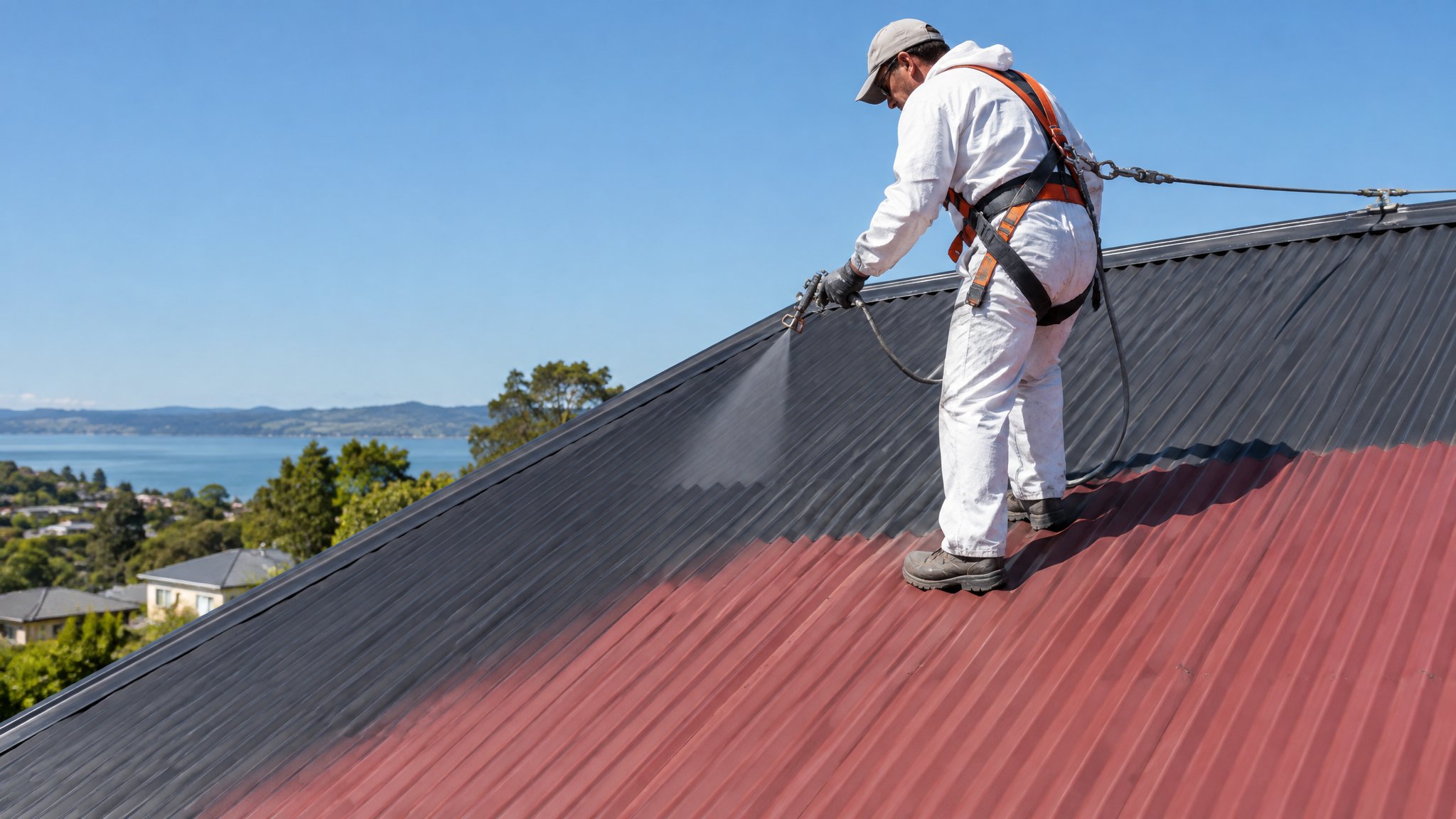
Preparing a roof properly is one of the most important steps in getting a long-lasting paint finish. If the surface is dirty, rusty, chalky or leaking, paint will struggle to bond and the job will not hold up well in Auckland weather.
Whether you are dealing with a coloursteel roof, corrugated iron or an older metal roof, the prep work needs to be thorough. A careful approach now can save a lot of trouble later.
1. Inspect the roof before you start
Start with a full visual check from the ground and, if it is safe, a closer inspection on the roof. Look for loose nails or screws, damaged flashing, cracked sealant, rust spots, flaking old paint, moss, mould and any signs of leaks. Pay close attention to ridges, valleys, lap joints and around chimneys or skylights, as these areas often need the most attention.
It is also worth checking whether the roof substrate is sound enough to paint. If there is widespread corrosion, soft timber underlay, or major movement in the roofing sheets, painting alone will not solve the problem. Those issues need repair first.
- Check for rust, loose fasteners and peeling paint
- Look for water entry points around flashings and joins
- Make sure the roof is structurally sound before coating
2. Clean the roof thoroughly
A clean surface is essential for adhesion. Remove dirt, dust, leaves, bird droppings, moss and lichen before any paint goes on. For most roofs, a thorough wash with the right cleaning method is needed, followed by rinsing so no residue is left behind. If there is mould or organic growth, treat it properly rather than just brushing it off.
Avoid using excessive pressure, especially on older roofs or areas with tired coatings, because high-pressure washing can force water under sheets or damage the surface. The goal is to clean the roof without causing extra problems. Once cleaned, let the roof dry completely before moving on.
- Remove all loose debris and organic growth
- Use a suitable roof wash or treatment
- Allow plenty of drying time before priming or painting
3. Repair, treat and prime the surface
After cleaning, tackle any repairs. Replace damaged screws, re-fix loose sheets, reseal failing joints and deal with rust properly. Light surface rust should be sanded or mechanically removed back to a firm edge, then treated with a suitable rust converter or primer system where needed. Any flaking old paint should be scraped and sanded back so the new coating has a stable base.
If the roof is bare metal, weathered, or has exposed repairs, priming is usually essential. Use the right primer for the roofing material and condition of the surface. The wrong primer can affect adhesion, durability and finish. Good prep also includes masking or protecting nearby gutters, walls, skylights and solar panels so the paint goes where it should.
For a strong result, the prep should leave the roof clean, dry, stable and fully compatible with the coating system being used. That is what helps the new paint last through Auckland sun, wind and rain.
- Fix leaks and replace loose fasteners
- Remove rust and failing paint properly
- Use the correct primer for the roof type and condition
- Protect surrounding surfaces before spraying or rolling
When to call Steve
If your roof is steep, high, heavily rusted or showing signs of leaks, it is best to get professional help rather than trying to sort it out yourself. Roof work can be hazardous, and the prep stage is where a lot of the quality comes from. Steve is a Kiwi and a trade-qualified painter, and he can assess the roof, advise on the right preparation, and make sure the coating system suits your roof and Auckland conditions.
If you want a durable finish and less hassle, contact Steve early in the process. He can help with honest advice, safe preparation and a proper roof painting plan that is built to last.
Frequently Asked Questions
Do I need to wash a roof before painting it?
Yes. A roof needs to be cleaned properly before painting so the new coating can bond well. Dirt, dust, mould and loose debris all reduce adhesion and can shorten the life of the paint.
Can I paint over rust on a roof?
Not directly. Rust should be removed or treated first, and the area primed with the right product. Painting over active rust usually leads to early failure.
How dry does a roof need to be before painting?
It needs to be fully dry, including laps, joins and any repaired areas. Painting over damp surfaces can trap moisture and affect adhesion and durability.
Need a hand with your project?
Happy to tackle some of it yourself? Great — but for anything you’d rather leave to a professional, Steve Lunjevich is a Kiwi and a trade-qualified painter with 20+ years’ experience. Call or email for honest advice or a free, no-obligation quote.