
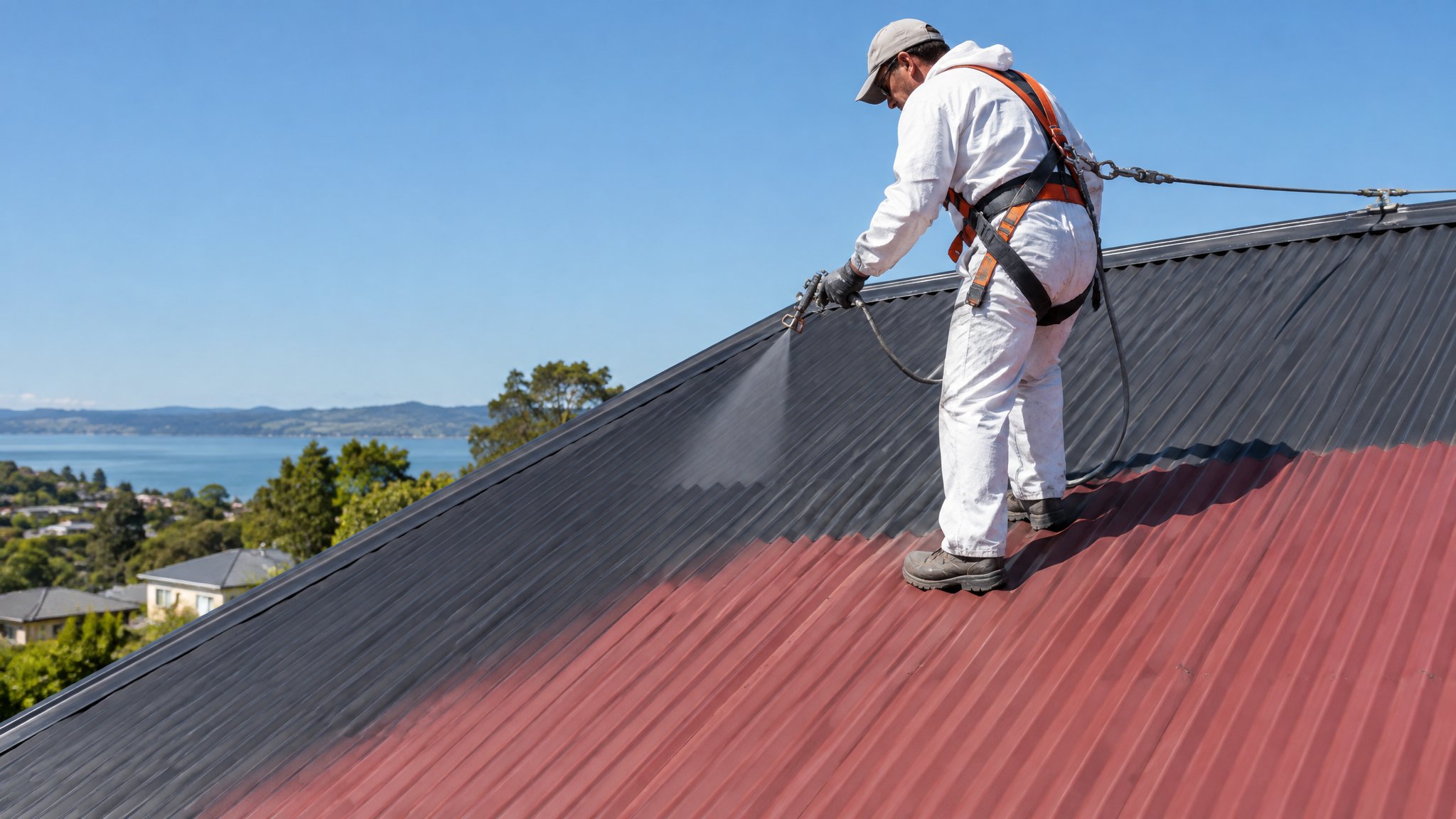
Painting a roof yourself can be a satisfying job, but vents, pipes and flashings are where it gets tricky. These small details can make the difference between a tidy result and a roof that looks rushed.
If you take your time with prep, masking and brush control, you can achieve a neat finish around most roof protrusions. The key is to work safely, keep your edges clean, and avoid forcing paint into gaps where it does not belong.
Start with safety and proper prep
Before you touch a brush, make sure the roof is safe to work on. Use stable access equipment, wear non-slip footwear, and avoid painting in wet, windy or very hot conditions. Auckland roofs can heat up quickly, which can make paint dry too fast and leave brush marks.
Clean the area around each vent or pipe first. Remove dirt, moss, loose old coating and any chalky residue. If there is rust on nearby metal, treat it properly before painting. A clean edge always gives you a cleaner finish.
- Wash and dry the area first
- Scrape off loose paint and debris
- Check seals, rust and cracked old mastic
- Have a small brush, rags and masking tape ready before you begin
Mask carefully, then cut in slowly
For neat lines, masking tape can help around round pipes, collars and irregular flashings. Press the tape down firmly so paint does not creep underneath. On older roofs, be careful not to lift weak coating when removing tape later.
Use a smaller brush rather than a roller around tight areas. A 50 mm or similar angled sash brush gives you better control. Load only a small amount of paint and work from the outside edge towards the fitting, rather than flooding the area with paint.
- Use short brush strokes for control
- Keep paint thin around sealant and joins
- Remove tape before the paint fully hardens
- If the roof profile is rough, work the paint into the texture gently instead of scrubbing it in
Watch the details around flashings and pipe boots
Roof vents and pipes often sit beside flashings, rubber boots or sealant joints. These areas need care because paint can crack or peel later if it is applied too heavily. Try not to paint over moving joints or degraded sealant unless it has been repaired first.
If the vent or pipe has rusted fixings, flaking coatings or damaged flashing, the right repair should happen before painting. On metal roofs, use the correct primer and topcoat system for the roof type, whether that is Colorsteel, iron, tile or another substrate.
- Do not bridge active joints with thick paint
- Use the correct primer for bare metal or repaired spots
- Keep the finish even, but do not overwork the area
- Let each coat dry properly before handling the masking or edge work again
When to call Steve
If the vents are awkwardly placed, the roof is steep, or the existing coating is failing, it is worth getting advice before you start. A neat roof finish takes patience, the right materials and a steady hand, especially around penetrations where leaks can become a problem if details are missed.
For a cleaner, longer-lasting result, contact Steve, a Kiwi and a trade-qualified painter. He can assess the roof, advise on the right products and handle the tricky parts so the finish looks sharp and performs well.
Frequently Asked Questions
Can I paint over roof vents and pipes directly?
You can paint around them, but avoid coating sealant joints, flexible boots or damaged areas until they are repaired. Use the correct primer if there is bare metal or rust.
What brush is best for painting around roof pipes?
A small angled sash brush is usually best because it gives better control around curved and tight areas. Keep the brush lightly loaded to avoid drips.
Should I use masking tape on roof vents?
Yes, masking tape can help with neat edges, especially around round pipes and awkward fittings. Remove it before the paint fully hardens so it does not pull the coating.
Need a hand with your project?
Happy to tackle some of it yourself? Great — but for anything you’d rather leave to a professional, Steve Lunjevich is a Kiwi and a trade-qualified painter with 20+ years’ experience. Call or email for honest advice or a free, no-obligation quote.