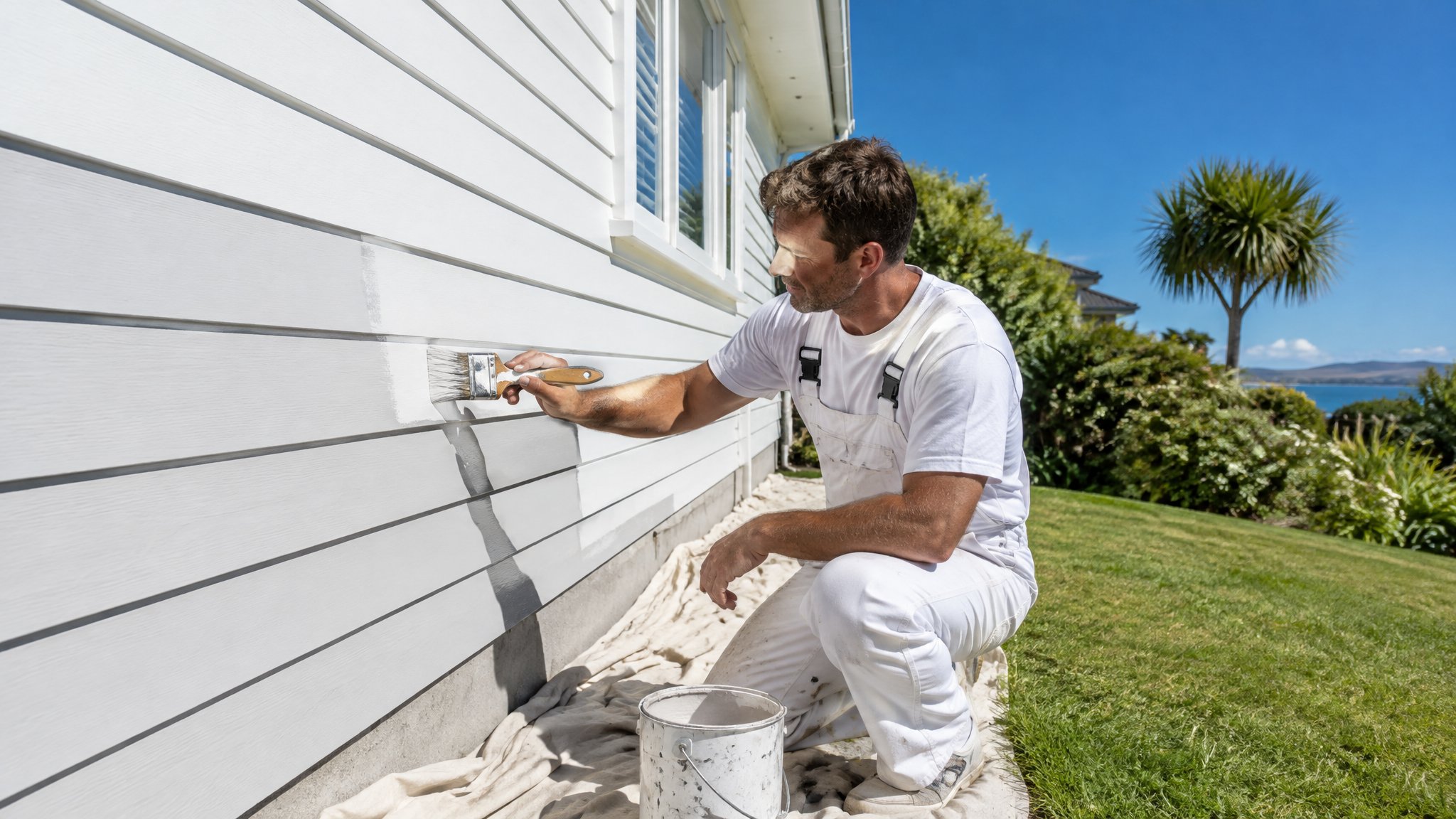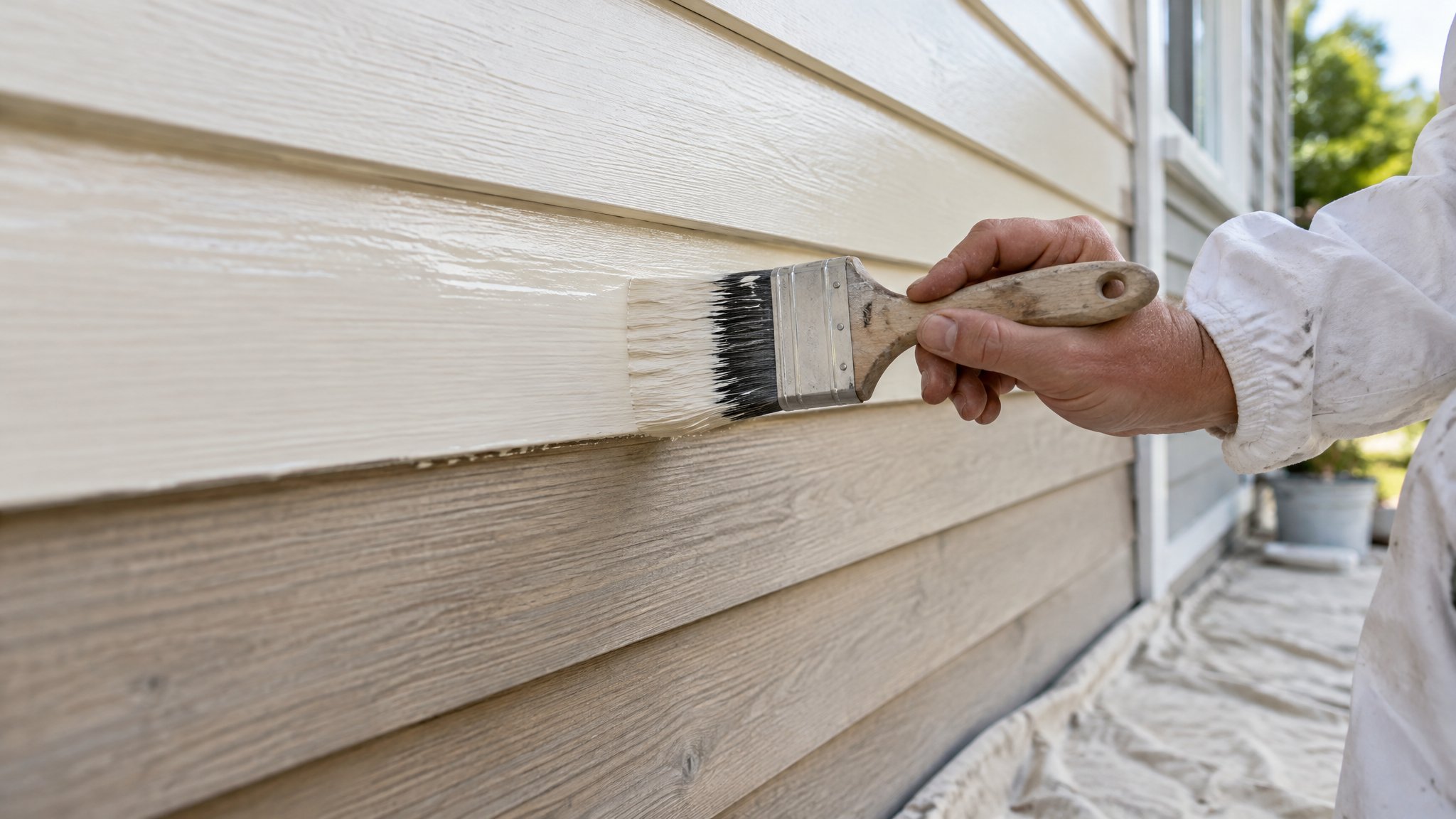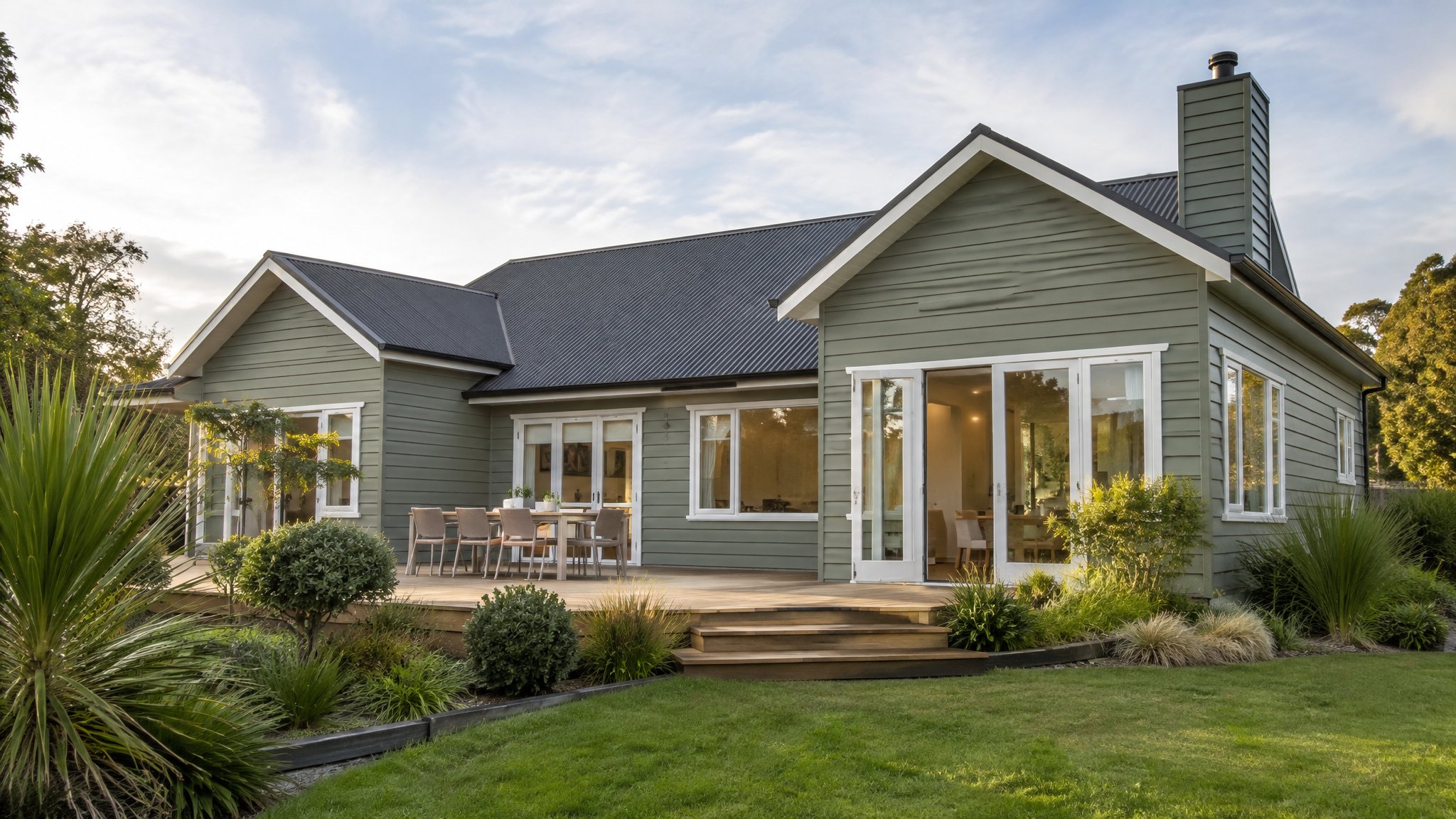
Painting a textured or pebbledash exterior wall is more about preparation and technique than speed. The rough profile can hold dirt, chalky paint, moss and hairline cracks, so a quick coat over the top usually won’t last.
With the right cleaning, repairs and coating system, you can refresh the look of an older home and protect the wall from Auckland’s damp, salty weather. Here’s how to do it properly.
Start with a thorough inspection and clean
Before you pick up a brush, inspect the wall closely for flaking paint, mould, moss, loose pebbles, cracks and any signs of water ingress. Textured surfaces often hide problems that need attention first.
Wash the wall with a low-pressure water blast or soft wash solution suited to exterior painting prep. Avoid high pressure on pebbledash or old render, as it can blow out weak spots and cause more damage. Let the surface dry fully before moving on.
- Scrape back all loose or blistered paint
- Treat mould or lichen with a suitable cleaner
- Seal cracks and minor holes with an exterior filler or repair compound
- Check around windows, joins and downpipes for leaks
Use the right primer and paint system
Textured walls need a coating system that bonds well and can move with the surface. If the existing paint is chalky, porous or patchy, a quality masonry sealer or bonding primer may be needed before topcoating.
Choose a premium exterior paint designed for masonry, render or roughcast surfaces. These paints are usually thicker and more durable, which helps them bridge texture and resist Auckland rain and UV exposure.
- Prime bare patches and repaired areas first
- Use products compatible with the existing coating
- Select a low-sheen or matt finish to help hide texture variation
- Follow the manufacturer’s drying times carefully
Apply paint evenly on rough surfaces
A pebbledash wall is usually best painted with a long-nap roller, sometimes combined with a brush for edges and tight spots. The nap needs to be long enough to get into the recesses without leaving thin patches.
Work in manageable sections and keep a wet edge to avoid lap marks. Two coats are often needed for even colour and full coverage, especially on darker or very porous surfaces. If spraying, back-rolling is usually essential so the paint is worked into the texture properly.
- Use extension poles to maintain even pressure
- Avoid overloading the roller and causing runs
- Cut in edges before rolling the main wall
- Paint on a dry, mild day with no rain forecast
When to call Steve
If your wall is heavily weathered, shedding grit, or showing signs of cracking and moisture damage, it’s worth getting expert advice before painting. Pebbledash and other textured exteriors can look straightforward, but the wrong prep or product choice can lead to peeling, patchiness or early failure.
Steve is a Kiwi and a trade-qualified painter, and he can assess the wall, recommend the right repair and coating system, and complete the job to a high standard. If you want a clean, durable finish on your Auckland exterior, contact Steve for advice or a quote.
Frequently Asked Questions
Can I paint pebbledash without plastering it smooth first?
Yes. Pebbledash and textured walls can be painted as they are, provided the surface is sound, clean and properly prepared. You do not need to plaster it smooth unless you want a completely different finish.
What kind of roller is best for textured exterior walls?
A long-nap roller is usually best because it reaches into the peaks and valleys of the texture. For very rough pebbledash, a thicker nap often gives better coverage and a more even finish.
Do I need primer on an old textured wall?
Often, yes. If the wall is porous, chalky, patched or showing bare masonry, a suitable primer or sealer helps the topcoat bond properly and improves durability.
Need a hand with your project?
Happy to tackle some of it yourself? Great — but for anything you’d rather leave to a professional, Steve Lunjevich is a Kiwi and a trade-qualified painter with 20+ years’ experience. Call or email for honest advice or a free, no-obligation quote.