
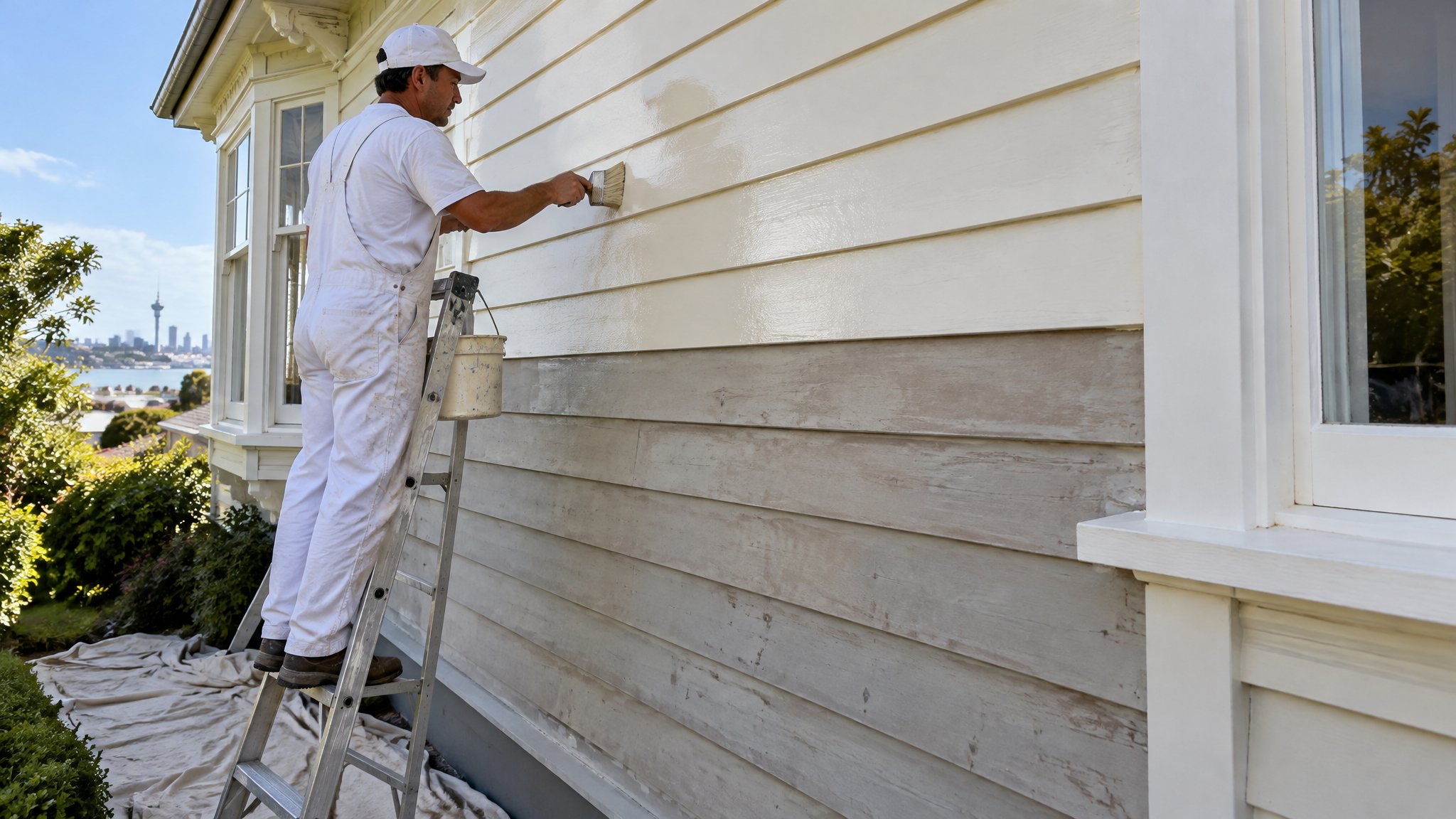
Painting behind built-in shelving or wardrobes can be awkward, but it is worth doing properly if you want a clean, finished look. In many Auckland homes, these fixed units sit tight against the wall, so getting paint on the surface behind them can mean a bit of planning and the right tools.
The best approach depends on whether the shelving is fixed in place, whether it can be moved, and how much of the wall is actually visible. A careful prep job now can save a lot of frustration later, especially if you are dealing with older plaster, gaps, or settled timber.
Start by working out what you can actually reach
Before you pick up a brush, look closely at the unit and the wall behind it. Some built-in shelves have a small gap at the back or sides, while others are fitted so tightly that you can only reach a narrow strip. If the shelving is painted the same colour as the wall, you may only need to refresh the visible edges rather than the whole hidden area.
If the unit is not permanently fixed, remove loose shelves, take out drawers, and see whether the carcass can be carefully shifted a little. Even a few centimetres of extra access can make cutting in and rolling much easier.
- Check for gaps at the top, sides, and back of the unit
- Remove anything loose that reduces access
- Decide whether the hidden wall really needs a full coat or just touch-ups
Use the right method for the space you have
For narrow gaps, a small angled brush, mini roller, or even a paint pad can help you reach areas where a standard brush will not fit. If you can get a hand and arm behind the shelving, work in thin coats and avoid overloading the brush, as drips are harder to fix in tight spaces.
If the shelving is fixed and the wall behind it is fully hidden, you may choose not to paint every part of it. In that case, concentrate on any visible lip or edge so there is no raw substrate showing where the unit meets the wall. If the room is being repainted in full, it is often better to pull the unit out where possible, or paint before the shelving goes in during a renovation.
- Use a narrow angled brush for cut-ins
- Try a mini roller on a short frame for small accessible areas
- Apply thin coats to reduce drips and patchiness
Prep matters more than people think
Behind built-ins, dust and old cobwebs build up quickly, so clean the area first with a vacuum attachment or a dry cloth. If there is mould, tannin staining, loose paint, or old adhesive, deal with that before painting. A quick sand and spot prime may be needed, especially on timber edges, repaired plaster, or any bare patches that show through once the unit is moved.
Use drop sheets and good masking around skirting boards, carpet edges, and nearby joinery. In premium Auckland homes, these spaces are often part of a larger decorative scheme, so neat lines and careful protection matter just as much as the paint itself.
- Remove dust and debris first
- Prime any bare timber or repaired plaster
- Protect flooring and joinery before you start
When to call Steve
If the shelving is fixed tight to the wall, if there is water staining or mould, or if you want the job finished cleanly without risking damage to joinery, it is sensible to get help. Steve is a Kiwi and a trade-qualified painter who can assess the access, advise whether the hidden area needs full coverage, and handle the work neatly with the right tools and preparation.
That is especially useful in Auckland homes where built-ins are part of a larger repaint or renovation, and where the finish needs to look sharp from every angle. If you are unsure how far to go, or you would rather not move heavy wardrobes or disturb fitted shelving, contact Steve for practical advice or to do the job for you.
Frequently Asked Questions
Do I need to paint the wall behind a built-in wardrobe?
Not always. If the area is completely hidden and stays dry, you may only need to paint the visible edges and any exposed sections. If the wardrobe is being removed or altered, paint the wall properly before the new fit-out goes in.
What is the best tool for painting behind shelves?
A small angled brush is usually the easiest for cut-ins, while a mini roller can help on slightly wider accessible areas. Use thin coats so you do not create drips in a tight space.
Should I move the shelving before painting?
If it is safe and practical, yes, even a small shift can make a big difference. But if the unit is fixed or too heavy to move safely, work with what you can access and get advice from Steve, a Kiwi and a trade-qualified painter.
Need a hand with your project?
Happy to tackle some of it yourself? Great — but for anything you’d rather leave to a professional, Steve Lunjevich is a Kiwi and a trade-qualified painter with 20+ years’ experience. Call or email for honest advice or a free, no-obligation quote.