
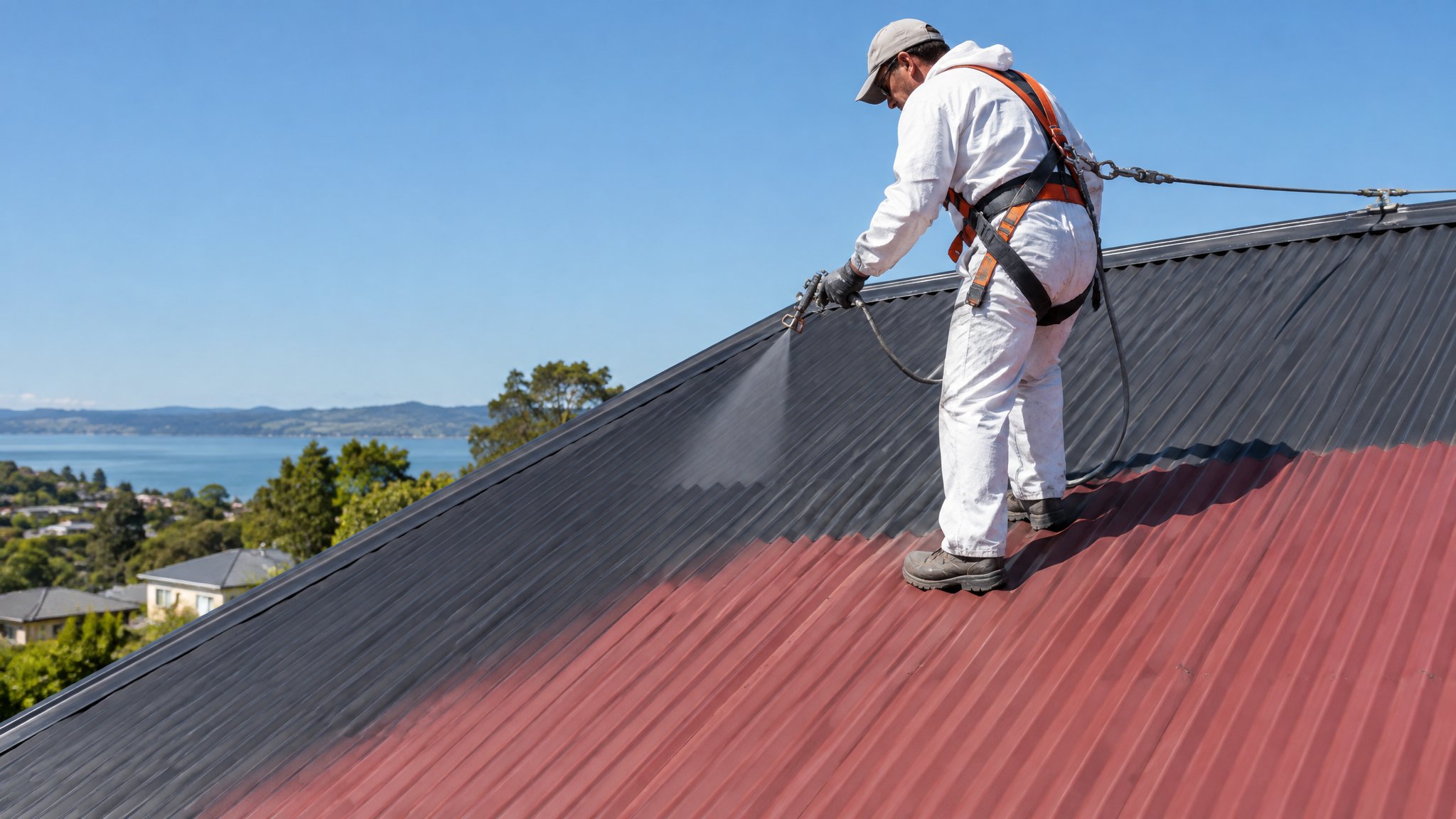
If you’re looking at your roof and wondering whether it’s safe to paint yourself, that’s a good question to ask before you get a ladder out. Roof painting can look straightforward from the ground, but steep pitches, slippery surfaces and awkward access can turn it into a serious fall risk very quickly.
In Auckland, many homes have roof shapes that are more challenging than they first appear, especially once you factor in height, pitch, weather and the condition of the roof surface. The safest approach is to assess the roof properly before you commit to the job.
Start with the pitch: the steeper the roof, the higher the risk
A roof’s pitch is the main thing to think about. The steeper the angle, the harder it is to stand, move tools, and keep your balance. If you would need to lean hard into the slope or scramble rather than walk, that roof is likely too steep for a DIY paint job.
As a general rule, any roof that feels unstable underfoot, especially one with a pronounced angle or a slippery profile, should be treated as unsafe for an inexperienced homeowner. Even a “moderately steep” roof can be dangerous once it is wet, dusty, mossy or coated in old paint.
Other signs the roof may be too steep to paint safely yourself include:
bullets":["You cannot move confidently without holding on at all times","The roof has multiple angles, hips, valleys or awkward transitions","You would need to work near edges, skylights or fragile flashing","The roof surface is metal, glossy, dusty or covered in moss","You do not have proper fall protection and roof access equipment"]},{
heading":"Look beyond the pitch: access and surface conditions matter too","paragraphs":["A roof is not just ‘steep’ or ‘not steep’. The real question is whether you can work on it safely for the full job. Access is a big part of that. If the ladder setup is awkward, the ground is uneven, or there is nowhere stable to stage materials, the risk rises quickly.","The roof surface itself also matters. Metal roofs, especially older ones, can become very slippery. Moss, lichen, dust and morning dew can make a roof dangerous even if it does not look especially steep from the street. A roof that is dry at midday may be much more hazardous early in the morning or after a shower.","If your roof has brittle or aging materials, rusted fixings, loose sheets, cracked tiles or weak sections, it may be unsafe even before you think about paint. In that case, painting is not the first job — a proper inspection is." ]},{
heading":"A simple DIY check before you climb","paragraphs":["Before going up, stand back and ask yourself three honest questions: can I get on and off the roof safely, can I move around without feeling off-balance, and can I complete the job without taking shortcuts? If the answer to any of those is no, the roof is probably too steep or too risky for a DIY approach.","It also helps to consider your experience. Someone who has painted roofs before, uses the right safety gear and understands edge protection will assess the job very differently from a first-timer. If you are unsure, err on the side of caution. A roof painting job is never worth a fall.","In many Auckland homes, what looks like a simple weekend project is better left to a professional once height, pitch and access are all considered together." ]},{
heading":"When to call Steve","paragraphs":["If you are in doubt, call Steve, a Kiwi and a trade-qualified painter, for advice before you step onto the roof. He can help you work out whether the roof is suitable for DIY, whether access and safety gear are adequate, and whether it would be wiser to have the job done professionally.","That is especially important for steep roofs, two-storey homes, older Auckland properties, or roofs with visible wear, slippery surfaces or tricky access. Steve knows how to assess the practical risks and can recommend the safest way forward for your home." ]}],
faqs":[{
q":"What roof pitch is too steep to paint yourself?","a":"If the roof feels unstable to stand on, requires constant grabbing for balance, or makes you nervous just getting onto it, treat it as too steep for DIY. Pitch, surface condition and access all affect safety."},{
q":"Can I paint a steep roof if I use a ladder?","a":"A ladder alone does not make a steep roof safe. You still need secure roof access, fall protection and a surface you can work on confidently. If the roof is steep or slippery, it is usually not a DIY job."},{
q":"What if the roof is only steep in one section?","a":"Even one steep section can make the whole job unsafe, especially if you need to cross it repeatedly. Mixed-pitch roofs and awkward valleys are best assessed carefully before any work begins."}]}]}]}]}]}]}]}]}]}]}]}]}]}]}]}]}]}]}]}]}]}]}]}]}]}]}]}]}]}]}]}]}]}]}]}]}]}]}]}]}]}]}]}]}]}]}]}]}]}]}]}]}]}]}]}]}]}]}]}]}]}]}]}]}]}]}]}]}]}]}]}]}]}]}]}]}]}]}]}]}]}]}]}]}]}]}]}]}]}]}]}]}]}]}]}]}]}]}]}]}]}]}]}]}]}]}]}]}]}]}]}]}]}]}]}]}]}]}]}]}]}]}]}]}]}]}]}]}]}]}]}]}]}]}]}]}]}]}]}]}]}]}]}]}]}]}]}]}]}]}]}]}]}]}]}]}]}]}]}]}]}]}]}]}]}]}]}]}]}]}]}]}]}]}]}]}]}]}]}]}]}]}]}]}]}]}]}]}]}]}]}]}]}]}]}]}]}]}]}]}]}]}]}]}]}]}]}]}]}]}]}]}]}]}]}]}]}]}]}]}]}]}]}]}]}]}]}]}]}]}]}]}]}]}]}]}]}]}]}]}]}]}]}]}]}]}]}]}]}]}]}]}]}]}]}]}]}]}]}]}]}]}]}]}]}]}]}]}]}]}]}]}]}]}]}]}]}]}]}]}]}]}]}]}]}]}]}]}]}]}]}]}]}]}]}]}]}]}]}]}]}]}]}]}]}]}]}]}]}]}]}]}]}]}]}]}]}]}]}
Frequently Asked Questions
Should I get a professional to do this?
Yes — the best move is a quick chat with Steve, a Kiwi and a trade-qualified painter. He can look at your situation, give honest advice and a clear, no-obligation quote across Auckland.
Need a hand with your project?
Happy to tackle some of it yourself? Great — but for anything you’d rather leave to a professional, Steve Lunjevich is a Kiwi and a trade-qualified painter with 20+ years’ experience. Call or email for honest advice or a free, no-obligation quote.