
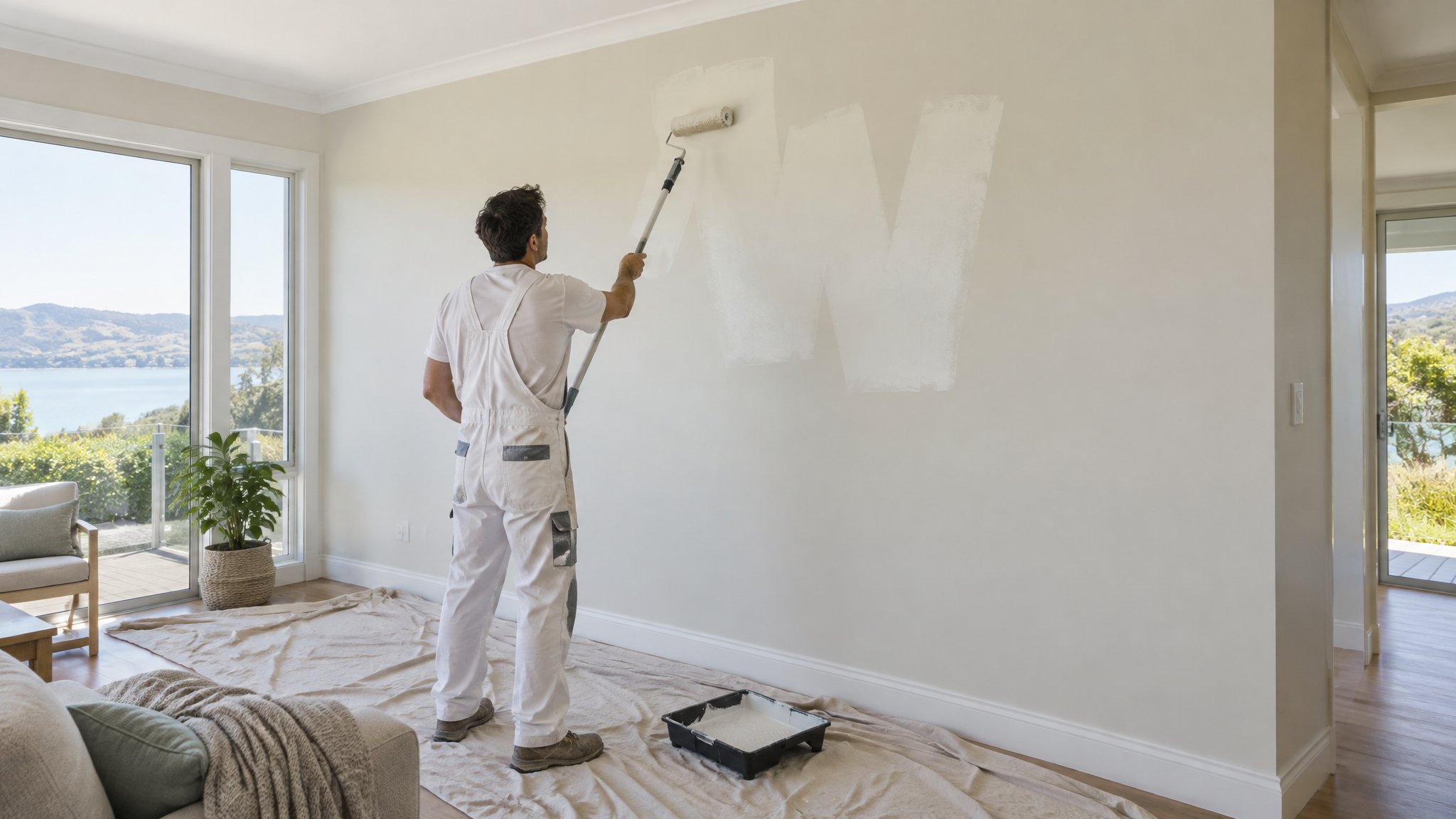
Painting a stairwell or high ceiling looks straightforward until you’re standing on a ladder with a brush in one hand and very little room to move. It’s one of those interior jobs where safety matters just as much as the finish.
If you’re in Auckland and thinking about tackling it yourself, the key is to plan the access properly, use the right equipment, and know when the height makes the job better left to a professional. A neat result starts with safe working conditions.
Start with a safe access plan
Before you open a tin of paint, work out exactly how you’ll reach each area. Stairwells often have awkward angles, bannisters, light fittings, and sloping ceilings, so a normal step ladder is usually not enough on its own.
For lower areas, a sturdy platform ladder or scaffold tower is far safer than balancing on the top steps of a ladder. If you must work on stairs, use ladder levellers or a purpose-built platform so you can stand flat and stable.
Always make sure the floor is clear, the ladder feet are secure, and the area below is kept free of family members, pets, and furniture. Good lighting also helps you spot drips, missed patches, and edge lines before they become a problem.
- Use a platform ladder or scaffold where possible
- Never overreach sideways from a ladder
- Keep three points of contact when climbing
- Move the ladder often instead of stretching too far
- Cover stairs and floors to protect from spills
Prep the space before you paint
A stairwell is not the place to improvise. Remove artwork, hooks, and loose fittings where possible, then dust the walls, cornices, and ceiling edges so the paint sticks properly. Fill dents and hairline cracks, especially around skirtings and corners where movement often shows up.
Use quality drop sheets and painter’s tape where needed, but don’t rely on tape to solve poor cutting-in. The cleaner your prep, the less time you’ll spend trying to fix finish issues later.
Choose a low-splatter roller with the right nap for the surface, and use extension poles so you can paint from a safer position. For ceilings, keep the roller loaded evenly and work in manageable sections to avoid lap marks.
Use the right technique for tall walls and ceilings
For high ceilings, begin by cutting in the edges and corners, then roll the main field while the cut-in paint is still wet if you can. This helps the finish blend more evenly. On stairwell walls, work from the top down so drips are easier to manage and you’re not leaning over fresh paint.
If the staircase has bannisters or balustrades, protect them well and allow enough drying time between coats so you’re not forced to squeeze past wet surfaces. Good ventilation is important too, especially in enclosed stairwells where paint fumes can linger.
If the job requires awkward reaching, double ladders, or moving scaffold on stairs, stop and reassess. A cautious approach is always faster than recovering from a slip, spill, or damaged wall.
When to call Steve
If your stairwell is steep, narrow, double-height, or close to delicate finishes, it’s worth getting help. Steve is a Kiwi and a trade-qualified painter, and he can assess the access, recommend the safest method, and complete the work with a tidy, professional finish.
That’s especially sensible for premium homes in Auckland suburbs like Remuera, Ponsonby, Parnell, Herne Bay, or Devonport, where a careful result matters as much as safe workmanship. If you’d like advice before starting, or you want the whole job handled properly, contact Steve for guidance and a quote.
Frequently Asked Questions
Can I paint a stairwell with just a ladder?
Sometimes for small touch-ups, but for full stairwell painting a ladder alone is often unsafe. A platform ladder or scaffold is usually a better choice, especially where the walls are high or the stairs are steep.
What is the safest way to paint a high ceiling?
Use stable access equipment, work from a flat platform where possible, and avoid overreaching. An extension pole, good lighting, and careful floor protection all help make the job safer and neater.
Should I hire a painter for a double-height stairwell?
Yes, that’s often the smartest option. A double-height stairwell can be difficult to access safely and finish cleanly, so it’s best to contact Steve, a Kiwi and a trade-qualified painter, for advice or to do the work.
Need a hand with your project?
Happy to tackle some of it yourself? Great — but for anything you’d rather leave to a professional, Steve Lunjevich is a Kiwi and a trade-qualified painter with 20+ years’ experience. Call or email for honest advice or a free, no-obligation quote.