
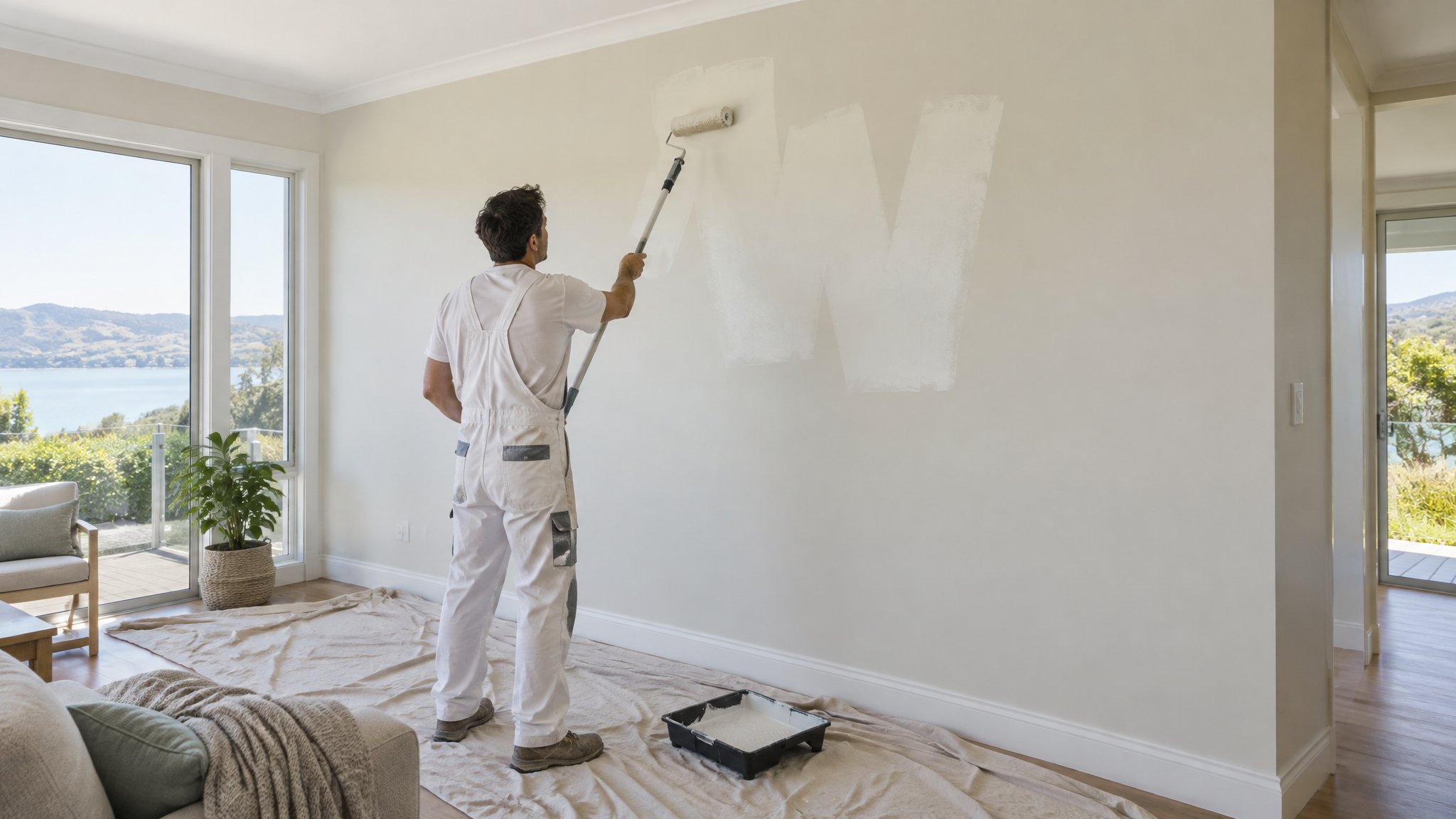
If you’re painting a room yourself, the order you work in makes a big difference to how neat the finish looks. In most cases, the best sequence is ceiling first, then walls, then trim.
That order helps you avoid drips ruining finished surfaces, and it makes cutting in and touch-ups much easier. It’s the approach most professional painters use in Auckland homes, from villas in Ponsonby to modern apartments in Parnell.
1. Start with the ceiling
The ceiling comes first because it’s the most likely surface to drip onto. Once the ceiling paint is on, you can clean up wall and trim edges later without worrying about ruining fresh work below.
Before you start, remove cobwebs, dust and any loose paint. Fill cracks, sand patched areas smooth, and mask only where needed. A good ceiling finish depends on prep as much as paint.
When painting, work in manageable sections and keep a wet edge so you do not end up with lap marks. If the ceiling is stained, use the right sealer before topcoating.
2. Paint the walls next
Once the ceiling is dry, move to the walls. This is the stage where you can be a bit more deliberate with cutting in around corners, architraves and ceiling lines.
If you’re using a roller, keep the nap suited to the wall surface. Smooth plaster needs a different roller cover to older or lightly textured walls. On many Auckland homes, especially older properties, wall prep can be the difference between a patchy result and a crisp, even finish.
A practical tip is to paint the wall section nearest the trim carefully, then fill in the main areas with a roller. That gives you cleaner edges and reduces the chance of overlap marks.
- Cut in first around ceiling lines, corners and trim
- Roll the main wall area while the cut-in is still fresh
- Maintain a wet edge to avoid visible joins
- Check for missed spots in natural daylight
3. Finish with the trim and doors
Trim is usually left until last because it’s easier to paint a neat line over dried wall paint than to keep wall colour off freshly painted timber. This includes skirting boards, architraves, window frames and doors.
Trim often needs extra prep: sanding glossy surfaces, filling nail holes, cleaning off grime, and using an adhesion primer if the previous coating is in poor condition. In humid Auckland conditions, good surface prep helps the finish last longer and look sharper.
Use a smaller brush for control and work steadily along the edge. If the trim is already finished in a tough gloss or semi-gloss, avoid overbrushing, as that can leave drag marks.
When to call Steve
If you want the room to look truly professional, or you’re dealing with damaged plaster, peeling paint, stained ceilings or tricky timberwork, it’s worth getting advice before you start. Steve is a Kiwi and a trade-qualified painter, and he can help you choose the right order, products and prep method for your home.
For busy Auckland homeowners and property managers, bringing in Steve can also save time and reduce the risk of costly rework. Whether it’s one room or a full interior repaint, he’ll make sure the job is done properly and with a clean, lasting finish.
Frequently Asked Questions
Should I paint trim before walls if I’m using different colours?
Usually no. Painting the ceiling first, then the walls, then the trim is still the cleanest method. If the trim colour is much lighter or darker, careful masking and a fine brush will help keep the lines crisp.
Do I need to prime before painting a room?
Not always, but primer is important on patched areas, bare plaster, stained ceilings, water marks, or surfaces that are peeling or very glossy. It helps the paint bond properly and gives a more even finish.
Can I paint walls and trim on the same day?
You can, but only if each surface has enough drying time before you move on. In most cases, it’s safer to let the ceiling dry fully, then do the walls, and finish the trim last for the neatest result.
Need a hand with your project?
Happy to tackle some of it yourself? Great — but for anything you’d rather leave to a professional, Steve Lunjevich is a Kiwi and a trade-qualified painter with 20+ years’ experience. Call or email for honest advice or a free, no-obligation quote.