
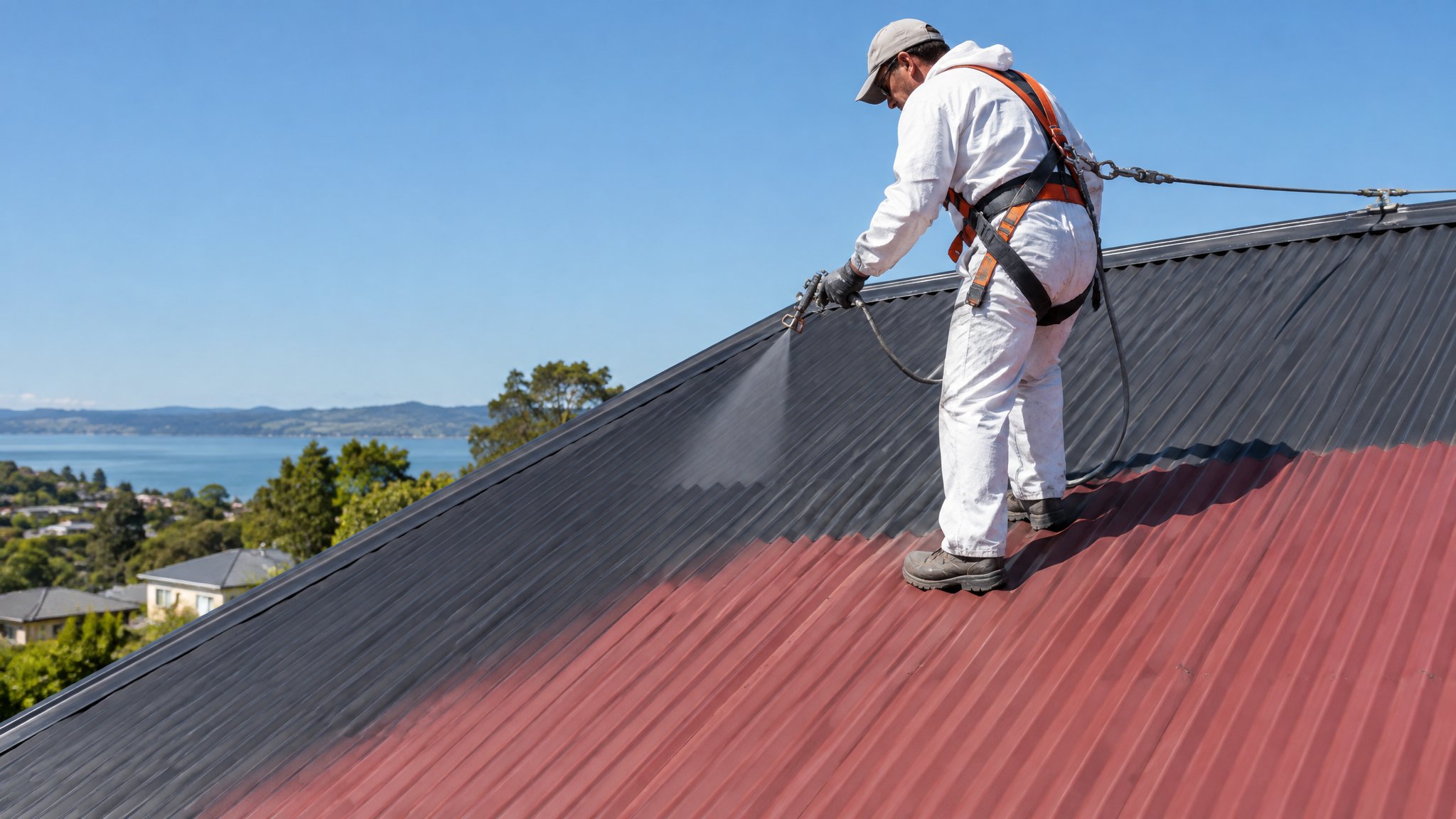
In short: sometimes, but usually not as a full substitute for proper coloured roof paint. A tinted sealer can help in the right situation, but it is not designed to do the same job as a complete roof coating system.
If you’re in Auckland and thinking about doing the roof yourself, the right product depends on the roof material, its current condition, and the finish you want. Getting that wrong can leave you with poor coverage, early wear, or a roof that still looks patchy.
What tinted sealer is actually for
Tinted sealer is mainly used to penetrate, bind, and prepare a surface before the top coats go on. On some roofs, it can help improve adhesion and provide a light, even base colour, especially where the roof has been cleaned back or is quite porous.
It is not usually intended to be the final weatherproof finish on its own unless the product data sheet specifically says so. Most roof systems still need a proper topcoat to give the colour depth, UV resistance, and durability a New Zealand roof needs.
- Helps seal porous or weathered surfaces
- Can improve adhesion for topcoats
- May reduce patchiness on some roofs
- Usually not a full replacement for roof paint
When it might work, and when it won’t
A tinted sealer may be suitable where the roof is sound, fully prepared, and the manufacturer allows it as part of the coating system. It can also be useful when you’re aiming for a subtle base tone before applying a finish coat.
It won’t be a good substitute if the roof is heavily weathered, chalky, rusted, flaky, or already has failed paint in places. In those cases, the roof needs proper surface prep first, and in many situations a full roof paint system is the safer choice.
- Good for some prepared, stable roof surfaces
- Not ideal for rusty, peeling, or leaking roofs
- Check compatibility with tile, metal, or membrane roofs
- Always follow the manufacturer’s system, not guesswork
DIY risks Auckland homeowners should think about
Roof painting looks straightforward until you factor in surface prep, weather windows, safety, and product compatibility. Auckland’s humidity, coastal air, and changeable weather can make drying and adhesion harder than many people expect.
If you use tinted sealer in place of roof paint without checking the system requirements, you could end up with uneven gloss, poor coverage, or a coating that breaks down sooner than it should. That can mean extra work and more expense later.
- Unsafe access and fall risk
- Incorrect prep on metal or tile roofs
- Poor curing in damp or humid weather
- Shorter coating life if the system is wrong
When to call Steve
If you’re unsure whether tinted sealer is suitable for your roof, it’s worth talking it through before you buy products or climb up with a roller. Steve is a Kiwi and a trade-qualified painter, and he can advise whether your roof needs a sealer, a full roof paint system, or something more specific for the material and condition.
That advice can save you from using the wrong product, missing hidden damage, or putting a finish on that won’t last. For Auckland homes, especially in exposed or coastal areas, the right system matters just as much as the colour.
Frequently Asked Questions
Can I put tinted sealer on top of an old roof coating?
Only if the existing coating is sound and the product system allows it. If the old coating is peeling, chalky, or incompatible, the new sealer may not bond properly.
Is tinted sealer the same as roof paint?
No. Tinted sealer is usually designed to seal and prepare the surface, while roof paint is made to form the durable, weather-resistant finish.
What’s better for a DIY roof job in NZ?
It depends on the roof type and condition, but most roofs need a proper prep and a complete coating system. If you’re unsure, contact Steve, a Kiwi and a trade-qualified painter, for practical advice before starting.
Need a hand with your project?
Happy to tackle some of it yourself? Great — but for anything you’d rather leave to a professional, Steve Lunjevich is a Kiwi and a trade-qualified painter with 20+ years’ experience. Call or email for honest advice or a free, no-obligation quote.