
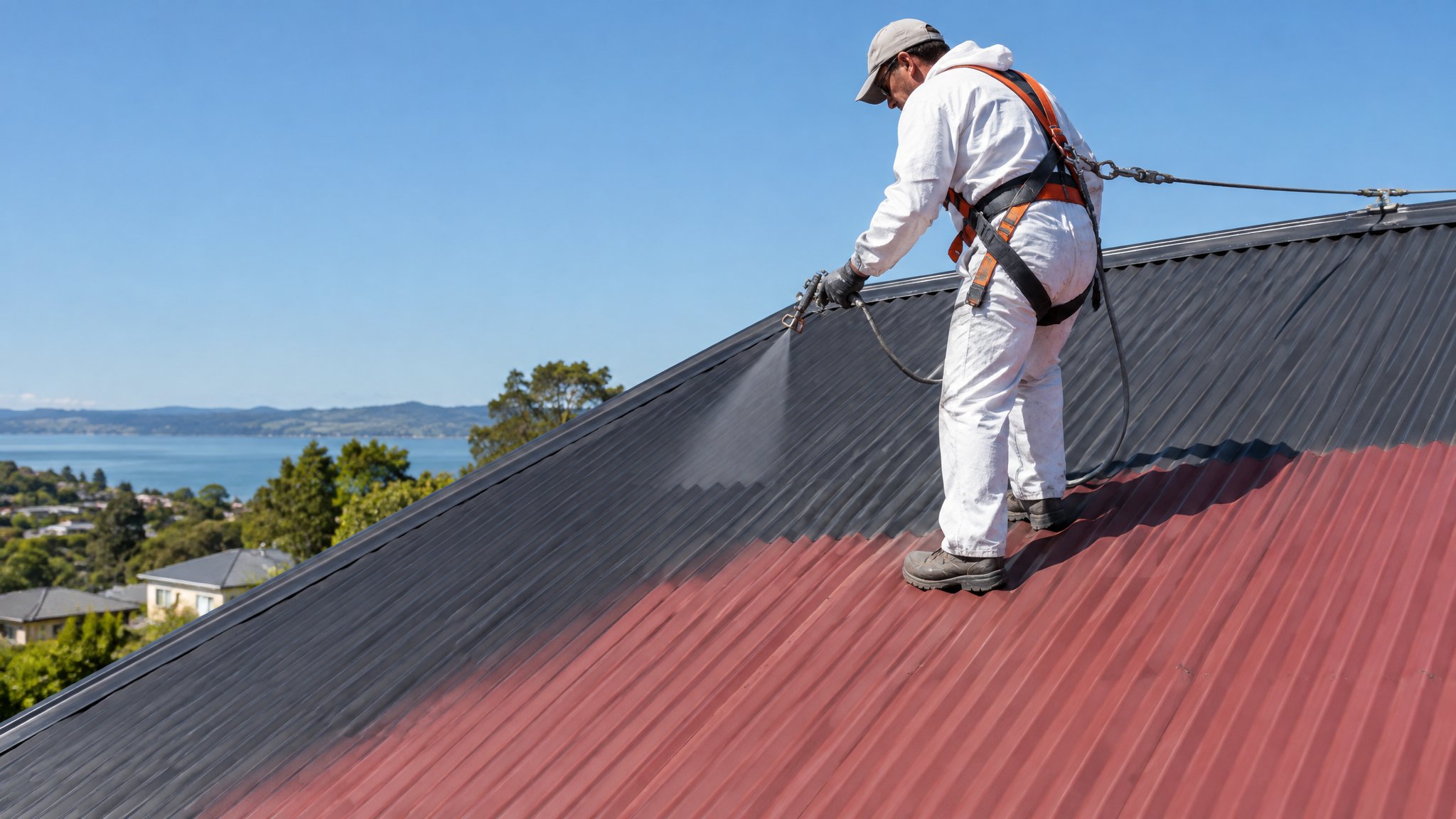
Painting a roof yourself can freshen up your home, but gutters and exterior walls are often the first things to get marked by drips, overspray, and sanding dust. A bit of careful prep makes a big difference to the finish and helps avoid costly clean-up later.
If you are doing the work yourself in Auckland, the key is to mask properly, work in the right weather, and keep your painting setup controlled from the start.
Start with a proper clean and inspection
Before you put any paint on the roof, clean the roof edge, gutters, and adjoining wall areas thoroughly. Dirt, moss, loose paint, and chalky residue can make protective tape fail and can also cause paint to flick where you do not want it.
Check the gutter line for leaks, loose brackets, cracked sealant, and any sharp edges. It is much easier to deal with these issues before painting than after you have masked everything up.
- Sweep or blow debris out of gutters before masking
- Wash down the roof edge and wall tops with mild detergent and clean water
- Allow surfaces to dry fully before taping
- Remove flaking paint so tape seals against a sound surface
Mask gutters and walls carefully
The best protection is usually a combination of painter's tape, masking paper, and plastic sheeting. Use tape designed for exterior work, because cheap tape can lift paint or let moisture creep underneath.
For gutters, run tape along the top edge where overspray and drips are most likely. Then attach masking paper or plastic below the tape so the whole gutter face is covered. For walls, tape along the top edge of the cladding and protect any nearby windows, trims, downpipes, and soffits.
If the roof profile is steep or corrugated, take extra care around the roof edge. Paint can run along the ribs and drip straight onto the gutter or wall if you apply too much at once.
- Use exterior-grade painter's tape only
- Overlap masking paper so there are no gaps
- Press tape edges down firmly to seal them
- Protect windows, lights, and downpipes near the work area
Control overspray, drips, and wind
Most accidental marking happens when the weather is working against you or the paint application is too heavy. Try to paint on a calm day with low wind, because even a light breeze can carry spray onto walls, soffits, and neighbouring surfaces.
If you are using a spray system, increase your masking zone and keep the spray angle tight. If you are brushing or rolling, avoid overloading the brush or roller, and work in smaller sections so paint does not puddle and run off the edge.
Keep a wet cloth and a scraper handy so any accidental marks can be dealt with straight away before the paint cures.
- Avoid painting in windy conditions
- Do not overload brush or roller
- Work from the top down in controlled sections
- Clean spills immediately before they dry
When to call Steve
If your roof is steep, high, or difficult to access, or if the gutters and wall joins are detailed and fragile, it is worth getting advice before you start. Steve is a Kiwi and a trade-qualified painter who can help you work out the safest way to protect surrounding surfaces, choose the right masking method, and get a clean result without damaging gutters or walls.
For premium homes and carefully finished exteriors around Auckland, a professional approach often saves time, reduces mess, and gives you better long-term results. If you are unsure about prep, masking, or the best roof painting method for your property, contact Steve, a Kiwi and a trade-qualified painter.
Frequently Asked Questions
Should I use plastic or paper to protect gutters when painting a roof?
Paper is often better for neat, controlled masking, while plastic is useful for larger areas that need full coverage. Many jobs use both: tape plus masking paper at the edges, and plastic where extra protection is needed.
Can I just use masking tape on its own?
Masking tape on its own is usually not enough for roof painting. It can still allow drips and overspray onto gutters and walls. Tape should be used with paper or plastic for proper protection.
What is the biggest mistake people make when painting a roof themselves?
The most common mistake is rushing the prep and not masking enough. Wind, heavy paint application, and poor surface cleaning often lead to marks on gutters, walls, and trim.
Need a hand with your project?
Happy to tackle some of it yourself? Great — but for anything you’d rather leave to a professional, Steve Lunjevich is a Kiwi and a trade-qualified painter with 20+ years’ experience. Call or email for honest advice or a free, no-obligation quote.