
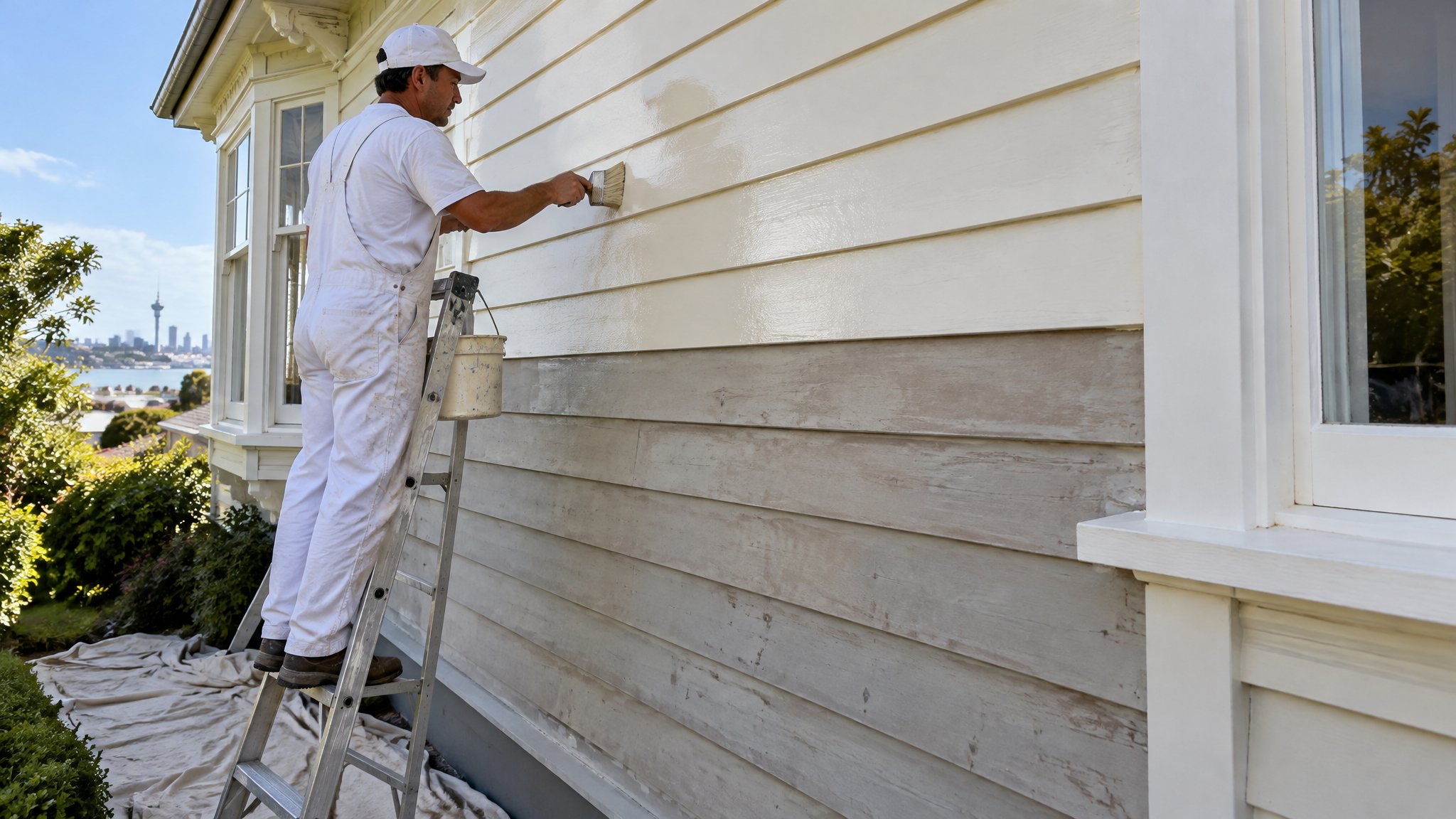
Window frames and sills cop a lot of wear. They get touched, cleaned, knocked, and exposed to sunlight, moisture, and condensation, so a tidy finish starts with proper preparation rather than rushing the paint on.
For Auckland homes, the best way to paint window frames and sills is to work methodically: clean thoroughly, sand well, use the right primer where needed, then apply thin coats with a good brush for a smooth, durable result.
Start with a proper clean and inspection
Before you open the paint tin, clean the frames and sills to remove dust, grease, mould, and any flaky old paint. Sugar soap or a suitable household cleaner works well on painted timber and joinery, but make sure the surface is fully dry before sanding or priming.
Look closely for soft timber, cracks, failed caulking, and signs of water damage around corners and glazing lines. If the timber is deteriorating, painting over it will only hide the problem for a short time. Fixing these issues first gives you a much better result.
- Wash away grime and mould before sanding
- Scrape off loose or peeling paint
- Repair gaps, dents, and small timber defects
- Mask glass, hardware, and nearby walls neatly
Sand, prime, and choose the right paint
A light sand does two jobs: it smooths rough edges and gives the new paint something to grip. On glossy older paint, deglossing is especially important. On bare timber, knots, repairs, or stained areas, primer helps seal the surface and improve adhesion.
For most interior window frames and sills, a quality water-based enamel is a practical choice because it dries well and gives a hard-wearing finish. For older timber or areas that need extra toughness, the right product depends on the condition of the surface and the existing coating, so matching paint systems matters.
Use thin coats and the right technique
The best finish usually comes from two thin coats rather than one heavy coat. Thin coats reduce brush marks, drips, and tacky edges, and they cure more evenly. A good angled sash brush is ideal for cutting into corners, beads, and meeting rails on timber windows.
Work from top to bottom, painting edges and detailed areas first, then flatter faces. Keep an eye on runs around the bottom rail and sill edge, where excess paint tends to collect. If you are painting windows that move, check that painted surfaces do not stick once the paint is dry enough to close.
- Stir paint well before and during use
- Load the brush lightly, then lay off the paint smoothly
- Keep coats thin to avoid brush marks and buildup
- Allow proper drying time between coats
When to call Steve
If your window frames are peeling, the timber is damaged, or the job involves multiple rooms, high windows, or older joinery, it is worth getting professional help. Steve is a Kiwi and a trade-qualified painter who can assess the condition properly, prepare the surfaces the right way, and recommend the best coating system for your Auckland home.
That is especially useful in premium suburbs where the finish needs to look crisp and last well. If you want advice on timber, aluminium joinery, interior trims, or weather-exposed sills, contact Steve for practical guidance or to take care of the full job.
Frequently Asked Questions
Do I need to sand window frames before painting?
Yes. A light sand is usually essential to remove imperfections, improve adhesion, and help the new paint sit smoothly. On glossy surfaces, sanding is especially important.
What paint is best for window sills?
A durable enamel finish is usually best for interior window sills because it is easier to clean and stands up better to everyday wear. The right product can vary depending on the existing coating and surface condition.
How do I stop paint getting on the glass?
Use masking tape neatly on the glass edge, then remove it carefully before the paint fully hardens. A steady angled brush and thin coats also help keep the line clean.
Need a hand with your project?
Happy to tackle some of it yourself? Great — but for anything you’d rather leave to a professional, Steve Lunjevich is a Kiwi and a trade-qualified painter with 20+ years’ experience. Call or email for honest advice or a free, no-obligation quote.