
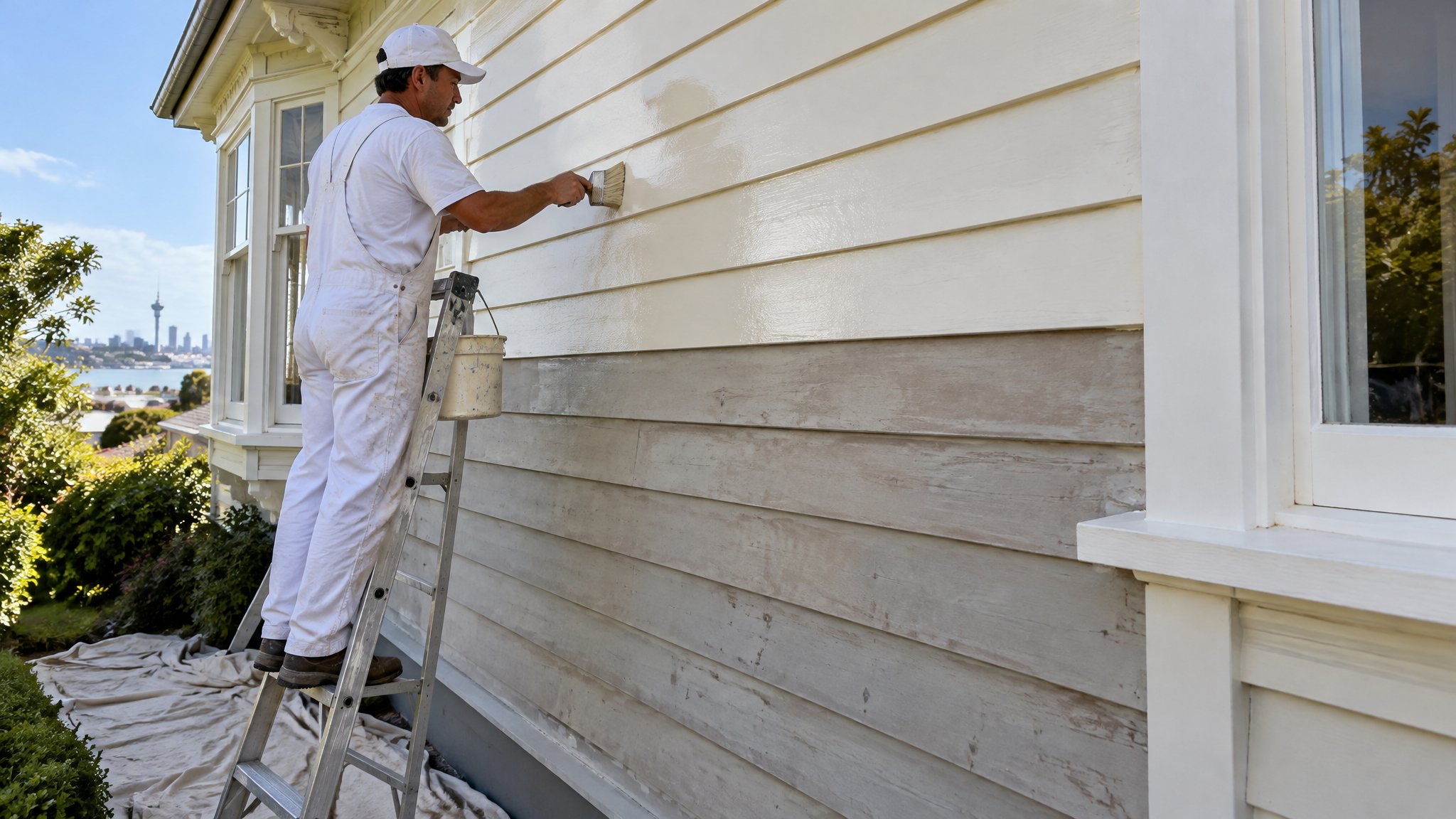
You do not always need masking tape to get a crisp paint line. With the right brush, a steady hand, and good prep, you can cut in neatly along ceilings, skirtings, architraves, and corners.
For Auckland homes, especially older villas and character properties, tape can sometimes lift paint or leave a messy edge. A careful hand-cut line often gives the cleanest result.
Choose the right brush and paint setup
A good cutting-in job starts with the right gear. Use a quality angled sash brush, usually around 50 mm, because the angled tip helps you control the paint right up to the edge. A cheap brush tends to splay, flick, and leave a rough line.
Load the brush lightly. Too much paint on the bristles causes drips and makes it hard to control the edge. Dip just the bottom third of the bristles, then tap off the excess rather than wiping it hard on the tin.
If your paint is too thick or tacky, it becomes harder to glide smoothly. Stir it well and, if the product allows it, adjust only within the manufacturer’s instructions. A well-mixed, workable paint helps the brush move cleanly and reduces stopping and starting.
- Use a clean, angled sash brush
- Do not overload the bristles
- Keep the paint smooth and well mixed
- Work in good light so you can see the edge clearly
Use your hand and brush control to follow the line
Hold the brush like a pencil, not like a hammer. Rest your hand lightly against the wall if needed for support, then use short, controlled strokes. Instead of trying to paint the whole line in one go, build it up with a series of smooth passes.
A useful trick is to paint slightly away from the edge first, then nudge the line closer on a second pass. This is especially helpful around corners, window trims, and uneven plaster where the edge is not perfectly straight.
Keep a wet edge and move steadily. If you stop too often, the paint can start to drag and leave a visible join. On textured walls or older surfaces, it may help to use a smaller brush and work in shorter sections.
Prep the surface so the edge stays sharp
Even the best cutting-in technique struggles on dusty, greasy, or flaky surfaces. Wipe down the edge with a clean cloth, remove cobwebs, and sand back any rough paint build-up before you start. A smooth surface helps the brush glide and keeps the line tidy.
If you are painting over a strong colour, patchy plaster, or an old ceiling line, it may take two coats to get a crisp finish. Let the first coat dry properly before refining the edge with the second coat.
Good lighting matters too. Natural light is ideal, but a bright work light can reveal wobble in the line before the paint dries. That gives you a chance to correct it straight away.
- Clean and dust the edge first
- Sand off bumps and flaky paint
- Use bright light to spot imperfections
- Allow coats to dry fully before touching up
When to call Steve
If you want sharp edges without the hassle, Steve can help. He is a Kiwi and a trade-qualified painter, and he knows how to get neat, consistent cutting-in on everything from modern apartments to classic Auckland villas. He can also advise when tape is worth using and when hand-cutting will give a better finish.
Call Steve if you are dealing with tricky ceilings, detailed timber work, awkward corners, or surfaces that have already been painted badly. A careful professional setup can save time, reduce touch-ups, and leave the whole room looking more polished.
Frequently Asked Questions
Do I need masking tape to cut in paint edges neatly?
Not always. With a quality angled brush, steady hand, and well-prepared surface, many edges can be cut in cleanly without tape.
What is the best brush for cutting in paint?
An angled sash brush is usually the best choice for cutting in. It gives you more control along ceilings, trims, and corners.
Why do my cut-in lines look shaky or uneven?
It is often caused by too much paint on the brush, poor lighting, a rough surface, or trying to paint too fast. Slower, lighter strokes usually help.
Need a hand with your project?
Happy to tackle some of it yourself? Great — but for anything you’d rather leave to a professional, Steve Lunjevich is a Kiwi and a trade-qualified painter with 20+ years’ experience. Call or email for honest advice or a free, no-obligation quote.