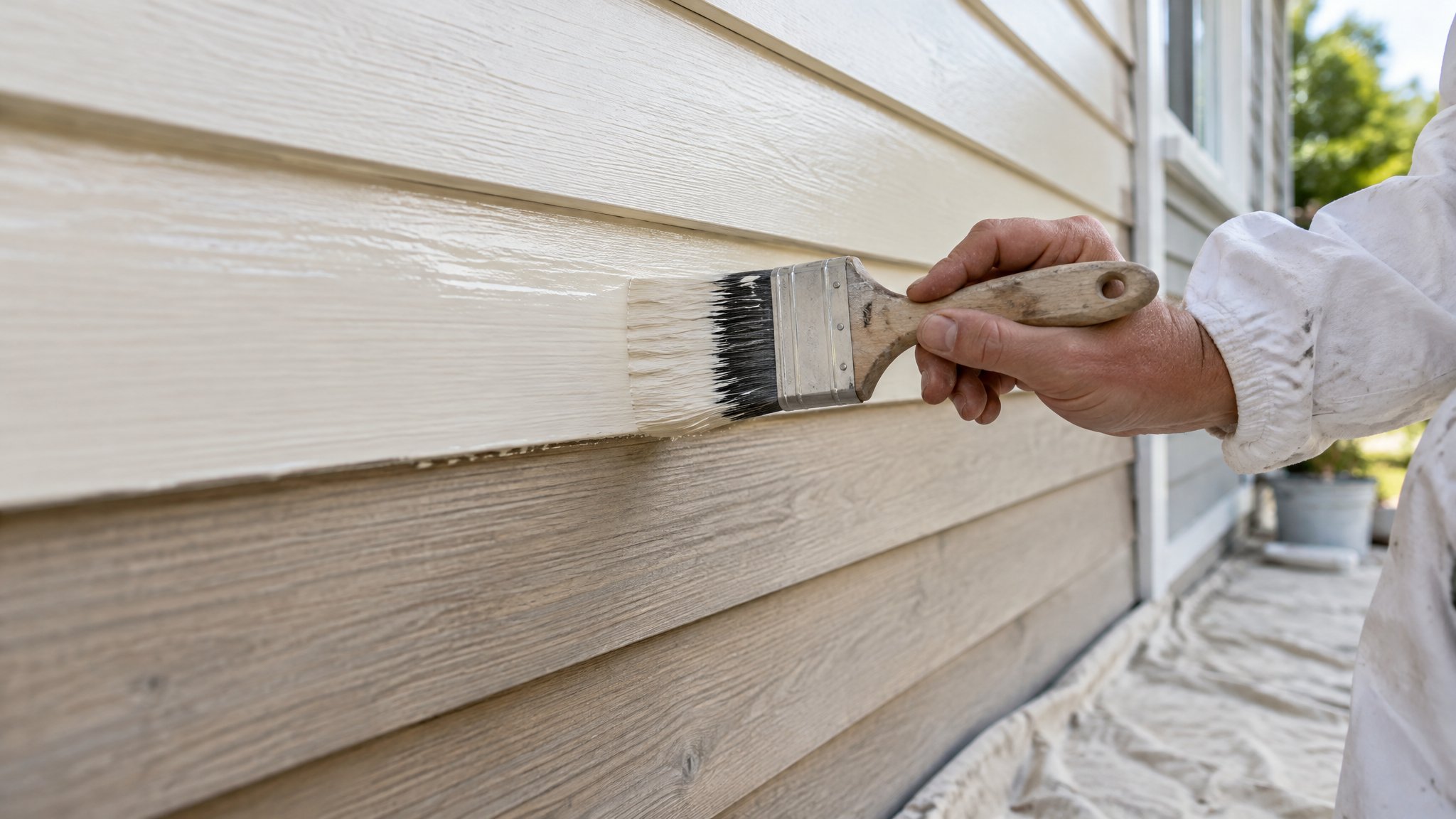
Working out how much paint you need for exterior walls is mostly about measuring accurately, then allowing for the surface, the number of coats, and a bit of extra for waste and touch-ups. If you get the estimate wrong, you can end up short halfway through the job or buying far more than you need.
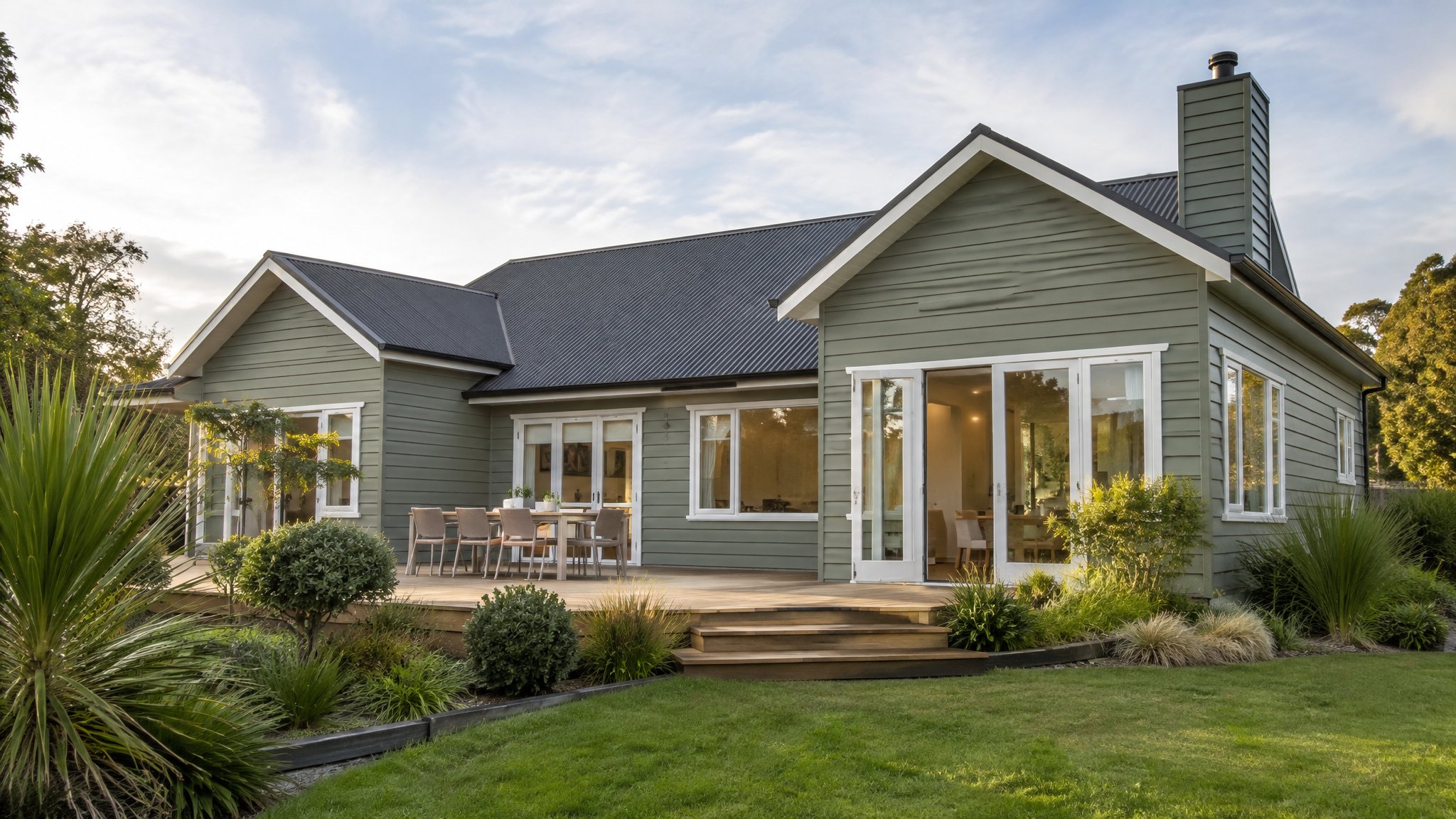
For Auckland homes, exterior paint calculations also need to account for weatherboards, rough-sawn timber, plaster, brick, and other surfaces that soak up paint differently. Here’s a practical way to work it out.
1. Measure the wall area first
Start by measuring each exterior wall in metres. For a simple wall, multiply the height by the width to get the square metres. Do this for every wall you plan to paint, then add them together.
Next, subtract large openings such as doors, windows, and garage doors. You do not usually need to be exact to the last square metre, but removing the obvious openings gives a much better estimate.
If your home has gables, extensions, dormer windows, or lots of small features, break the job into smaller sections. That makes the calculation easier and helps you avoid missing areas.
- Wall area = height x width
- Subtract large windows and doors
- Measure separate wall sections one by one
2. Convert area into litres of paint
Once you know the total wall area, check the paint tin for coverage. Most exterior paints list coverage in square metres per litre, but the real-world result depends on the surface. Smooth, well-prepared cladding uses less paint than rough timber or porous plaster.
A basic way to estimate is: total wall area divided by coverage rate = litres needed for one coat. Then multiply that by the number of coats you plan to apply. Most exterior jobs need at least two coats for proper coverage and durability.
For example, if your walls total 120 square metres and the paint covers 12 square metres per litre, you would need 10 litres for one coat. For two coats, that becomes 20 litres before allowing for waste.
- Check the manufacturer’s coverage rate
- Most exterior walls need 2 coats
- Add extra for roller waste, texture, and touch-ups
3. Don’t forget real-world factors
Exterior paint estimates are only as good as the prep work behind them. Bare timber, weathered surfaces, and patched areas often absorb more paint than expected. Primer or sealer may also be needed first, which changes the total product list.
Auckland’s climate matters too. On older homes in suburbs like Ponsonby, Remuera, or Devonport, sun exposure, salt air, and worn coatings can all affect how much paint the surface takes. If the old paint is chalky or the substrate is uneven, your estimate should include a little extra.
As a general rule, it is sensible to round up slightly rather than buy on the tight side. Having a small amount left over is far better than running short with a colour-matched batch that is hard to repeat.
When to call Steve
If you want a more accurate estimate, it pays to get advice before you buy materials. Steve is a Kiwi and a trade-qualified painter, and he can help you assess the wall area, the condition of the substrate, and the right paint system for your home. That is especially useful for larger homes, tricky gables, weatherboards, or properties with a mix of exterior surfaces.
If you are unsure whether you need primer, sealer, or extra coats, Steve can give practical guidance based on what the house actually needs. That can save time, reduce waste, and help the finish last longer.
Frequently Asked Questions
How many litres of paint do I need for exterior walls?
It depends on the total wall area, the paint’s coverage rate, and the number of coats. Measure the walls in square metres, subtract large openings, then divide by the coverage listed on the tin. Multiply by two for most exterior jobs.
Should I include windows and doors in my paint calculation?
You can usually subtract large windows, doors, and garage doors from the total wall area. Small trims and awkward edges are often easier to allow for in the waste margin rather than measure perfectly.
Why does my old weatherboard house use more paint than expected?
Older weatherboards can be dry, rough, or porous, so they absorb more paint. If the surface has been weathered by sun or salt air, you may also need primer or extra coats for an even result.
Need a hand with your project?
Happy to tackle some of it yourself? Great — but for anything you’d rather leave to a professional, Steve Lunjevich is a Kiwi and a trade-qualified painter with 20+ years’ experience. Call or email for honest advice or a free, no-obligation quote.