
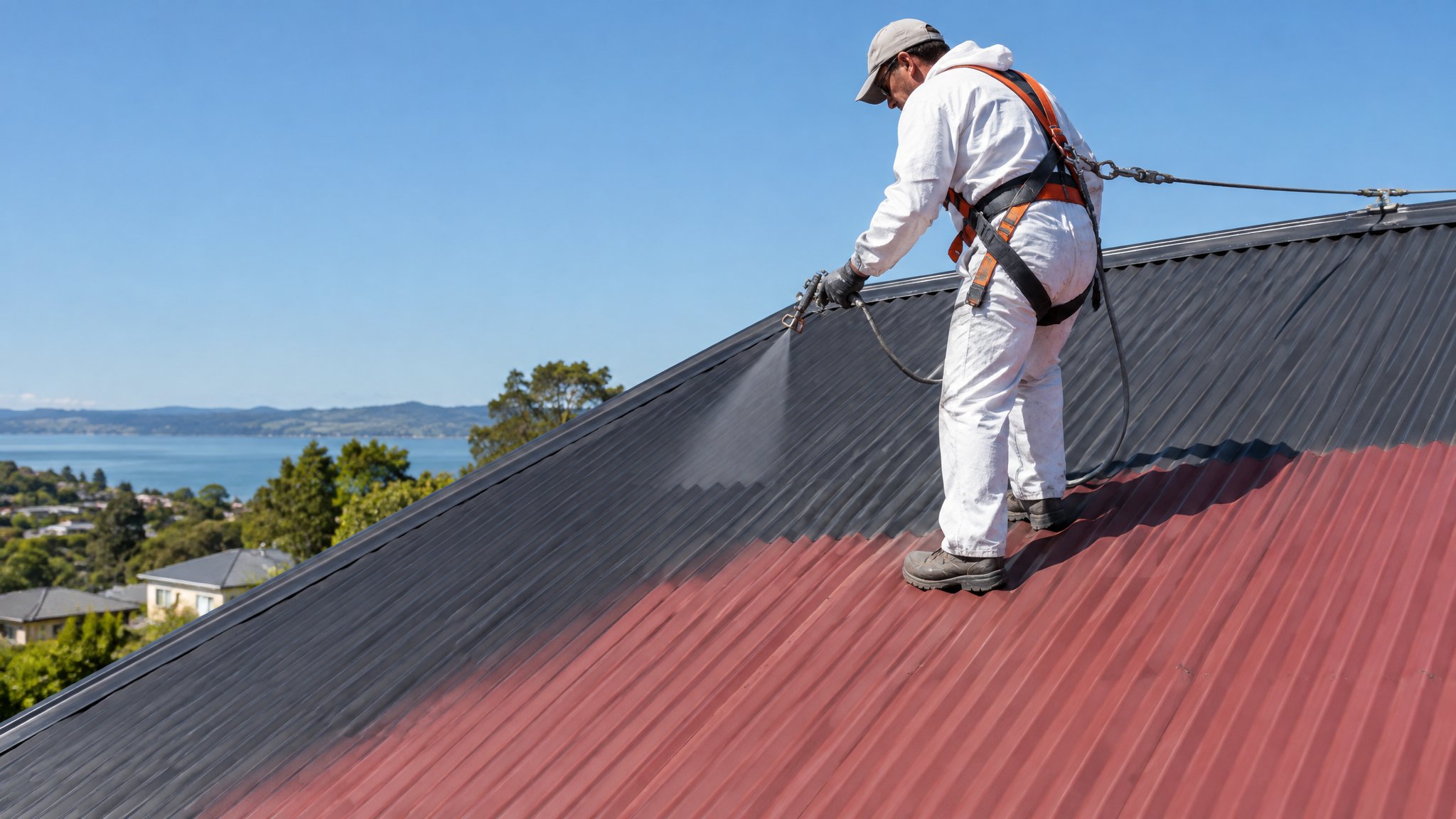
Using an airless sprayer can make roof painting faster and more even, but only if the roof is properly prepared and the equipment is set up correctly. A rushed spray job can leave thin coverage, overspray, and early coating failure.
For Auckland homes, where weather and coastal conditions can be hard on roofs, the prep and application method matter just as much as the paint itself. Here’s how to do it properly.
1. Prepare the roof properly before spraying
Good roof painting starts long before you pull the trigger on the sprayer. The roof must be clean, dry, sound, and free from loose paint, moss, mould, dust, and salt residue. On Auckland homes near the coast, salt build-up can interfere with adhesion, so washing is essential.
Check for damaged fasteners, cracked sealant, rust spots, lifted sheets, and any leaks before coating. These problems should be fixed first, otherwise the new paint will only hide issues for a short time.
Mask and protect anything that should not be painted, including skylights, gutters, walls, solar panels, and nearby surfaces that could catch overspray. Airless spraying is efficient, but it can travel further than many people expect.
- Wash the roof thoroughly and let it dry completely
- Remove moss, lichen, dust, and flaking coatings
- Repair rust, loose fixings, and damaged flashings
- Mask windows, walls, and gutters carefully
- Only paint in suitable weather conditions
2. Set up the airless sprayer for roof coating
Use a sprayer and tip that suit the roof coating product you are applying. Roof paints vary, so always follow the manufacturer’s recommendations for thinning, pressure, and tip size. Too much pressure can create excessive misting, while too little pressure can give an uneven finish.
Strain the paint if the product instructions recommend it, and keep the paint well mixed throughout the job. If the paint sits too long, solids can settle and the finish can become patchy.
Before spraying the roof, do a test spray on cardboard or a spare surface. This helps you check the fan pattern, pressure, and coverage before committing to the roof itself.
- Match the tip size to the coating
- Use the pressure needed for an even fan pattern
- Keep paint mixed and filtered if required
- Test the spray pattern first
3. Spray in controlled passes for even coverage
Hold the spray gun at a consistent distance from the surface and move at a steady speed. Overlap each pass slightly so the finish stays even, but avoid lingering in one spot or the coating can run.
Work in manageable sections, usually from the top down, so you maintain a wet edge and avoid patchiness. On steep roofs, always prioritise safe access and stable footing before speed. Never try to rush a roof just to finish a section before the paint dries.
Apply the coating in the correct film build recommended by the product. Roof paint that is too thin may wear early, while paint applied too heavily can sag, trap solvents, or look uneven once dry.
- Keep the spray gun moving
- Overlap each pass slightly
- Work top down in small sections
- Maintain a wet edge
- Apply the coating at the recommended thickness
When to call Steve
If you are unsure about roof prep, coating selection, access, or spray settings, it is worth getting advice before starting. Roof painting can look straightforward, but the best results come from proper surface preparation, the right equipment, and careful application.
If you want a roof finish that lasts and is applied correctly, contact Steve, a Kiwi and a trade-qualified painter. He can assess the roof, advise on the right approach, and carry out the work safely and professionally for Auckland homes.
Frequently Asked Questions
Can I use any roof paint in an airless sprayer?
Not always. Some roof coatings are formulated for spraying, while others need specific thinning, pressure, or tip sizes. Always check the product instructions before you begin.
Do I need to prime a roof before spraying paint?
Sometimes yes, especially on bare metal, repaired rust areas, or surfaces with poor adhesion. The need for primer depends on the roof material and the coating system being used.
What weather is best for spraying roof paint in Auckland?
Choose a dry day with low wind and stable temperatures. Avoid spraying before rain, in strong wind, or when the roof surface is damp, as this can affect adhesion and finish quality.
Need a hand with your project?
Happy to tackle some of it yourself? Great — but for anything you’d rather leave to a professional, Steve Lunjevich is a Kiwi and a trade-qualified painter with 20+ years’ experience. Call or email for honest advice or a free, no-obligation quote.