
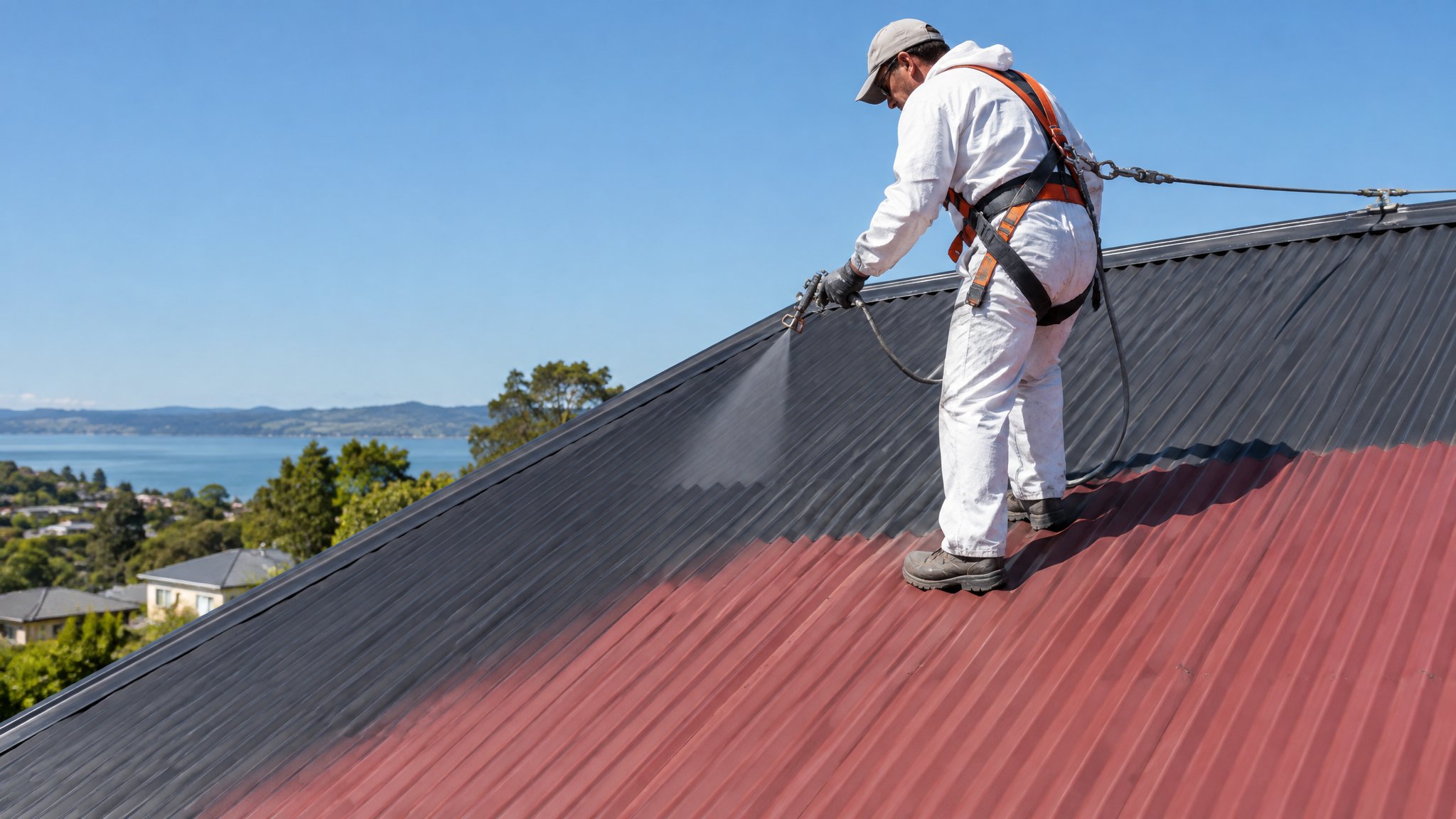
Painting a curved or barrel tile roof takes more care than painting a flat profile. The shape creates dips, edges, and shadowed areas that can make coverage uneven if you rush the job or use the wrong tools.
With the right preparation, coating system, and application method, a tiled roof can be finished cleanly and last well in Auckland’s changeable weather. Here’s how it’s done in practice.
Start with the right prep and roof condition
Before any paint goes on, the roof needs a proper inspection. Curved tiles often hold dirt, moss, lichen, and salt build-up in the lower arcs and side laps, so those areas must be cleaned thoroughly. If the roof is left dirty, the paint will struggle to bond and can fail early.
Check for cracked tiles, loose ridge capping, broken pointing, lifted flashings, and worn sealant around penetrations. Any repairs should be completed first. Roof paint is not a fix for leaks or structural issues.
Once the roof is sound, wash it carefully with low to medium pressure so you do not damage the tile surface. Allow it to dry fully before coating. Moisture trapped in a barrel tile profile can cause blistering or poor adhesion.
- Remove moss, lichen, dust, and salt residue
- Replace cracked or loose tiles before painting
- Let the roof dry fully after washing
- Mask and protect gutters, walls, and solar panels
Use the right products and tools for curved tiles
Curved or barrel tiles are not ideal for a one-size-fits-all approach. A quality roof coating made for concrete or terracotta tiles is usually the right choice, but the exact product should suit the tile type and condition. A primer may also be needed if the roof is chalky, porous, or previously uncoated.
For application, a spray setup is often the most efficient way to reach the hollows and curves evenly, especially on older barrel tile roofs. However, brushing and rolling still have a place for detail work, touch-ups, and tight edges. The key is to apply an even film thickness without flooding the overlaps.
Work from the top down and keep a wet edge. Curved tiles can create thin spots on the high points and runs in the troughs if too much paint is applied at once. Multiple lighter coats generally give a more even finish than one heavy coat.
Application technique matters on barrel profiles
The shape of barrel tiles means you need to think about both coverage and access. Start with ridge lines, hips, edges, and around flashings before moving onto the main field of the roof. That helps avoid missed sections and awkward overspray lines.
When spraying, hold the nozzle at a steady distance and overlap passes slightly so the paint lands evenly across the curves. If rolling, use a roof roller that can reach into the tile profile without leaving ridges. Take care not to push paint so hard that it pools in the lower sections.
Weather matters as well. Choose a dry, settled day with no strong wind, and avoid painting in direct intense heat if it will cause the coating to flash off too quickly. Auckland conditions can change fast, so plan carefully.
- Paint ridges and edges first
- Keep coats light and even
- Avoid painting in wind, rain, or high humidity
- Watch for pooling in the tile troughs
When to call Steve
If your roof is steep, fragile, heavily weathered, or difficult to access, it is worth getting help. Curved tile roofs can be slippery and awkward, and the coating system needs to match the roof material and condition for a durable result. For advice or a full roof painting job, contact Steve, a Kiwi and a trade-qualified painter. He can assess the roof, recommend the right prep and coating approach, and make sure the finish is applied properly and safely.
Frequently Asked Questions
Can I paint barrel tiles with a roller?
Yes, but a roller is usually better for detail work or smaller areas. For a full curved tile roof, spraying often gives more even coverage, with rolling used to finish edges and touch-ups.
Do I need to prime curved roof tiles before painting?
Sometimes. If the tiles are porous, powdery, stained, or previously uncoated, a suitable primer or sealer may be needed to help the topcoat bond properly.
How many coats does a tiled roof usually need?
Most tiled roofs need at least two coats for consistent colour and coverage, but the exact system depends on the tile type, condition, and the coating used.
Need a hand with your project?
Happy to tackle some of it yourself? Great — but for anything you’d rather leave to a professional, Steve Lunjevich is a Kiwi and a trade-qualified painter with 20+ years’ experience. Call or email for honest advice or a free, no-obligation quote.