
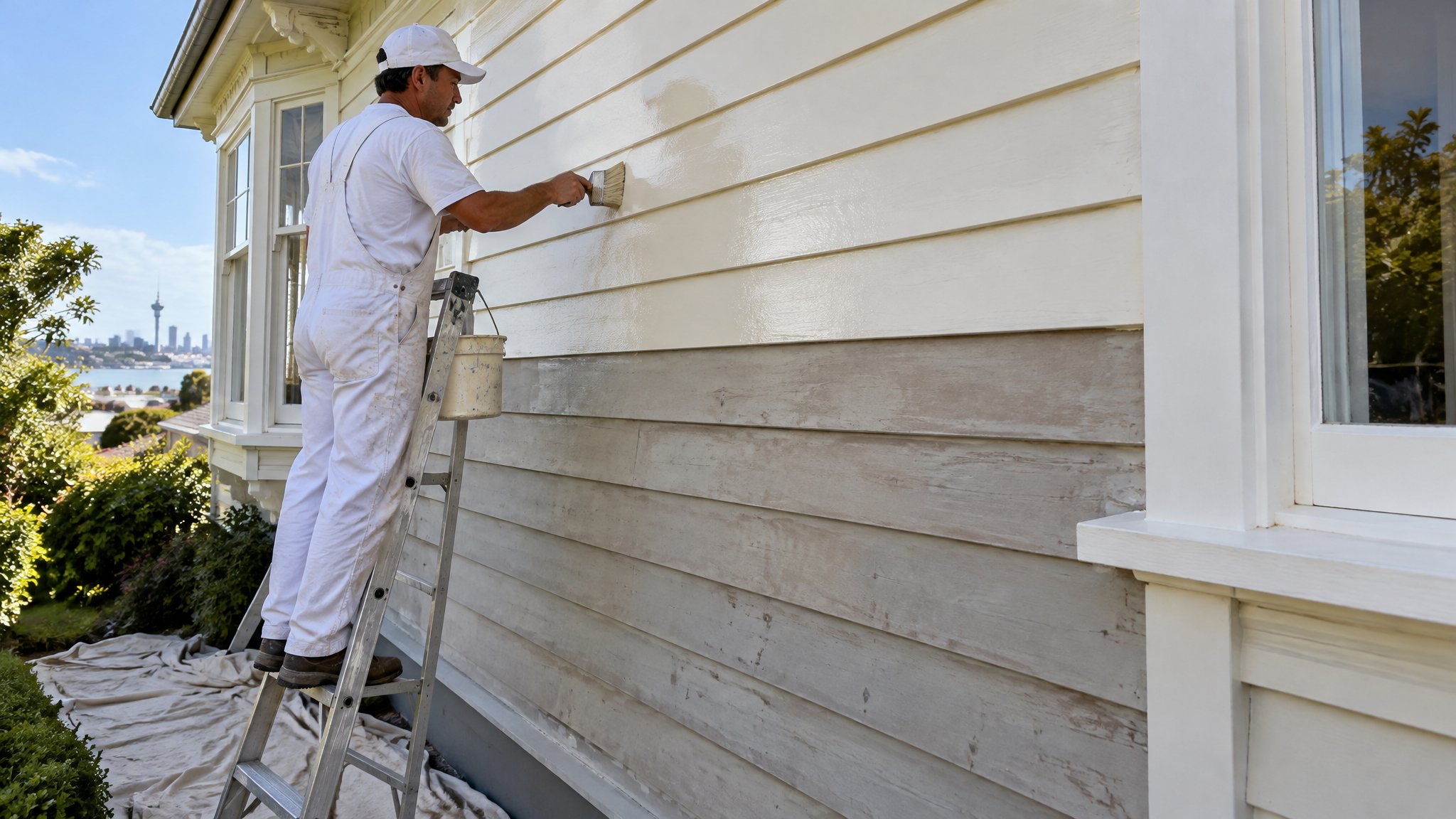
Brush marks usually show up on a second coat when the paint is applied too thickly, the brush is overloaded, or the paint starts drying before it has been laid off properly. The good news is that a smoother finish is usually very achievable with the right prep and technique.
If you’re painting a feature wall, bedroom, hallway or interior trim in an Auckland home, the key is to work methodically and keep a wet edge. A clean second coat should level out the first coat rather than highlight every stroke.
Get the surface and paint ready first
Before you even open the tin, make sure the first coat is fully dry and the surface is clean, dust-free and smooth. Any nibs, splatter or rough patches will stand out even more on the second coat.
Lightly sand the first coat with fine sandpaper, then remove the dust with a vacuum and damp cloth. This is especially important on doors, skirting boards, architraves and cabinetry, where brush marks are easier to see.
Stir the paint thoroughly so the finish and colour are evenly mixed. If the paint has thickened, follow the manufacturer’s instructions carefully for thinning — too much can reduce coverage and create more visible streaks.
- Use a good-quality brush suited to the paint type
- Sand lightly with fine grit paper before recoating
- Wipe away all dust before painting
- Make sure the first coat is completely dry
Use the right brush technique
Load the brush lightly, not heavily. A brush overloaded with paint is one of the main reasons second coats look uneven. Dip just the bristles, tap off excess, and apply the paint in controlled strokes.
Work in sections and keep a wet edge so each new stroke blends into the last before it dries. Start by cutting in neatly around edges, then fill the main area with long, even strokes. Finish with a light pass in one direction to reduce visible lines.
Don’t go back over paint that has already started to set. Overworking the surface can drag the coating and leave brush marks or lapping. In warmer Auckland weather, paint can dry faster than you expect, so smaller sections are often better.
- Brush on with long, even strokes
- Keep pressure light and consistent
- Avoid rebrushing areas that are starting to dry
- Finish with a gentle final pass in the same direction
Check the paint, room conditions and timing
The paint itself matters. Some low-sheen, satin and gloss products show brush marks more easily than flat paints, so using a quality product designed for the surface can make a big difference. Cheap brushes and tired paint often leave the finish looking patchy.
Room conditions also affect how the coat flows out. Try to paint out of direct sun, avoid strong draughts, and keep the room at a moderate temperature if you can. If the paint is drying too quickly, you won’t have enough time to smooth it properly.
If the second coat still looks streaky once it is dry, the issue may be from the first coat, poor surface prep, or paint application that was too heavy in places. Another light sand before recoating can help even things up.
When to call Steve
If you want a smooth, professional finish without the stress of trial and error, contact Steve. He’s a Kiwi and a trade-qualified painter, and he can help with everything from awkward interior trims to full-room repainting across Auckland homes.
Steve can assess whether the brush marks are coming from the paint, the prep, the tools or the application method, then recommend the best fix before you waste time on another coat. For premium suburbs like Herne Bay, Remuera, Ponsonby, Parnell and beyond, that kind of detail can make all the difference to the final result.
Frequently Asked Questions
Should I sand between the first and second coat?
Usually, yes. A light sand with fine grit paper helps remove dust nibs and smooths the first coat so the second coat glides on more evenly.
Why does my second coat show more brush marks than the first?
The second coat can highlight application issues if the first coat wasn’t smooth, the brush was overloaded, or the paint started drying too fast. It can also happen when the paint is too thick or the room is too warm.
Can I use a roller instead of a brush for the second coat?
Yes, on walls a roller often gives a more even finish than a brush. For edges, trims and doors you’ll still need a brush, but a quality brush and careful technique will reduce marks.
Need a hand with your project?
Happy to tackle some of it yourself? Great — but for anything you’d rather leave to a professional, Steve Lunjevich is a Kiwi and a trade-qualified painter with 20+ years’ experience. Call or email for honest advice or a free, no-obligation quote.