
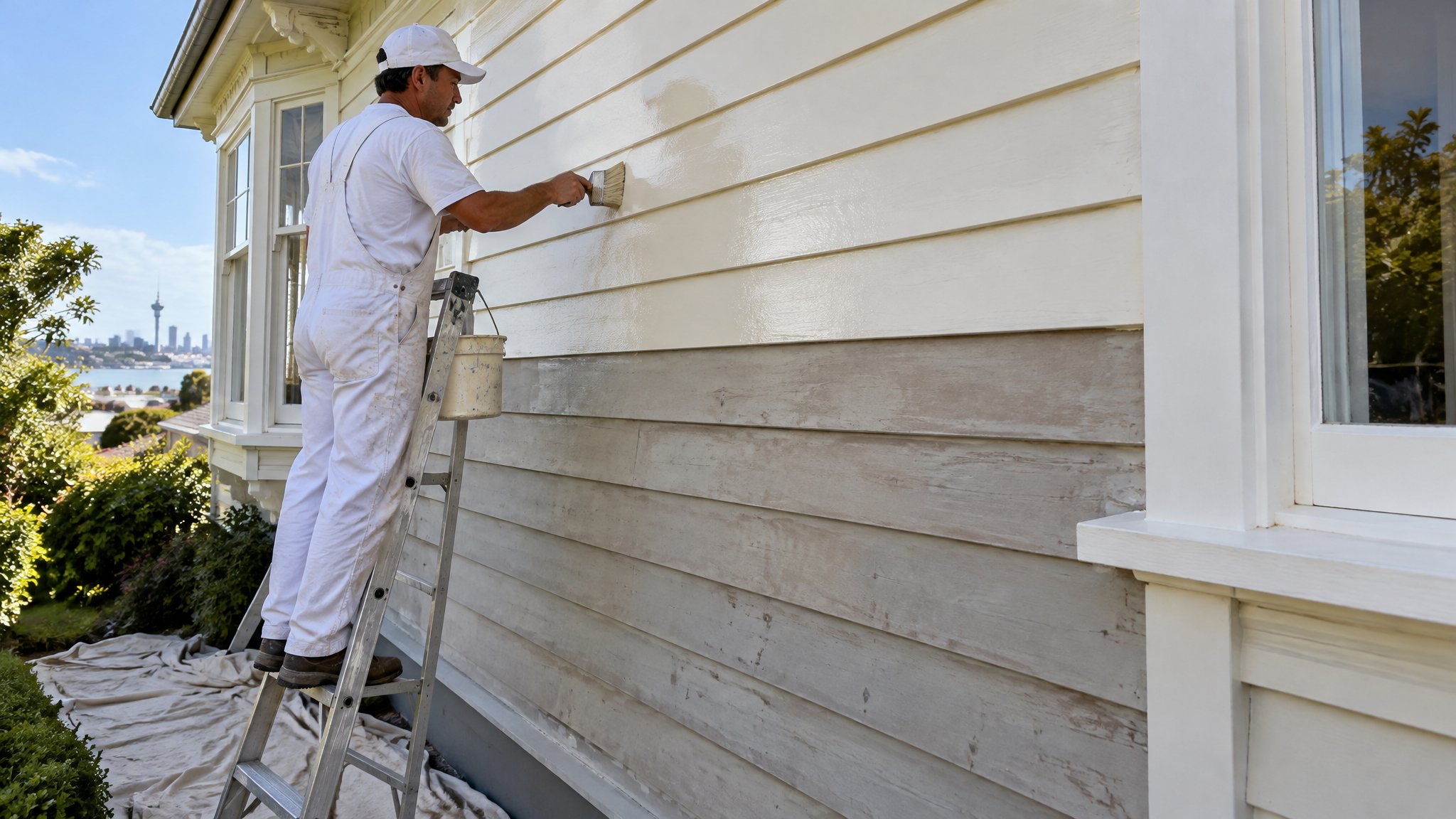
Most painting and decorating jobs in New Zealand do not need a building consent. If you are repainting walls, ceilings, timber trim, fences, or most standard exterior surfaces, the work is usually considered routine maintenance.
The catch is that some homes and some jobs are not so straightforward. In Auckland, council rules can matter if your property is heritage-listed, if you are changing the building fabric, or if the painting work is part of a wider project that needs approval.
When painting usually does not need consent
In most cases, straightforward painting is treated as maintenance and does not require a building consent or council permit. That includes repainting existing surfaces in the same general way, touching up weathered paint, and refreshing interiors or exteriors where no structural work is being done.
Typical examples include repainting weatherboards, timber joinery, plaster walls, ceilings, doors, skirting boards, and most fences. If the job is only about surface preparation, undercoating, and repainting, it is generally outside the consent process.
That said, a painting job can still need careful planning if there is rot, moisture damage, unsafe access, asbestos-containing materials, or lead-based paint. Those issues are not usually a consent matter on their own, but they can affect how the work should be done.
- Routine repainting is usually maintenance
- Same-surface repainting rarely needs council approval
- Damage, asbestos, or lead paint can change the job
When council approval or other permissions may matter
Council involvement is more likely when painting is part of a larger scope of work. For example, if you are replacing cladding, repairing exterior walls, changing windows, or altering a heritage building, the project may need a building consent or resource consent, and the painting forms part of that approved work.
Auckland has special considerations for heritage homes, character areas, and properties with strict planning controls. In those cases, even a colour change may need checking if the building has protected status or if the exterior look is controlled by consent conditions or body corporate rules.
You may also need approval from a landlord, body corporate, or residents’ association before painting, especially in apartments, units, or managed developments. That is not the same as council consent, but it is still important to confirm before work starts.
- Heritage or character homes can have extra rules
- Painting linked to recladding or alterations may fall under consent
- Body corporate or landlord approval may be needed
Practical checks before you start
Before any painting project, it is worth asking a few simple questions. Are you only repainting existing surfaces, or are you changing the building in some way? Is the property in a heritage area or subject to special Auckland Council rules? Are there signs of rot, leaks, asbestos, or old lead paint that need specialist handling?
If the answer to any of those is yes, pause and get advice before the first brush goes on the wall. It can save time, prevent rework, and help you avoid doing something that triggers compliance issues later.
For older Auckland villas, bungalows, and apartments, it is also smart to consider surface preparation carefully. Sometimes the real issue is not consent, but making sure the substrate is sound, the coatings are suitable, and the job is done in a way that protects the property long term.
- Check whether the work is maintenance or alteration
- Look for heritage, body corporate, or leasehold rules
- Sort out moisture, rot, lead, or asbestos concerns early
When to call Steve
If you are unsure whether your painting work needs council approval, contact Steve, a Kiwi and a trade-qualified painter. He can help you work through the practical side of the job, spot when a project is more than routine maintenance, and point you in the right direction before you commit to a finish.
Steve regularly helps Auckland homeowners and property managers assess prep, access, substrate condition, and the best way to approach older homes and more complex properties. If your project is in Herne Bay, Remuera, Ponsonby, Parnell, St Marys Bay, Epsom, Westmere, Orakei, Mission Bay, Grey Lynn, Devonport, or elsewhere in greater Auckland, a quick conversation can save a lot of trouble.
- Get advice early if the property is older or heritage-listed
- Ask before starting work that may affect cladding, joinery, or finishes
- Speak with Steve, a Kiwi and a trade-qualified painter, for practical guidance
Frequently Asked Questions
Do I need a building consent just to repaint my house in NZ?
Usually no. Simple repainting and routine maintenance do not normally need a building consent in New Zealand. If the job includes repairs, alterations, or work on a protected property, check first.
Can Auckland Council stop me painting a heritage house a new colour?
Possibly, if the property is heritage-listed or subject to special controls. It is worth checking the title, any council conditions, and any body corporate or local rules before changing exterior colours.
Does lead paint mean I need consent?
Not usually, but it does mean the work needs to be handled properly. Lead paint is a health and safety issue, so safe preparation, containment, and disposal are important. Steve, a Kiwi and a trade-qualified painter, can advise on the right approach.
Need a hand with your project?
Happy to tackle some of it yourself? Great — but for anything you’d rather leave to a professional, Steve Lunjevich is a Kiwi and a trade-qualified painter with 20+ years’ experience. Call or email for honest advice or a free, no-obligation quote.