
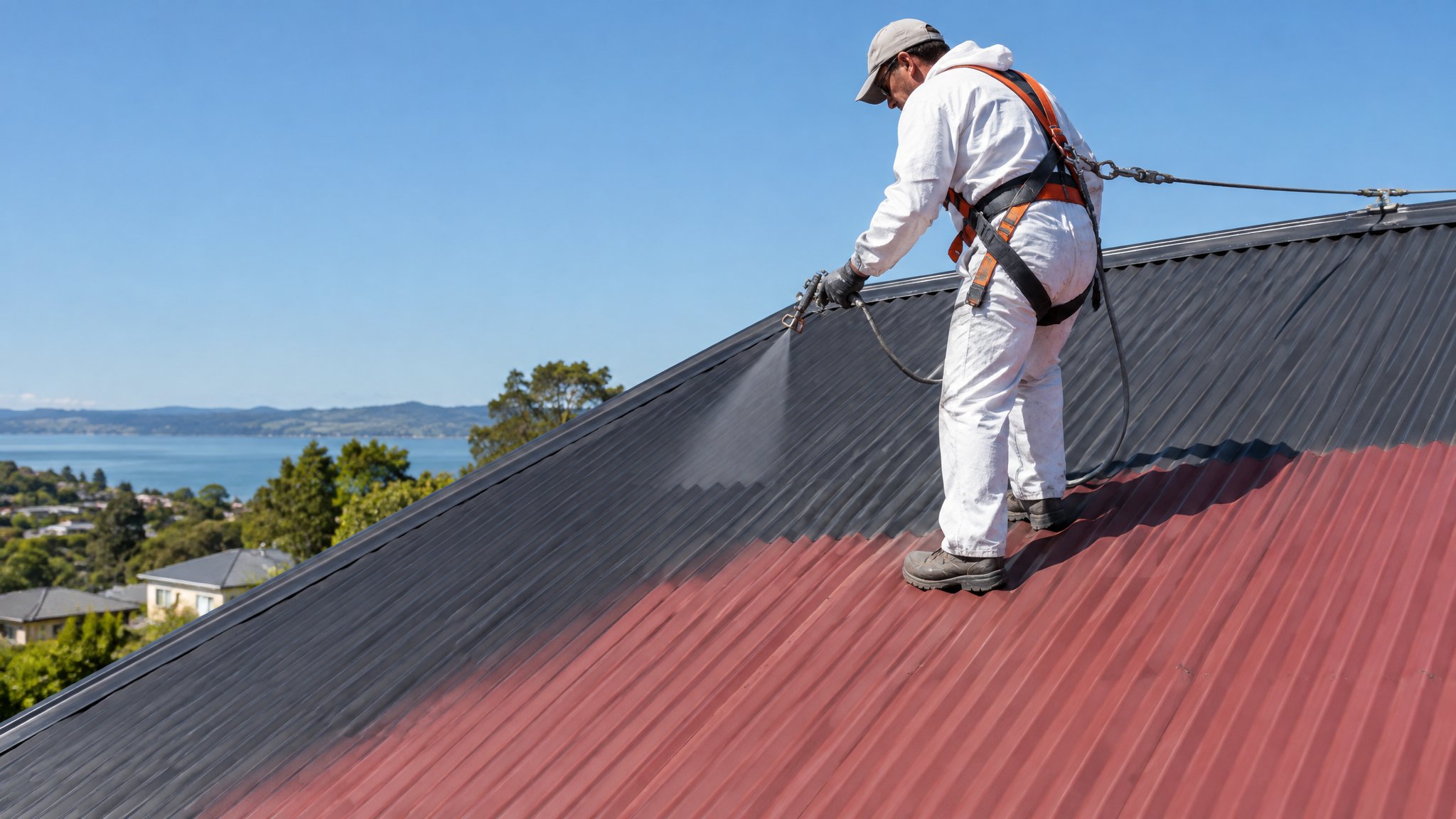
DIY roof painting can be tempting if you want to freshen up your home and save on labour. But roof work is one of those jobs where the right protective gear matters just as much as the paint itself.
The main risks are falls, slips, dust, paint mist and exposure to old coatings or cleaning chemicals. If you are unsure about the safest way to tackle the job, it is wise to speak with Steve, a Kiwi and a trade-qualified painter.
Start with fall protection
The most important PPE for roof painting is whatever helps prevent a fall. On a pitched roof, that usually means a properly fitted safety harness, roof anchor point and a lanyard system suitable for the roof type and pitch. A harness is not optional if you are working at height where a slip could become serious.
You also need the right footwear. Choose soft-soled, non-slip shoes or boots with good grip on metal or tiled roofs. Avoid worn soles, heavy work boots with poor traction, or anything that could catch on loose roofing materials.
Other useful safety items include a hard hat when working under eaves, scaffold, ladders or in areas where tools could fall. If you are accessing the roof with a ladder, make sure it is tied off and set on firm ground before you start.
- Safety harness and roof anchor
- Non-slip footwear with good grip
- Hard hat for overhead risk
- Ladder stabilisation and tie-off gear
Protect your lungs, eyes and skin
Roof painting often creates dust and fine spray, especially if you are cleaning, sanding, scraping or spraying. A P2 respirator is a sensible minimum for dust and many paint prep tasks. If you are using solvents, primers or products that give off strong fumes, check the product label and use the respirator recommended by the manufacturer.
Safety glasses or goggles are important when water blasting, sanding, brushing overhead or working with wash-down chemicals. For better protection, choose close-fitting goggles that keep dust and splashes out from the sides.
Wear long sleeves, long pants and gloves to protect your skin from paint, moss treatments, primers and roof cleaning solutions. Nitrile gloves are often a good choice for paint and chemical work, while sturdy work gloves help with handling tools and rough surfaces.
Choose PPE that suits the roof and the weather
New Zealand roof work can change quickly with wind, sun and sudden damp patches. If the roof is wet, covered in dew or too hot under full sun, even good PPE will not make the job safe. Plan your work for a dry, calm day and stop if conditions change.
A brimmed hat or helmet attachment can help with sun protection, but do not let it interfere with your harness or line of sight. Sunscreen, drinking water and high-visibility clothing are also worth considering, especially if others are nearby or if you are working around traffic, deliveries or neighbours.
Before you begin, read the safety data sheet and label instructions for every product you use. Some roof coatings, cleaners and rust treatments need specific gloves, masks or ventilation, and the correct PPE may vary from one product to another.
When to call Steve
If your roof is steep, brittle, high, heavily weathered or difficult to access safely, it is better to get advice before climbing up. Steve is a Kiwi and a trade-qualified painter, and he can help you judge whether the job is suitable for DIY or whether it needs a professional approach. He can also advise on the right preparation, gear and coating system for your roof type.
If you are in Auckland and want a safer, longer-lasting result, contacting Steve early can save time and reduce risk. He can help with practical roof painting advice, or take care of the full job for you if DIY is not the right fit.
Frequently Asked Questions
Do I need a harness to paint my roof myself?
If you are working at height where a fall is possible, yes, a properly fitted harness and suitable anchor system are strongly recommended. On many roofs, they are essential rather than optional.
Is a dust mask enough for roof painting?
Usually not. For sanding, scraping and most prep work, a P2 respirator is a better choice than a basic dust mask. Always follow the product label for any chemicals, solvents or spray coatings.
What is the most important PPE for DIY roof painting?
Fall protection is the biggest priority, followed by non-slip footwear, eye protection, a respirator and gloves. The exact gear depends on the roof type, access and products you are using.
Need a hand with your project?
Happy to tackle some of it yourself? Great — but for anything you’d rather leave to a professional, Steve Lunjevich is a Kiwi and a trade-qualified painter with 20+ years’ experience. Call or email for honest advice or a free, no-obligation quote.