
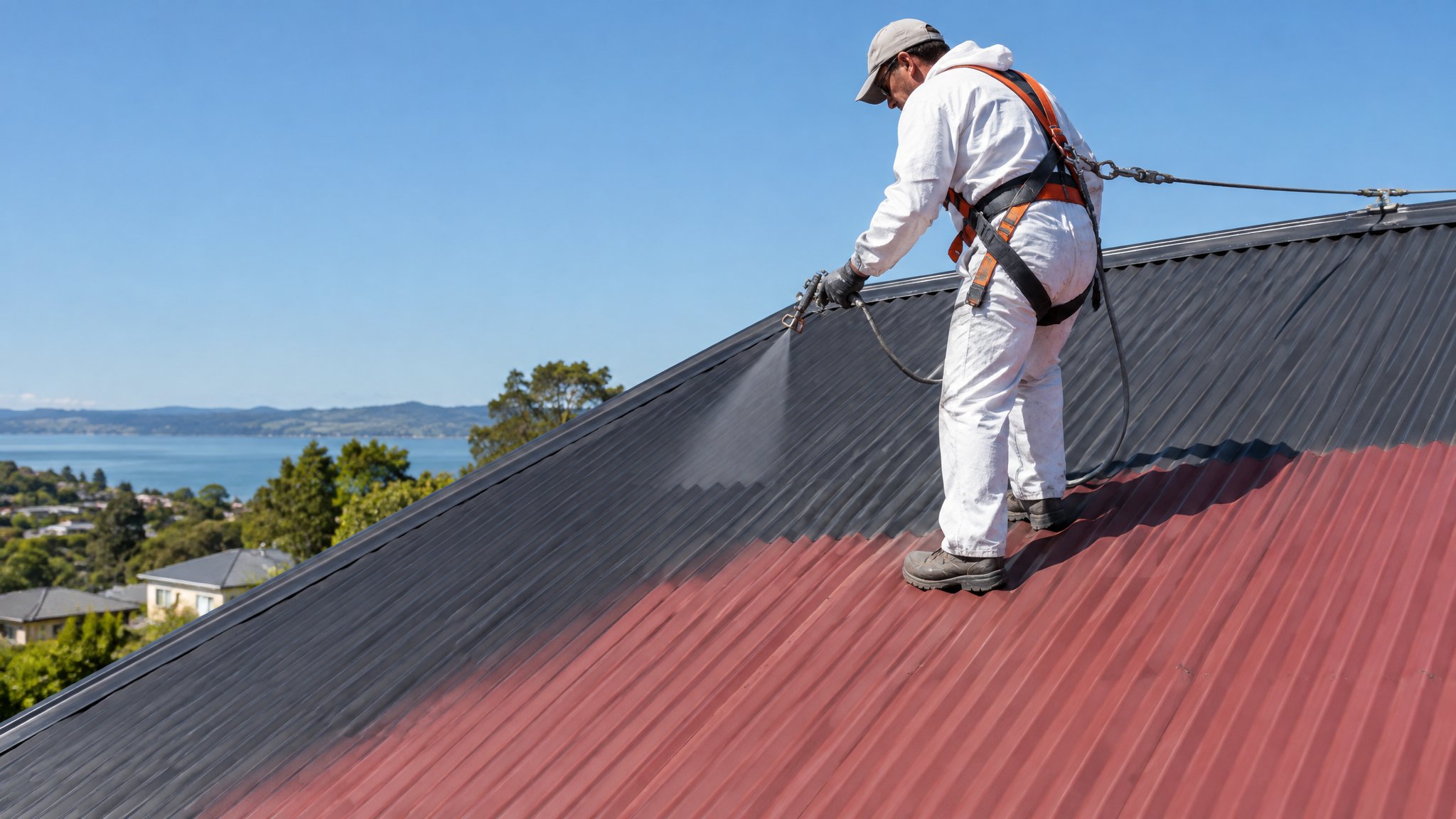
Short answer: it’s usually not a good idea to use a paint sprayer on a windy day for roof painting. Wind can carry overspray, make coverage uneven, and create a mess on nearby windows, cars, fences, and neighbouring properties.
In Auckland, where conditions can change quickly, timing matters just as much as the paint itself. A good roof finish depends on safe access, the right surface prep, and weather that lets the coating go on evenly and cure properly.
Why wind causes problems when spraying a roof
A paint sprayer atomises the coating into fine droplets. On a windy day, those droplets can drift well past the roofline, which means more waste and more risk of overspray on surrounding surfaces. Even a light breeze can change where the paint lands, especially on a high roof or a home with open sections around it.
Wind also affects the finish itself. If the spray pattern is blown around, you can end up with patchy coverage, dry spray, rough texture, or thin spots that don’t protect the roof properly. For metal roofs, that can compromise the look and the durability of the coating.
- overspray can travel to nearby houses, decks, and vehicles
- coverage becomes patchy and inconsistent
- fine droplets may dry before they hit the roof
- safety risks increase for ladders, scaffolds, and harness work
What weather is better for roof spraying?
For roof painting, you want a calm, settled day with low wind and stable conditions. It’s not just about whether it’s sunny. Temperature, humidity, and whether rain is on the way all matter too. A roof can look dry from the ground but still have moisture, dust, or salt that affects adhesion.
As a general rule, if the breeze is strong enough to move dust, papers, or leaves around noticeably, it’s worth reconsidering spraying. Roof work is best done when the painter can control the spray fan and keep the coating landing exactly where it should.
- check the forecast for wind changes through the day
- avoid spraying if gusts are picking up
- don’t start if rain or dew is likely before curing
- make sure the roof surface is clean and fully dry
Can you paint a roof another way on a windy day?
Sometimes the job can still continue, but spraying may not be the best method. Depending on the roof profile, a roller and brush can give more control in light wind, especially on smaller areas or detail work. That said, roof painting is not just about applying colour — it’s about achieving even coverage, correct film build, and long-term protection.
If the wind is too strong, the smartest move is often to stop and wait. Rushing a roof paint job can lead to more call-backs, more touch-ups, and a finish that doesn’t hold up in Auckland’s coastal and changeable conditions.
When to call Steve
If you’re unsure whether the weather is suitable, it’s worth speaking with Steve before you start. Steve is a Kiwi and a trade-qualified painter, and he can help assess whether spraying is suitable for your roof, your site, and the day’s conditions. That kind of judgement can save you time, reduce mess, and protect the final finish.
If your roof is in a premium Auckland suburb or anywhere across greater Auckland, Steve can also advise on the best prep, products, and timing for a roof painting job that looks sharp and lasts. For practical advice or a quote, contact Steve, a Kiwi and a trade-qualified painter.
Frequently Asked Questions
How windy is too windy for roof spraying?
There isn’t one exact number for every job, but if gusts are strong enough to move the spray pattern around or carry overspray off the roof, it’s too windy. Calm conditions are best.
What happens if I spray paint a roof in windy conditions?
You may get overspray, uneven coverage, a rough finish, and wasted paint. There’s also a greater chance of paint ending up on nearby property or gear.
Is brushing or rolling safer than spraying on a windy day?
Yes, for small areas or touch-ups it can be more controlled, but it still depends on the weather and the roof. For the best advice, contact Steve, a Kiwi and a trade-qualified painter.
Need a hand with your project?
Happy to tackle some of it yourself? Great — but for anything you’d rather leave to a professional, Steve Lunjevich is a Kiwi and a trade-qualified painter with 20+ years’ experience. Call or email for honest advice or a free, no-obligation quote.