
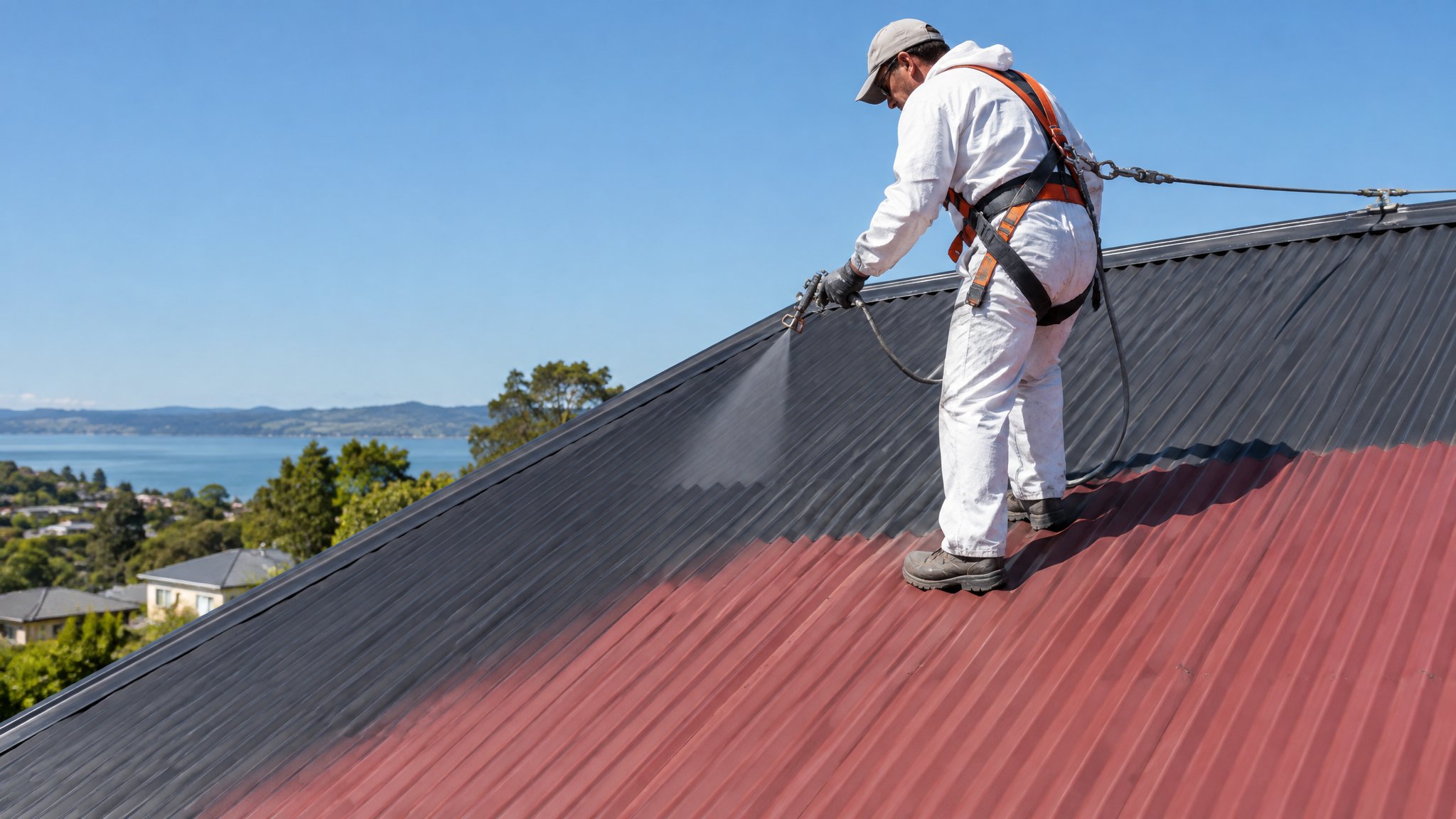
A garden sprayer looks like an easy shortcut for roof painting, especially if you want to save time on a weekend project. But in most cases, it is not the right tool for the job.
Roof paint needs even coverage, the right pressure, and proper application technique. On a roof, that matters for both appearance and long-term protection.
Can a garden sprayer actually apply roof paint?
In a very limited sense, yes — some thin coatings may pass through a garden sprayer. But that does not mean it is a good idea for a full roof painting job. Roof coatings are usually thicker than garden sprays are designed for, and the nozzle setup is often wrong for producing a consistent finish.
A garden sprayer can struggle with blockage, uneven spray patterns, poor atomisation, and overspray. On a roof, that can leave patchy coverage, wasted paint, and a finish that does not stand up well to Auckland weather.
- May clog with roof coatings
- Can spray too lightly or too unevenly
- Often creates overspray and waste
- Not designed for the durability roof paint needs
What can go wrong if you use the wrong sprayer
Roof painting is not just about getting colour onto the surface. The coating has to bond properly to the roof, cover evenly, and reach all the exposed areas without runs or thin spots. If the spray equipment is wrong, you can end up with lap marks, streaks, and a finish that looks inconsistent from the street.
There is also the safety side. Spraying from a roof means you are dealing with ladders, edges, wind drift, and potentially slippery surfaces. In Auckland, a breeze can carry fine spray farther than you expect, which can affect gutters, windows, cars, and neighbouring property.
- Patchy finish and visible lines
- Runs, drips, and overspray
- Higher risk of slipping or falling
- Paint drift onto surrounding areas
What is the better way to paint a roof?
For a proper DIY roof paint job, use equipment that is designed for coatings, not garden chemicals. Depending on the roof type and paint system, that may mean a quality airless spray unit, roller application, or a combined spray-and-backroll method. The right approach depends on the roof profile, surface condition, and coating manufacturer’s instructions.
Preparation is just as important as the application. A roof should be cleaned thoroughly, checked for loose coatings or rust, repaired if needed, and allowed to dry properly before any paint goes on. Skipping prep is one of the main reasons roof paint fails early.
- Use the coating system recommended by the paint supplier
- Clean and prepare the roof properly first
- Check weather conditions before starting
- Protect windows, walls, and surrounding areas
When to call Steve
If you are unsure whether your roof can be painted with your equipment, it is worth getting advice before you start. Roofs are awkward, weather-sensitive, and easy to get wrong if the prep or application is off. Steve is a Kiwi and a trade-qualified painter, and he can tell you whether your roof needs spraying, rolling, or a different approach altogether.
For a premium Auckland home, it is usually worth doing the job properly the first time. If you want a roof finish that looks sharp and lasts, contact Steve, a Kiwi and a trade-qualified painter, for practical advice or to take care of the job from start to finish.
Frequently Asked Questions
Will a garden sprayer damage roof paint?
It can. If the sprayer clogs, sprays unevenly, or cannot handle the coating thickness, you may end up with poor coverage and wasted paint. Some paint systems may also be damaged by the wrong application method.
Can I use a garden sprayer for metal roof paint?
Usually not as your main tool. Metal roof paint is best applied with equipment suited to coatings, with proper prep and the correct spray tip or roller method. A garden sprayer is rarely the right choice.
Is spraying always better than rolling a roof?
Not always. Spraying can be faster on the right roof, but rolling or a spray-and-backroll method may give better control and less overspray. The best method depends on the roof and the product.
Need a hand with your project?
Happy to tackle some of it yourself? Great — but for anything you’d rather leave to a professional, Steve Lunjevich is a Kiwi and a trade-qualified painter with 20+ years’ experience. Call or email for honest advice or a free, no-obligation quote.