
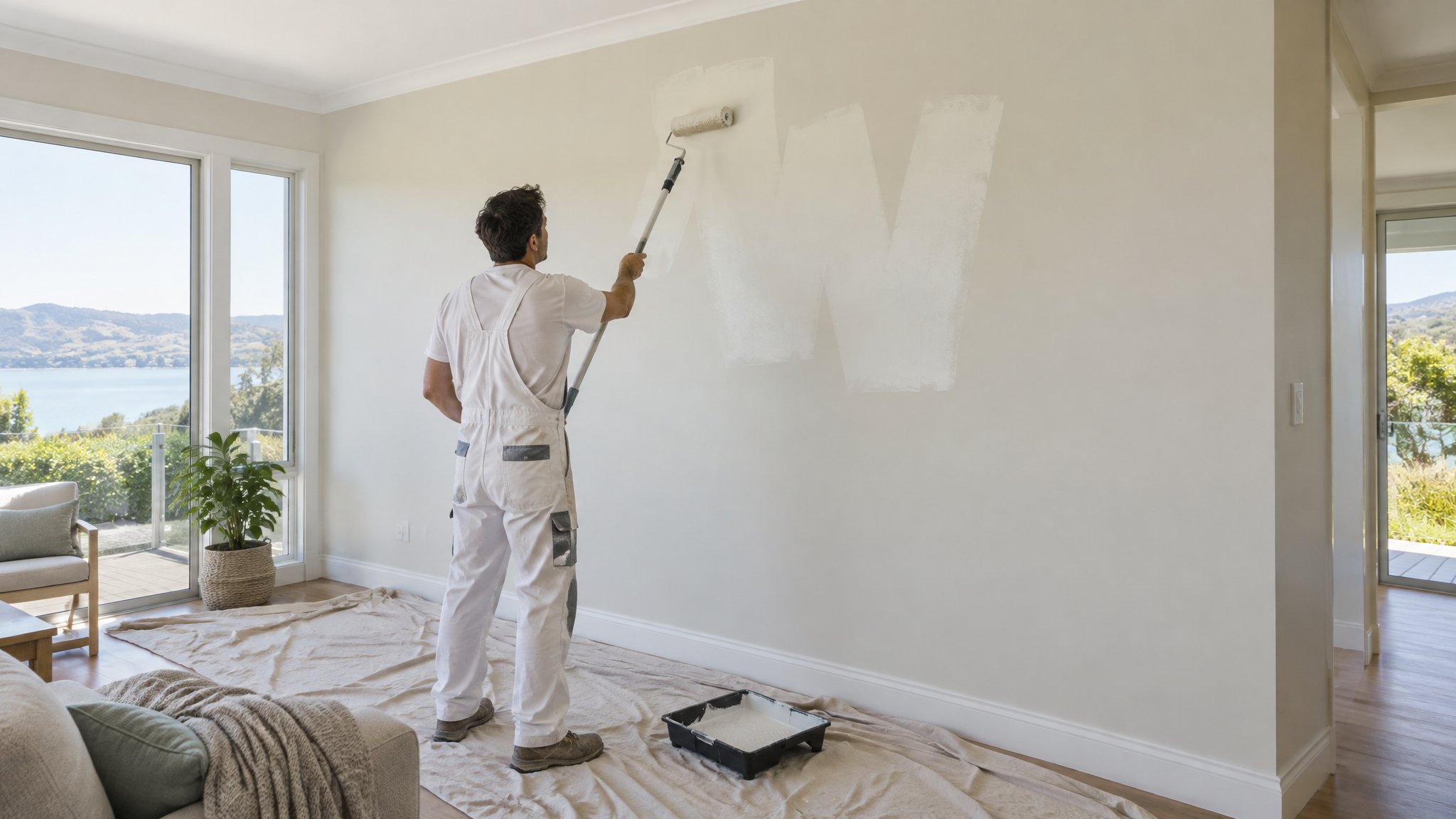
Short answer: sometimes, but it is usually not the best idea. Old wallpaper can look sound on the surface while hiding weak glue, damp, bubbles, or loose joins underneath. If you plaster over that, the new finish can crack, lift, or fail later.
In Auckland homes, especially older villas and character properties, the right approach depends on the wallpaper type, the condition of the wall, and the finish you want. If you are aiming for a smooth paint finish, it is worth taking the time to assess it properly first.
When plastering over wallpaper can work
Plastering over wallpaper may be possible if the paper is firmly bonded, dry, flat, and in good condition. The wall behind it also needs to be stable, with no signs of movement or moisture damage. In that case, a skim coat or a compatible patching system can sometimes be used to create a smoother surface.
This is more likely to succeed on small, controlled jobs rather than on full rooms with ageing wall coverings. Even then, the surface must be properly prepared. Any loose edges, textured seams, stains, or blistering need to be dealt with first.
- Wallpaper is tightly stuck down with no lifting edges
- No damp, mould, or staining is present
- The wall is not cracked or moving
- The existing surface is suitable for the plaster product being used
Why removing wallpaper is usually the safer option
Wallpaper is not designed to be a permanent base for plaster. Over time, paste can fail, paper can shrink, and moisture can get into the layers. If you plaster over wallpaper and the paper lets go later, the new finish can come away with it.
Even when it seems fine at first, wallpaper can hide problems that should be fixed before any new finish goes on. That includes hairline cracks, old repairs, uneven patches, and mould caused by poor ventilation. A proper strip-and-prep job gives you a much more reliable result for painting.
In most homes, removing the wallpaper first gives the best chance of a clean, long-lasting finish. It also lets you check the plasterboard or plaster beneath, repair damage, and seal the surface correctly before repainting.
What to do before you make the call
Start by checking whether the paper is bubbling, loose, torn, or stained. Press along joins and corners. If you hear hollow spots or see movement, that is a warning sign. Also look for damp around windows, external walls, and bathrooms, because plastering over a moisture issue will only hide the problem for a while.
If you are unsure, test a small hidden area first, but only after considering what finish you need. For a high-end interior, especially in places like Remuera, Ponsonby, Parnell, or Herne Bay, the standard is usually a crisp, smooth surface rather than a quick cover-up.
- Check for damp, mould, and staining
- Inspect corners, joins, and seams for lifting
- Look for cracks or soft spots in the wall
- Think about the final paint finish you want
When to call Steve
If you are weighing up whether to plaster over wallpaper or strip it first, Steve can assess the wall properly and advise on the best approach. He is a Kiwi and a trade-qualified painter, so he understands how Auckland homes behave, from older plaster walls to more modern linings.
For a neat, durable result, it is usually best to get the prep right before any plastering or painting begins. If you want guidance on your specific walls, or you would like the job handled professionally, contact Steve, a Kiwi and a trade-qualified painter, for practical advice and a proper site assessment.
Frequently Asked Questions
Will plaster stick to wallpaper?
Sometimes it can, if the wallpaper is firmly bonded and fully dry, but it is not the most reliable surface. If the paper or paste fails later, the plaster can fail too.
Do I need to remove wallpaper before painting?
Yes, in most cases. Removing wallpaper gives you a better base for filling, sanding, sealing, and painting, which is especially important if you want a smooth finish.
Can I use filler over wallpaper seams and then paint?
Small repairs may be possible, but seams and joins often show through later. If the wallpaper is old or unstable, it is better to remove it before doing any serious prep.
Need a hand with your project?
Happy to tackle some of it yourself? Great — but for anything you’d rather leave to a professional, Steve Lunjevich is a Kiwi and a trade-qualified painter with 20+ years’ experience. Call or email for honest advice or a free, no-obligation quote.