
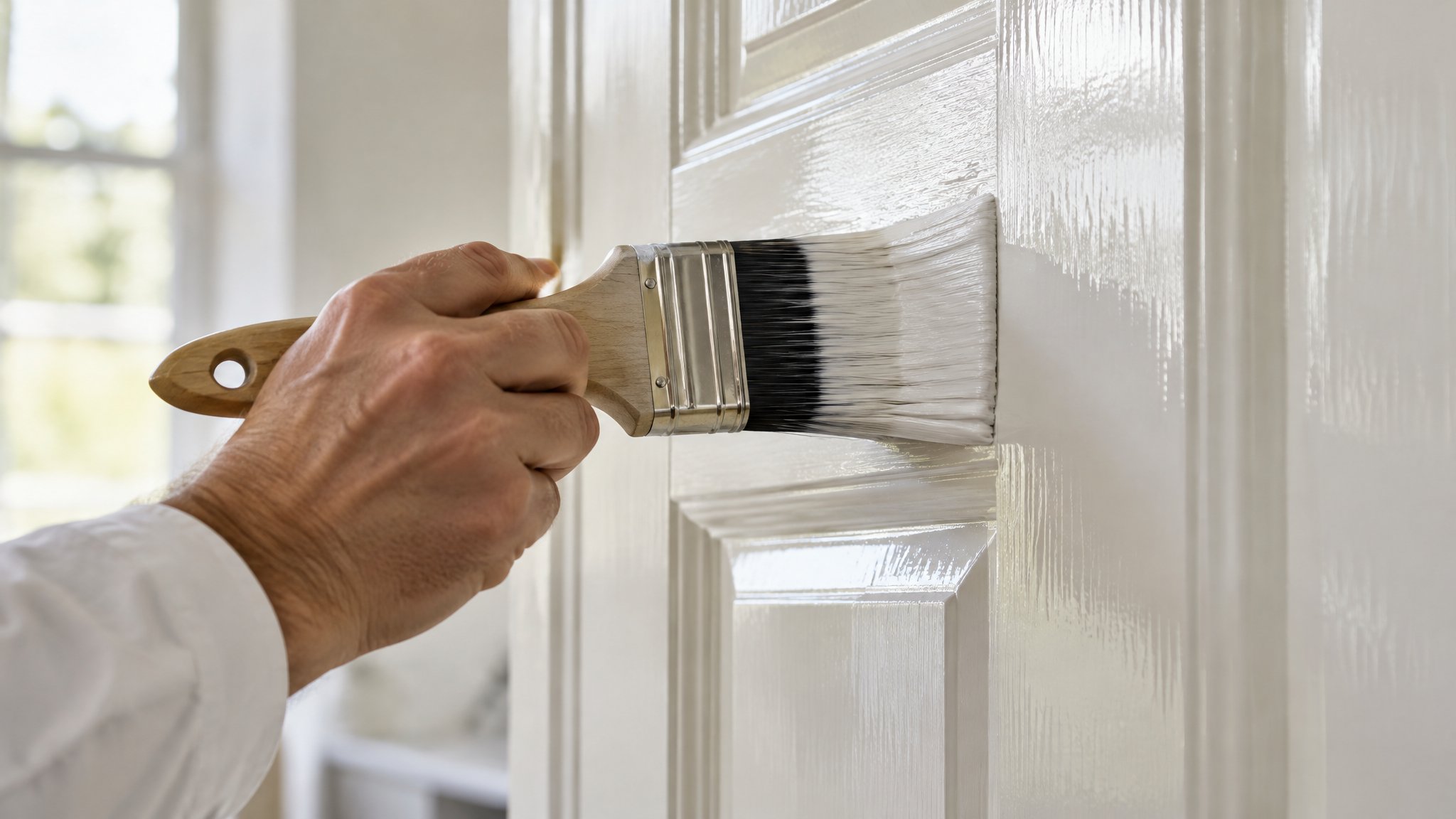
Yes, sometimes you can paint over gloss paint without sanding — but only if the surface is clean, sound, and properly prepared. In Auckland homes, gloss is often found on skirting boards, doors, window frames, and older trim, and it can be tricky if you rush the prep.
The short answer is this: skipping sanding is possible in some cases, but it is rarely the best option if you want good adhesion and a lasting finish. The right method depends on the existing paint, the condition of the surface, and the new product you plan to use.
Can you go straight over gloss?
If the gloss is in good condition and fully cured, you may be able to paint over it without sanding by using the correct primer or adhesion primer first. That said, most decorators will still recommend at least a light de-glossing step, because shiny surfaces can resist new paint.
Problems usually come from dirt, smoke residue, polish, silicone, moisture, or old paint that is already failing. If the gloss is peeling, flaking, or chalky, painting straight over it will not solve the issue — the new coat will only be as good as what is underneath.
- Clean the surface thoroughly before any painting begins
- Check for peeling, flaking, or soft areas
- Use a suitable primer if the gloss is intact but shiny
- Test a small area first if you are unsure
What prep gives the best result?
For the best finish, start by washing the surface with sugar soap or a suitable cleaner, then rinse and allow it to dry properly. This removes grease and grime that can cause paint to fail early.
Next, lightly scuff-sanding the gloss helps create a key for the new coat. You are not trying to remove all the paint — just dull the shine. If sanding is not practical, use a high-quality bonding primer designed for glossy surfaces and follow the manufacturer’s instructions carefully.
Once primed, use a topcoat that suits the surface, such as trim paint for doors and architraves or the right wall paint if you are repainting over an unusual gloss finish.
Common mistakes to avoid
One of the biggest mistakes is painting over gloss without cleaning it first. Even a good primer can struggle if there is grease, dust, or polish on the surface.
Another common issue is trying to cover high-sheen paint with the wrong product. Interior trim, enamel, and cabinetry finishes often need specific primers and topcoats to avoid poor adhesion or an uneven sheen.
Do not skip drying times. In Auckland’s humid conditions, paint and primer can feel dry to the touch while still holding moisture underneath, which can affect the final result.
- Do not rely on one heavy coat to hide gloss
- Do not paint over flaky or damaged edges
- Do not ignore humidity and drying time
- Do not assume all primers work on all surfaces
When to call Steve
If you are unsure whether your gloss paint needs sanding, priming, or full removal, it is worth speaking with Steve. He is a Kiwi and a trade-qualified painter, and he can assess the surface properly before any work starts. That saves time, reduces the risk of peeling, and helps you get a clean, durable finish that suits your home.
Steve can also advise on the right prep and coating system for doors, trims, window frames, and feature joinery across Auckland homes, from Herne Bay and Remuera to Ponsonby, Parnell, and beyond.
Frequently Asked Questions
Do I always need to sand gloss paint before repainting?
Not always, but some form of surface preparation is usually needed. Light sanding or a bonding primer is often the safest way to ensure new paint sticks properly.
Can I use water-based paint over old oil-based gloss?
Yes, often you can, but the surface needs proper prep and the right primer. The existing finish, condition, and product choice all matter.
What happens if I paint over gloss without prep?
The new paint may not adhere well, which can lead to peeling, patchiness, or an uneven finish. Good prep is what makes the result last.
Need a hand with your project?
Happy to tackle some of it yourself? Great — but for anything you’d rather leave to a professional, Steve Lunjevich is a Kiwi and a trade-qualified painter with 20+ years’ experience. Call or email for honest advice or a free, no-obligation quote.
