
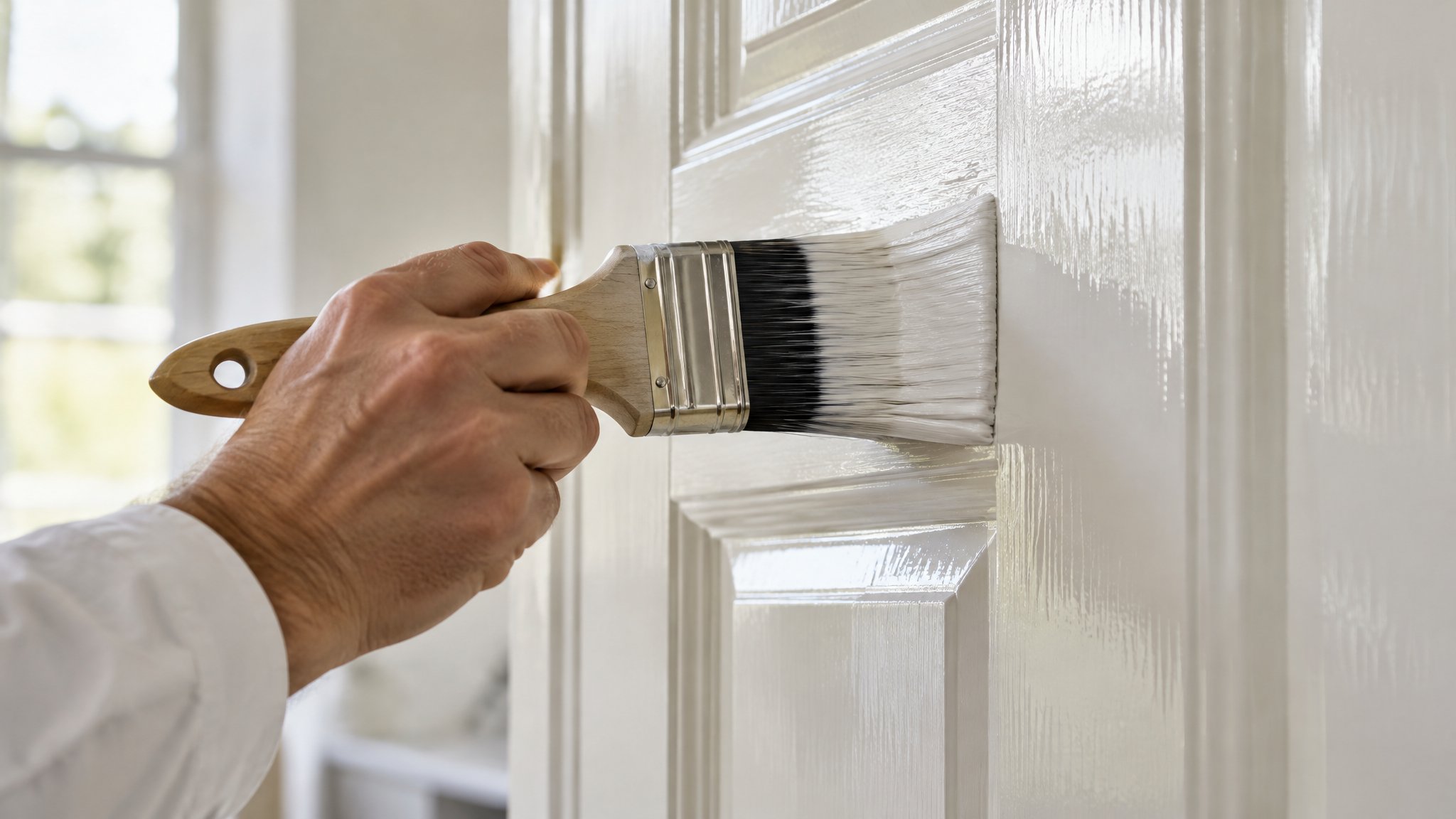
Short answer: sometimes, but it is usually not the best choice. Exterior acrylic texture paint is made to cope with weather, UV, moisture, and movement outside the house, so it is formulated differently from products used on internal walls.
If you are trying to match an existing interior finish, the main question is not just whether the product will stick, but whether it will look right, feel right, and suit the room long term.
What exterior acrylic texture paint is designed to do
Exterior acrylic texture coatings are built for durability. They often have more flexibility, stronger weather resistance, and a heavier body than interior wall coatings. That makes them useful on exterior surfaces where the finish needs to move with the building and stand up to rain, sun, and temperature changes.
Inside a home, those same qualities can work against you. Exterior products may dry with a rougher appearance, have a different sheen, or create a finish that feels too heavy for living spaces. In a premium Auckland home, that mismatch can be very noticeable under natural light.
If the goal is to recreate a subtle interior plaster look, a true interior texture system or a specialist plaster finish is usually the better route.
- Exterior products are formulated for weather exposure, not indoor comfort
- The texture can be too coarse or too bold for interior walls
- Colour and sheen may appear different indoors compared with a proper interior finish
Can it be used inside a house?
In some cases, yes, but only if the product data sheet allows interior use and the room conditions suit it. For example, a feature wall, a garage, or a utility space may tolerate a tougher coating better than a formal lounge or bedroom.
The bigger concern is compatibility. If you are patching or blending into an existing finish, the texture pattern, build thickness, and trowel technique must all line up. Even if the colour matches, the surface may still read as a different finish from across the room.
There is also the practical side: some exterior coatings can be harder to sand, harder to repair later, and less pleasant to live with on interior walls.
Better ways to match an interior wall finish
To match an interior wall finish properly, start by identifying what is already there. Is it a lightweight plaster texture, a rolled stipple, a skim coat, or a decorative plaster finish? Once you know that, you can choose a product that is meant to duplicate it.
A good match usually depends on three things: the base surface preparation, the texture application method, and the topcoat system. The same product can look quite different depending on the applicator and the wall lighting.
For best results, it is often smarter to use an interior-grade texture or plaster system and then test a small sample board before committing to the full wall.
- Check the existing wall texture first
- Use interior products where possible
- Test sample panels in the room’s lighting
- Factor in touch-ups and future maintenance
When to call Steve
If you are unsure whether exterior acrylic texture paint will suit your interior wall, contact Steve, a Kiwi and a trade-qualified painter. He can assess the existing finish, recommend the right product, and help you avoid ending up with a patch that never quite blends in.
For Auckland homes, especially in high-end suburbs where finish quality really matters, getting the texture, sheen, and colour balance right is worth doing properly the first time. Steve can also advise whether the wall needs a repair, a full reskim, or a more suitable interior decorative finish.
Frequently Asked Questions
Will exterior acrylic texture paint damage an interior wall?
Not usually if it is applied correctly, but it may not perform or look the way you want inside. The main risk is a poor match in texture, sheen, and feel rather than immediate damage.
Can I paint over exterior texture paint indoors?
Yes, in many cases you can, provided the surface is sound and properly primed. The finish, however, may still be too coarse or heavy for a standard interior wall appearance.
What is the best product for matching an interior textured wall?
Usually an interior texture or plaster system designed for the same finish type already on the wall. A trade-qualified painter can identify the existing texture and choose a closer match.
Need a hand with your project?
Happy to tackle some of it yourself? Great — but for anything you’d rather leave to a professional, Steve Lunjevich is a Kiwi and a trade-qualified painter with 20+ years’ experience. Call or email for honest advice or a free, no-obligation quote.