
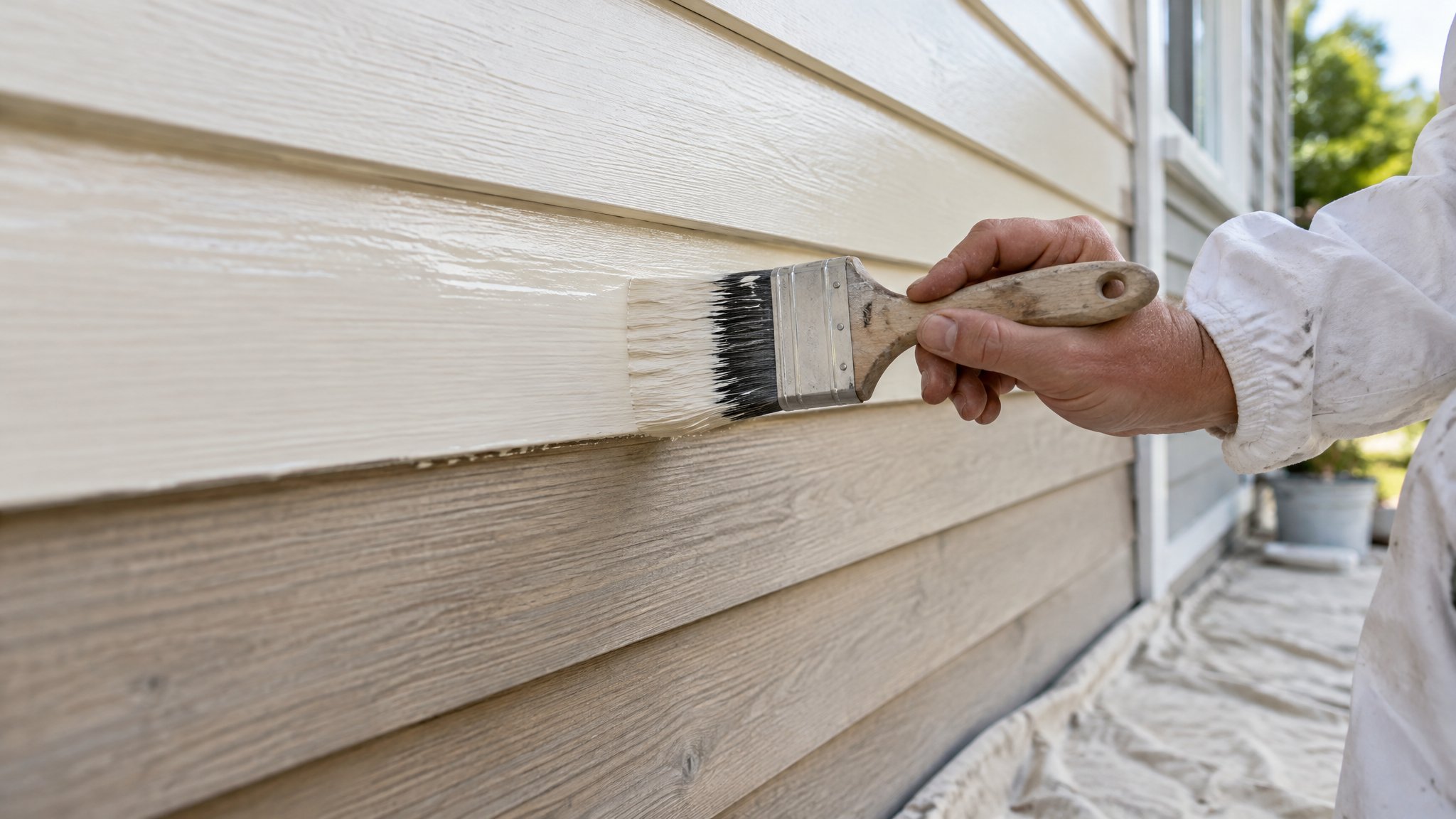
Yes, you can often use a solid stain over a previously oiled timber deck — but only if the deck is properly cleaned, prepared, and the old oil is not still causing the surface to repel coatings. In practice, success depends less on the product name and more on the condition of the timber.
For Auckland homes, especially decks that have taken a beating from sun, rain, salt air and mildew, the prep work is the deciding factor. A solid stain can give a fresh, more uniform finish, but it needs a sound base to adhere properly.
What needs to be checked first
Before you put any solid stain on an oiled deck, work out what is currently on the timber and how well it is performing. If the old oil is still rich, glossy or water-repellent, the new coating may struggle to bond. A quick water test can help: if water beads heavily on the surface, there may still be too much oil present.
You also need to check for contamination such as dirt, mould, tannin bleed, and grease from barbeques or foot traffic. Even a good product will fail if the timber is dirty or the surface has not been evenly prepared. Soft or weathered boards, loose fixings and damaged areas should be dealt with first.
- Look for peeling, flaking or patchy old coating
- Check whether water soaks in or beads on the timber
- Remove mould, dirt and salt residue
- Replace or repair damaged decking boards
- Make sure the deck is fully dry before coating
How to prepare an oiled deck for solid stain
Preparation usually starts with a thorough clean using an appropriate timber deck cleaner. In many cases, a stronger degreasing or oil-removal wash is needed, followed by rinsing and allowing the deck to dry properly. If the timber still feels greasy or looks patchy after cleaning, the old oil may need further removal before coating.
Light sanding can help open the grain and remove loose fibres, but sanding alone will not fix an oily surface. In some cases, especially if the deck has been heavily oiled over time, you may need to strip back the coating more aggressively. The goal is a dull, clean, even surface that gives the solid stain something to key into.
Choose a solid stain or deck coating that is specifically designed for timber decking and is compatible with the existing coating condition. Follow the manufacturer’s instructions carefully, especially around drying times, recoating windows and weather conditions. Auckland humidity can slow drying, so timing matters.
Common problems to avoid
One of the biggest mistakes is painting over old oil without proper preparation. That often leads to patchiness, poor adhesion, premature wear or peeling. Another common issue is applying too much product too quickly, which can leave an uneven finish on open-grained timber.
Be cautious if the deck has had multiple oil applications over the years. Layers of build-up can stop a solid stain from gripping well. Also avoid coating in damp weather, on hot boards in full sun, or just before rain. Those conditions can affect penetration, drying and final appearance.
- Do not coat over glossy or greasy timber
- Avoid applying in wet, humid or very hot conditions
- Don’t rely on sanding alone if oil is still present
- Use products intended for exterior timber decking
- Test a small area first if you are unsure
When to call Steve
If you are unsure whether your deck will take a solid stain, it is worth getting proper advice before you start. Steve is a Kiwi and a trade-qualified painter, and he can assess the existing finish, advise whether it needs stripping or sanding, and recommend the right system for your timber and Auckland conditions.
That is especially useful for premium homes where the deck finish needs to look sharp and last well. A good inspection can save you time, money and disappointment, and help avoid coating failure from the start.
Frequently Asked Questions
Will solid stain stick to an oiled deck?
Sometimes, yes — but only if the old oil is no longer repelling moisture and the surface has been cleaned and prepared properly. If the timber is still oily or glossy, adhesion may be poor.
Do I need to strip the old oil off completely?
Not always, but in many cases you do need to remove enough of it so the deck is clean, dull and porous enough for the new coating to bond. Heavy build-up or stubborn oil usually means more prep is needed.
Can I just sand an oiled deck and paint it?
Sanding helps, but it usually is not enough on its own if oil is still present. A thorough clean and, where needed, oil removal is important before applying a solid stain.
Need a hand with your project?
Happy to tackle some of it yourself? Great — but for anything you’d rather leave to a professional, Steve Lunjevich is a Kiwi and a trade-qualified painter with 20+ years’ experience. Call or email for honest advice or a free, no-obligation quote.