
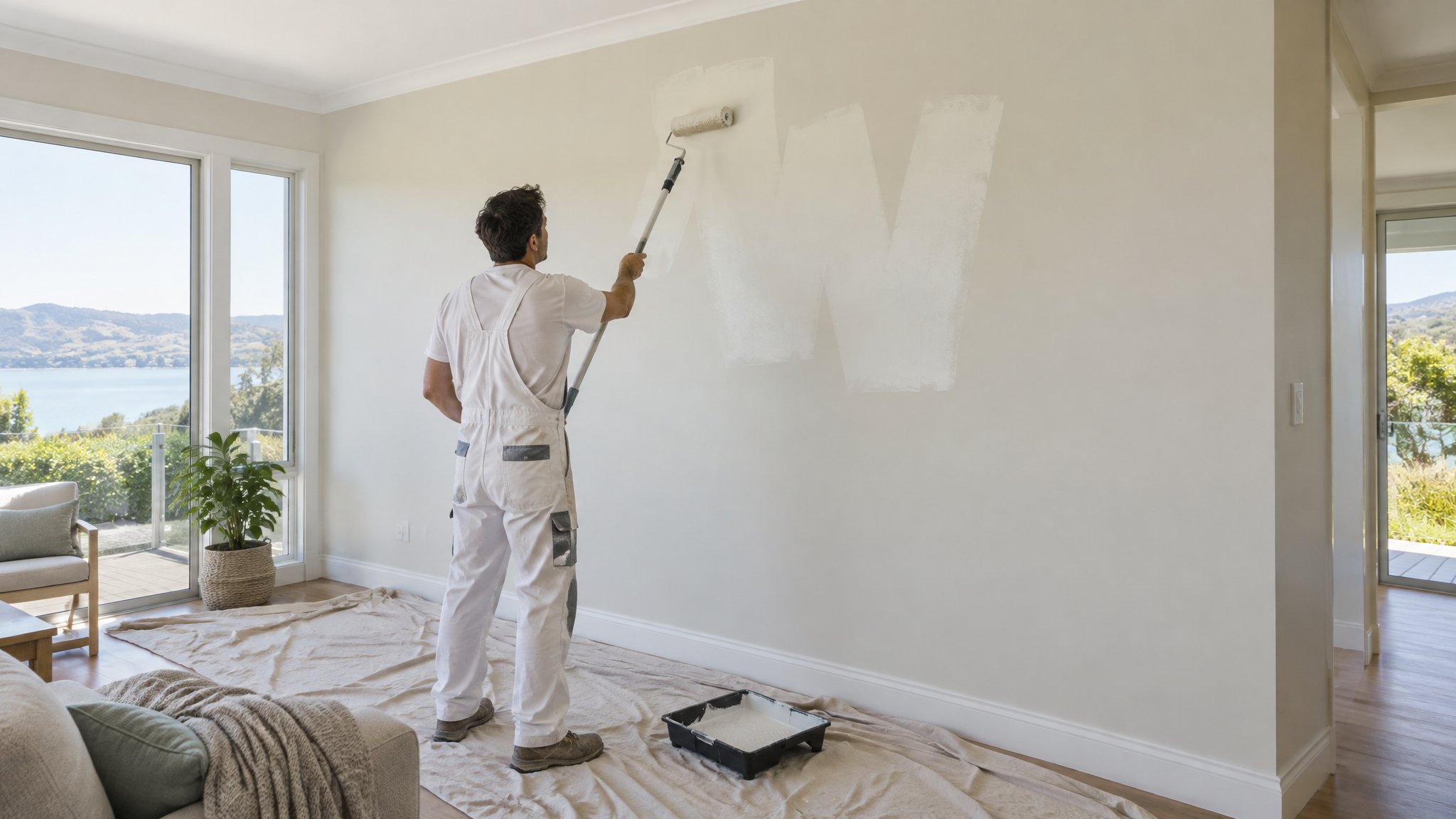
Short answer: no, you should not paint over a damp or slightly wet interior wall. Even if the wall looks mostly dry, moisture trapped in the plasterboard, plaster, or old paint film can cause poor adhesion and surface failure later.
In Auckland homes, dampness can come from leaks, condensation, recent plaster repairs, or drying weather after a wash-down. If you want a finish that lasts, the wall needs to be properly dry before any painting starts.
Why painting over damp walls is a bad idea
Paint needs a sound, dry surface to grip properly. If you paint onto damp substrate, the moisture can interfere with adhesion and the coating may blister, peel, bubble, or dry unevenly.
You can also lock moisture into the wall, which is especially risky if there is an ongoing leak or condensation issue. In that case, the paint is only hiding the problem for a short time.
A damp wall may also hold stains, tannins, mould, or salts that keep bleeding through the finish coat. That means extra prep later and a less durable result.
- Poor adhesion and early peeling
- Bubbling or blistering as moisture escapes
- Mould returning behind the paint film
- Stains or patches showing through
- Uneven sheen or colour changes
How dry should an interior wall be before painting?
As a general rule, the wall should feel dry to the touch, and any plaster repairs should be fully cured before you paint. If there has been water damage, give the area extra time and make sure the source of moisture has been fixed first.
In practical terms, do not rely only on appearance. A wall can look dry on the surface while still holding moisture underneath. Good ventilation, heating, and time all help, especially during Auckland’s cooler, wetter months.
If you are unsure, test the area carefully before painting. Look for cool or dark patches, soft plasterboard, musty odours, or signs of mould. If any of those are present, stop and investigate further.
- Fix the leak or condensation source first
- Allow plaster repairs to fully dry and cure
- Use heating and ventilation to help drying
- Check for musty smells, staining, or soft spots
- Only prime and paint once the wall is properly dry
What to do if the wall is only slightly damp
If the wall is only a little damp, the best approach is still to wait. A few extra hours or days is far better than rushing into a paint job that may fail and need redoing.
Start by identifying why the wall is damp. Common causes include a roof or plumbing leak, poor bathroom ventilation, condensation on an exterior wall, or a patch repair that has not dried fully.
Once the issue is sorted, dry the room well and inspect the surface again. If the wall has been affected by water, it may need stain sealing, mould treatment, or repair work before repainting.
When to call Steve
If you are dealing with damp patches, stained plasterboard, mould, or a wall that just will not dry out properly, it is worth getting advice before you start painting. Steve is a Kiwi and a trade-qualified painter, and he can help you work out whether the wall is ready to paint or needs prep first.
For Auckland interiors, that can make a big difference to how long the finish lasts. Steve can assess the surface, recommend the right prep, and paint it properly once the moisture issue has been handled.
Frequently Asked Questions
Can I use a quick-dry paint on a damp wall?
No. Fast-drying paint still needs a dry surface underneath. If the wall is damp, the coating may fail just as quickly as standard paint.
How can I tell if an interior wall is too damp to paint?
Look for cool or dark patches, soft plaster, mould, musty smells, or recent water damage. If in doubt, wait and fix the cause first.
What if the wall was patched and feels dry on top?
Patched areas can stay damp below the surface even when they feel dry outside. Give them proper time to cure before priming or painting.
Need a hand with your project?
Happy to tackle some of it yourself? Great — but for anything you’d rather leave to a professional, Steve Lunjevich is a Kiwi and a trade-qualified painter with 20+ years’ experience. Call or email for honest advice or a free, no-obligation quote.