
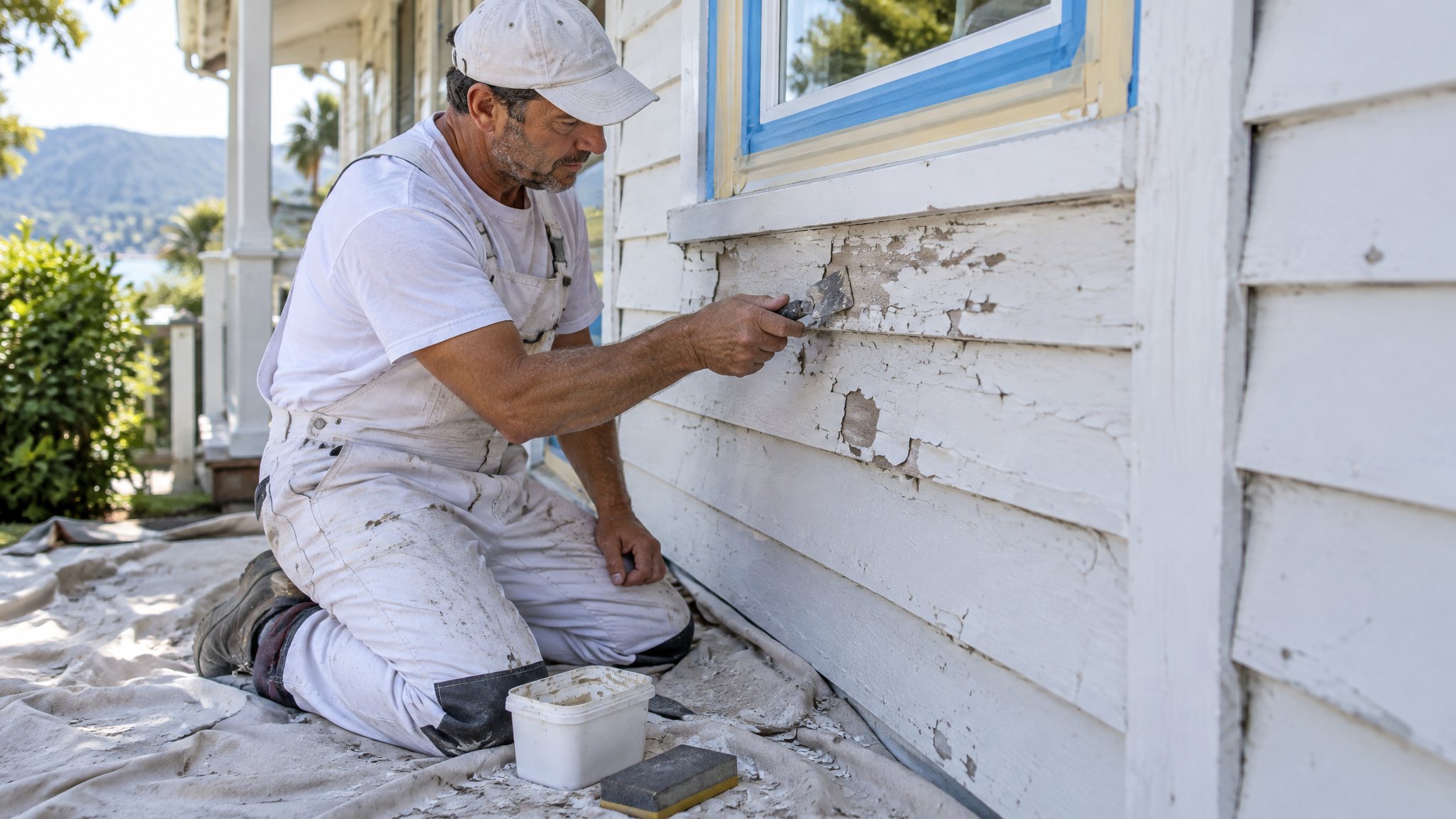
If you own an older home in Auckland, lead paint can still turn up in walls, windows, trims and other painted surfaces. It is a common question: can a painter legally remove lead paint?
The short answer is yes, but only if the work is done safely and in line with New Zealand health and safety requirements. The right approach depends on the condition of the paint, the method used, and how the area is contained and cleaned up.
Is lead paint still a problem in older NZ homes?
Yes. Many homes built before the late 1970s may have layers of lead-based paint somewhere in the coating system, especially on window sashes, weatherboards, doors, trims and interior features that were painted multiple times over the years.
Lead paint is usually not a problem if it is in good condition and left undisturbed. The risk comes when it starts flaking, chalking, sanding dust is created, or the coating is stripped during preparation. That is when lead particles can spread through the home and around the property.
- Common locations include window frames, skirtings, doors and exterior joinery.
- Risk increases when paint is sanded, heat-stripped or dry-scraped.
- Children and pregnant people are most vulnerable to lead exposure.
Can a painter legally remove it?
In New Zealand, a painter can remove lead paint, but the work must be carried out in a way that protects the health and safety of everyone on site. That means using the right controls for the job rather than treating it like an ordinary prep task.
A professional painter should assess the surface first and decide whether the lead paint should be removed, encapsulated, or stabilised before repainting. Not every surface needs full removal. In many cases, safe preparation and repainting over sound coatings is the better option.
If removal is needed, the job should be planned to limit dust and debris. That often means controlled methods, containment, appropriate PPE, and proper disposal of waste. A reputable painter will also consider nearby occupants, neighbours and how the property is used.
What safe lead paint prep should look like
Safe lead paint work is less about speed and more about control. The aim is to avoid creating dust and to keep contaminated material contained from start to finish.
Good practice usually includes a site-specific plan, wet methods where appropriate, careful masking, sealed waste handling, and thorough clean-up. Windows, floor coverings, gardens and nearby fixtures may all need protection depending on the job.
A homeowner should be cautious if someone proposes aggressive dry sanding without controls, or assumes all older paint can be stripped the same way. That is rarely a good sign.
- Ask how the area will be contained before work starts.
- Check what method will be used to avoid dust.
- Make sure cleanup and waste disposal are included in the plan.
When to call Steve
If your home is older and you suspect lead paint, it is worth getting advice before any prep begins. Steve is a Kiwi and a trade-qualified painter, and he can assess the surface, talk through the safest approach, and help decide whether removal is actually necessary.
For many Auckland homes, the best outcome comes from careful preparation, the right products, and a controlled method that protects the house and the people in it. If you are renovating, selling, or refreshing an older property, Steve can help you plan the job properly from the start.
Frequently Asked Questions
How do I know if my house has lead paint?
If your home was built before the late 1970s, assume lead paint may be present until tested or professionally assessed. Older villas, bungalows and pre-1970s homes are the most likely candidates.
Can I sand lead paint myself before repainting?
It is not a good idea unless you fully understand the risks and control methods. Dry sanding can create hazardous dust. A professional painter should advise on the safest prep approach.
Does lead paint always have to be removed?
No. If it is sound and stable, it may be safer to encapsulate or paint over it after proper preparation. The right option depends on the condition of the coating and the area involved.
Need a hand with your project?
Happy to tackle some of it yourself? Great — but for anything you’d rather leave to a professional, Steve Lunjevich is a Kiwi and a trade-qualified painter with 20+ years’ experience. Call or email for honest advice or a free, no-obligation quote.