
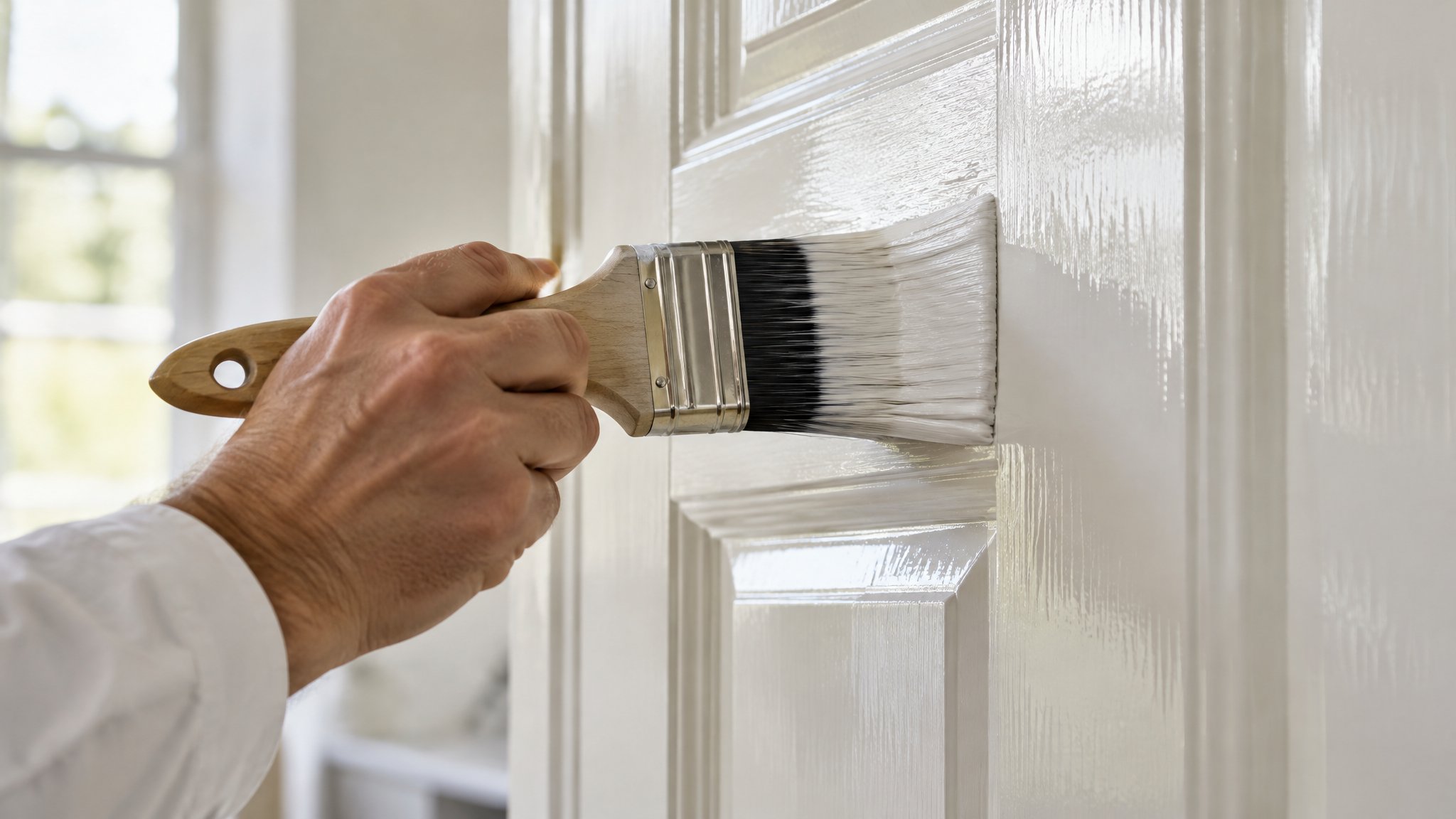
Choosing between acrylic and enamel paint comes down to where the surface is, how hard it is used, and the finish you want. In Auckland homes, both have a place, but they are not always interchangeable.
Acrylic is usually the more forgiving choice for large interior areas, while enamel is valued for toughness and a smoother, more hard-wearing finish on trim and doors. If you are unsure, Steve, a Kiwi and a trade-qualified painter, can help you match the right product to the job.
What is acrylic paint best for?
Acrylic paint is water-based, easy to work with, and generally the go-to for interior walls and ceilings. It dries faster than enamel, has less odour, and cleans up with water, which makes it practical for occupied homes.
For most Auckland living spaces, acrylic is a smart choice for plasterboard walls, ceilings, and other broad interior surfaces. It also allows the wall to breathe a little, which can be helpful in older homes and properties with varying moisture levels.
- Best for walls and ceilings
- Good for low-fuss cleanup
- Usually faster drying
- Often preferred for large interior areas
What is enamel paint best for?
Enamel paint is traditionally used where you want a tougher, more washable finish. It is commonly applied to doors, trims, skirting boards, windows, and kitchen joinery. In these areas, hands, cleaning, and general wear can be constant, so durability matters.
Modern water-based enamels are popular in New Zealand because they give you a harder finish without some of the drawbacks of older solvent-based products. They are often used when a crisp, smooth look is important, especially on detailed timber work.
- Best for doors, trims and skirting
- Suitable for windows and joinery
- More resistant to scuffs and regular cleaning
- Often chosen for a smoother, harder finish
Acrylic vs enamel: where each one makes sense
A simple way to compare them is to think about the surface and the amount of handling it gets. Acrylic suits broad, less-touched areas. Enamel suits high-contact surfaces that need extra durability and easier wipe-down cleaning.
In Auckland homes, this usually means acrylic on walls and ceilings, and enamel on trims, doors, windows, and cabinetry. Bathrooms and kitchens can go either way depending on the product system, surface preparation, and ventilation, but a quality moisture-resistant coating is essential.
If you are painting over an existing finish, the old coating matters too. For example, enamel over enamel can work well if the surface is properly sanded and prepared. Acrylic over old enamel may need extra prep for adhesion.
- Use acrylic for most walls and ceilings
- Use enamel for doors, trims, windows and joinery
- Check the existing finish before repainting
- Prep is just as important as the paint choice
When to call Steve
If you are trying to work out the right paint for a heritage villa, a modern townhouse, or a high-traffic family home, it pays to get the product choice right before you start. The wrong coating can lead to poor adhesion, flashing, scuffing, or a finish that does not wear well.
Contact Steve, a Kiwi and a trade-qualified painter, if you want practical advice on acrylic vs enamel for your project, or if you would like the job done properly from prep through to final coat. He can assess the surface, recommend the best system, and make sure the finish suits your home and how it is used.
Frequently Asked Questions
Is acrylic paint better than enamel for walls?
Usually yes. Acrylic is commonly preferred for interior walls because it is easier to apply, dries quickly, and is designed for larger surface areas.
Can I use enamel paint on interior walls?
You can, but it is not usually the first choice. Enamel is generally better for trim, doors, and joinery where a harder-wearing finish is needed.
What paint should I use for kitchen cupboards or bathroom joinery?
A durable enamel-type coating is often the better option, provided the surface is properly prepared and the correct primer and topcoat system is used.
Need a hand with your project?
Happy to tackle some of it yourself? Great — but for anything you’d rather leave to a professional, Steve Lunjevich is a Kiwi and a trade-qualified painter with 20+ years’ experience. Call or email for honest advice or a free, no-obligation quote.