
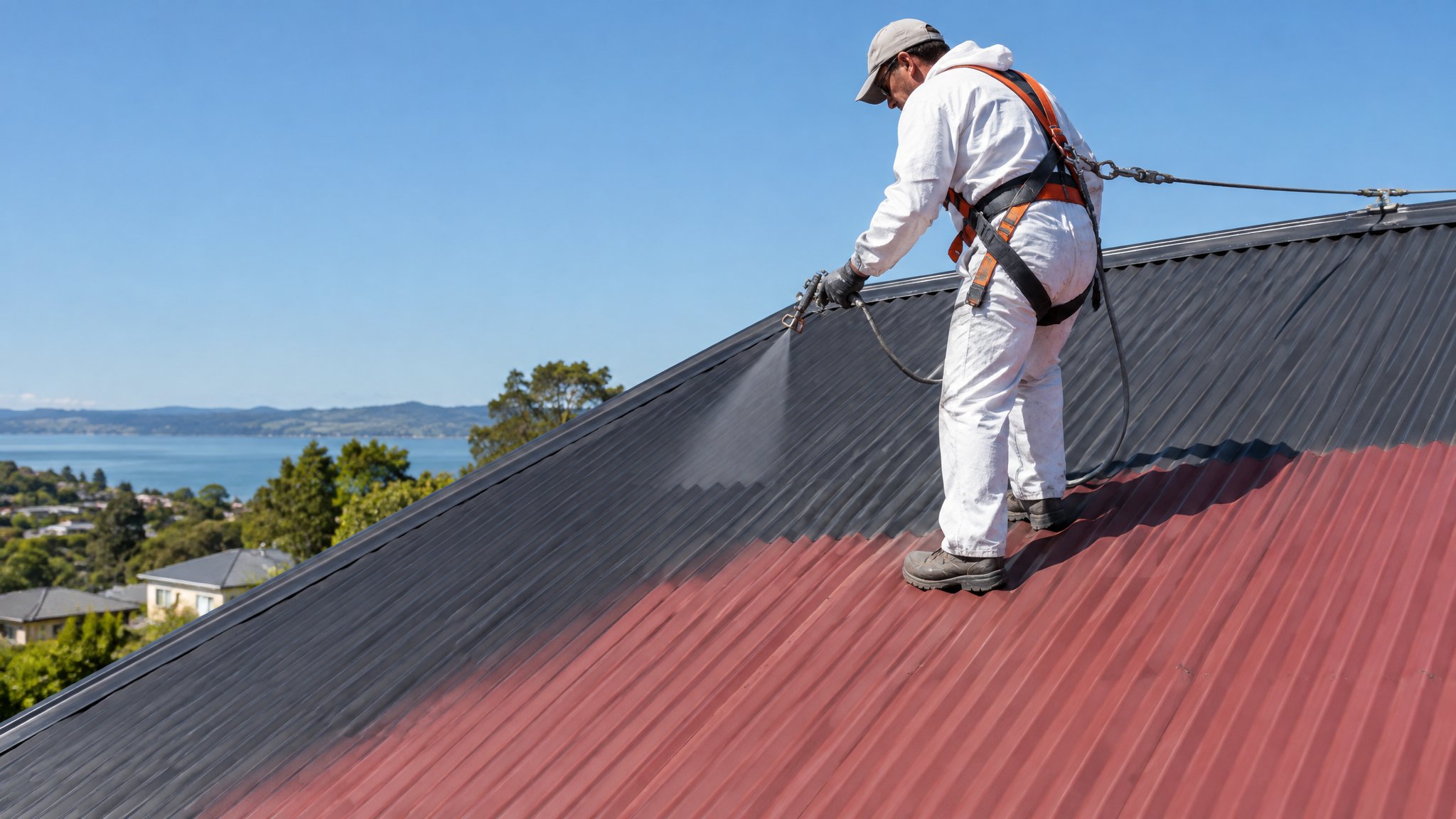
If you’re painting a roof by hand, the tool you choose makes a big difference to the finish, coverage, and how hard the job feels. The best option depends on the roof type, the paint you’re using, and whether you’re working on corrugated iron, long-run metal, or concrete tiles.
For most roof painting jobs in Auckland, a roller will cover larger areas quickly, while a brush is best for cutting in, tight edges, overlaps, screws, and awkward details. The trick is using the right sleeve or brush head for the surface, not just grabbing the nearest tool.
Best roller for roof paint by hand
For most hand-applied roof paint jobs, a medium-nap roller is the most practical choice. On metal roofs, a shorter nap usually gives a smoother finish and helps avoid excess paint sitting in the grooves. On slightly textured roofs, a medium nap can help the paint reach into the profile without needing too many passes.
A 230 mm roller frame is common because it covers a decent area without becoming too heavy. If you’re working on a roof with a lot of ridges, laps, or steep angles, a smaller roller can be easier to control and safer to use.
Look for a solvent-resistant roller sleeve if you’re using roof coating that requires one. Cheap sleeves can shed fluff, leave bubbles, or break down partway through the job.
- Short nap for smooth metal roofs
- Medium nap for lightly textured surfaces
- Solvent-resistant sleeve where required by the paint system
- Smaller roller for better control on detailed roof profiles
Best brush for roof paint and detailed areas
A good quality sash brush or angled roof brush is best for edges, flashings, penetrations, fasteners, and anywhere a roller can’t reach properly. A 75 mm to 100 mm brush is usually handy for roof work, depending on the detail and how much cutting in is needed.
Synthetic bristles suit many modern roof paints, especially water-based products, because they hold their shape and give a cleaner edge. For some solvent-based coatings, you may need a brush that is specifically compatible with that product. Always check the label so the bristles do not soften or drag.
If you are brushing an entire roof rather than just details, keep in mind that it will be slower and more tiring than rolling. Brush application can still work well for small areas, touch-ups, or tricky roof sections, but it takes a steady hand to avoid lap marks.
- 75 mm to 100 mm angled brush for most detailing
- Synthetic bristles for many water-based roof paints
- Use a compatible brush for solvent-based coatings
- Best for cut-ins, laps, screws, flashings and touch-ups
Choosing the right hand method for your roof type
Metal roofs generally suit a roller-and-brush combination: roll the broad sections and brush the edges, overlaps, and fixings. This gives a more even finish and usually uses the paint more efficiently. On corrugated profiles, a roller with enough nap to reach into the valleys can help reduce missed spots.
Concrete tile roofs are different. Their texture and shape often mean more brushing and careful rolling to work paint into the surface without flooding the profile. A smaller roller and a good brush can be a better combination than trying to force a large roller across every contour.
No matter the roof type, surface preparation matters just as much as the tool. If the roof is dirty, mossy, chalky, or flaking, even the best roller will struggle to produce a durable finish. Clean, dry, sound surfaces are essential before any paint goes on.
- Metal roofs: roller for flats, brush for edges
- Tile roofs: smaller roller and brush for better control
- Match the tool to the paint system and roof profile
- Preparation affects finish more than tool choice alone
When to call Steve
If you are unsure whether your roof needs a short-nap roller, a medium-nap sleeve, or a specific brush for the coating you’ve bought, it is worth getting advice before you start. The wrong tool can leave streaks, poor coverage, or a finish that wears out too soon. For Auckland homes, weather exposure, roof pitch, and existing coating condition all play a part in choosing the right approach.
Steve is a Kiwi and a trade-qualified painter, and he can help you decide whether hand application is suitable for your roof or whether a professional spray and hand-finish system would be better. If you want practical guidance for your Auckland roof, or you’d rather have the job done properly from the start, contact Steve for advice.
- Helpful for tool selection
- Useful for roof condition checks
- Best for tricky roofs, steep pitches, or coating uncertainty
Frequently Asked Questions
Can I use any paint roller on a roof?
Not really. Roof paint usually works best with a solvent-resistant sleeve matched to the roof surface and the coating type. A standard cheap roller can shed fibres or leave an uneven finish.
Is brushing roof paint as good as rolling it?
Brushing is fine for edges, details, and small areas, but rolling is usually better for large roof sections because it is faster and gives a more even finish.
What size brush is best for roof painting?
A 75 mm to 100 mm angled brush is a practical choice for most roof detailing, including flashings, edges, screws, and around penetrations.
Need a hand with your project?
Happy to tackle some of it yourself? Great — but for anything you’d rather leave to a professional, Steve Lunjevich is a Kiwi and a trade-qualified painter with 20+ years’ experience. Call or email for honest advice or a free, no-obligation quote.