
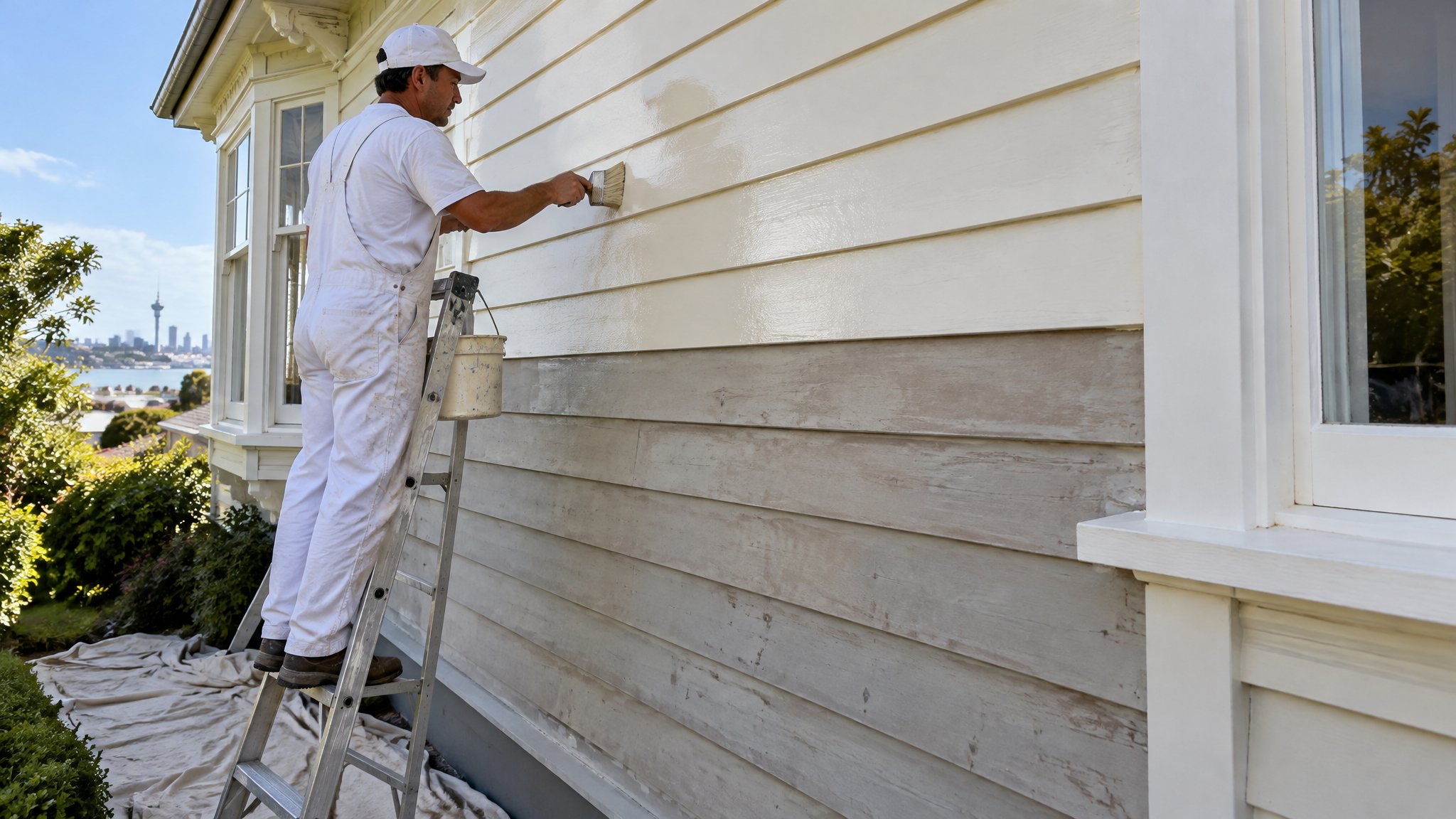
If you want to refresh a kitchen without replacing tiles or glass, painting the splashback can be a smart option. The key is choosing a coating that can handle heat, moisture, grease and constant wiping.
For Auckland homes, the right product and preparation matter just as much as the colour. A splashback is a hard-working surface, so standard interior wall paint usually is not enough.
What paint works best on a kitchen splashback?
In most cases, a high-quality, washable kitchen and bathroom paint is the best starting point for a painted splashback. These products are designed to cope better with humidity, steam and regular cleaning than a basic low-cost wall paint.
For a smoother, more durable finish, many painters will also consider a hardwearing enamel or a specialised protective topcoat, depending on the surface and how much abuse it gets. The right choice depends on whether the splashback is a previously painted wall, plasterboard, timber, MDF or an existing tiled area being painted over.
A satin or semi-gloss finish is often preferred because it is easier to wipe down than a flat finish. Very shiny finishes can show every imperfection, so surface preparation becomes especially important.
- Use washable kitchen and bathroom paint for painted wall splashbacks
- Consider a tougher enamel or specialist coating for high-use areas
- Choose satin or semi-gloss for easier cleaning
- Avoid standard flat wall paint behind cooktops and sinks
Can you paint over tiles or other splashback surfaces?
Yes, but only if the surface is properly prepared. Painted tiles can look good for a while, but if the prep is poor, the finish may chip or peel when exposed to moisture and heat.
Tiles need thorough cleaning to remove grease and soap residue, then de-glossing or sanding so the paint can grip. A suitable bonding primer is usually essential before topcoating. Grout lines may still show through, so if you want a perfectly smooth result, that needs to be discussed before the job starts.
If the splashback is made from glass, stainless steel or another non-porous surface, painting is possible in some cases, but it is more specialised. In those situations, product selection and prep are critical, and it is worth getting advice before you start.
- Clean off all grease and cooking residue
- Sand or de-gloss shiny surfaces
- Use the correct bonding primer
- Expect texture to remain unless the surface is levelled first
How to get a finish that lasts in a busy kitchen
A splashback fails most often because of poor preparation, not because of the colour chosen. Before painting, the surface should be sound, dry and free from dust, grease and old flaking paint. Any gaps or cracks should be filled with an appropriate product, then sanded smooth.
Good ventilation also helps. Kitchens in Auckland can hold moisture, especially in older villas and weatherboard homes, so allowing proper drying time between coats is important. If the splashback is near a gas hob or an area that gets very hot, check that the paint system is suitable for that location.
If you want the best long-term result, think beyond just the paint can. The primer, topcoat, number of coats and curing time all affect how well the splashback performs.
- Prep is the difference between a neat finish and an early repaint
- Allow proper drying and curing time
- Use the right filler, primer and topcoat as a system
- Keep strong cleaners off the surface until fully cured
When to call Steve
If you are unsure what paint to use on a kitchen splashback, or whether your existing surface can be painted at all, it is worth speaking with Steve, a Kiwi and a trade-qualified painter. He can assess the surface, recommend the right coating system and help you avoid a finish that peels, marks or looks patchy after a few months.
This is especially helpful if your kitchen has tiles, old paint, moisture issues or a high-use cooking area. Steve can advise on the most suitable option for your Auckland home and make sure the preparation is done properly for a clean, durable result.
Frequently Asked Questions
Can I use normal wall paint on a kitchen splashback?
It is not recommended. Standard wall paint usually does not stand up well to grease, steam and repeated wiping. A washable kitchen and bathroom paint, or a more durable coating system, is a better choice.
What finish is best for a painted splashback?
Satin or semi-gloss is usually best because it is easier to clean than flat paint. The exact finish depends on the surface and how much wear the area gets.
Do I need primer before painting tiles?
Yes, in most cases. Tiles are glossy and non-porous, so a suitable bonding primer is usually needed for the paint to adhere properly and last longer.
Need a hand with your project?
Happy to tackle some of it yourself? Great — but for anything you’d rather leave to a professional, Steve Lunjevich is a Kiwi and a trade-qualified painter with 20+ years’ experience. Call or email for honest advice or a free, no-obligation quote.